Before You Buy Yarn, Ask This One Gentle Question
Have you ever stood in front of a wall of yarn (or scrolled a yarn shop site at midnight… no judgment 😄) and felt your brain do that little blue screen of death?
Ha ha if so, yep I have been there too.
Fiber labels. Price tags. “Is this soft enough?” “Will it pill?” “Can I wash it?” “Is this color going to make me happy or haunt me?” And then—of course—someone casually says, “Just pick the perfect yarn!” 🙄
Friend… we are not doing that today.
Here’s the truth: the goal is not to find the perfect yarn. The goal is to find a yarn that supports the life your project is going to live.
So let’s gently reframe the whole thing.
The Gentle Question that Helps (and Calms the Yarn Noise)
Before you buy yarn, ask:
What does this project need?
That’s it. That’s the question.
Not “What yarn is the sexiest (yes yarn can be sexy)?”
Not “What yarn is trending?”
Not even “What yarn is the softest?” (Sometimes soft is actually… not helpful. I know. We’ll talk about it.)
Just: What does this project need?
Because once you know what the project needs, the yarn options start narrowing themselves down in a really practical way.
Here are a few examples of “needs” a project might have:
Easy care (machine wash, durable, low-fuss)
Breathability (hello, warm climate sweaters and layering pieces)
Drape (flowy fabric, movement, softness with structure)
Structure (stitch definition, crisp texture, cables that pop)
Warmth (cozy, insulating, winter-walk-friendly)
Next-to-skin comfort (because itch is not a personality trait we need)
This isn’t a complicated system. It’s more like a small flashlight you can use in a big yarn cave.
A Quick Example: Synthetic Yarn in the Right Place
Let’s talk about synthetic yarn for a second, because it gets treated like the villain in a story where it really doesn’t belong.
Synthetic yarn can be wonderful when a project needs things like:
Durability (especially for items that get loved hard)
Affordability (hello, bigger projects and practice pieces)
Easy washing (because real life includes spaghetti sauce)
Some great places for synthetic (or synthetic blends):
Practice projects (swatches that turn into hats, scarves, or “I learned something!” moments)
Toys (they get dragged, hugged, washed, and occasionally… chewed)
Accessories that get frequent use (everyday hats, mittens for kids, etc.)
Anything that needs to be low-stress to care for
And just to be super clear: this does NOT make synthetic yarn “bad” or “good.”
It just makes it more or less suited to what you’re making.
(Also: we’re allowed to choose yarn that fits our budget and our energy. That is part of being a confident maker, too.)
What to Notice Before You Cast On
If you want a simple “pause moment” before you commit, here are a few questions I love. You don’t need to answer all of them every time—just pick the ones that match your project.
1) Will this touch your skin for long periods?
If it’s a sweater, cowl, or anything worn close to the neck like a scarf… your comfort matters.
A yarn can be gorgeous and still feel like a tiny army of invisible squirrels on your collarbone. (Ask me how I know.)
2) Does it need to breathe?
Some projects need airflow. A summer tee or a light layering sweater wants breathability and comfort, not heat-trapping intensity.
3) Will you need to block it into a specific shape?
Lace, garments with drape, pieces that need to relax into the right dimensions—blocking is part of the plan. Some fibers respond beautifully to blocking. Others are… less enthusiastic like synthetics.
4) Will it need frequent washing?
Be honest with your future self. If it’s going to be washed often (kids, pets, gifts for someone who definitely isn’t hand-washing anything)… choose a yarn that won’t make laundry feel like a negotiation.
A Common Mistake: Choosing by Color or Price Alone
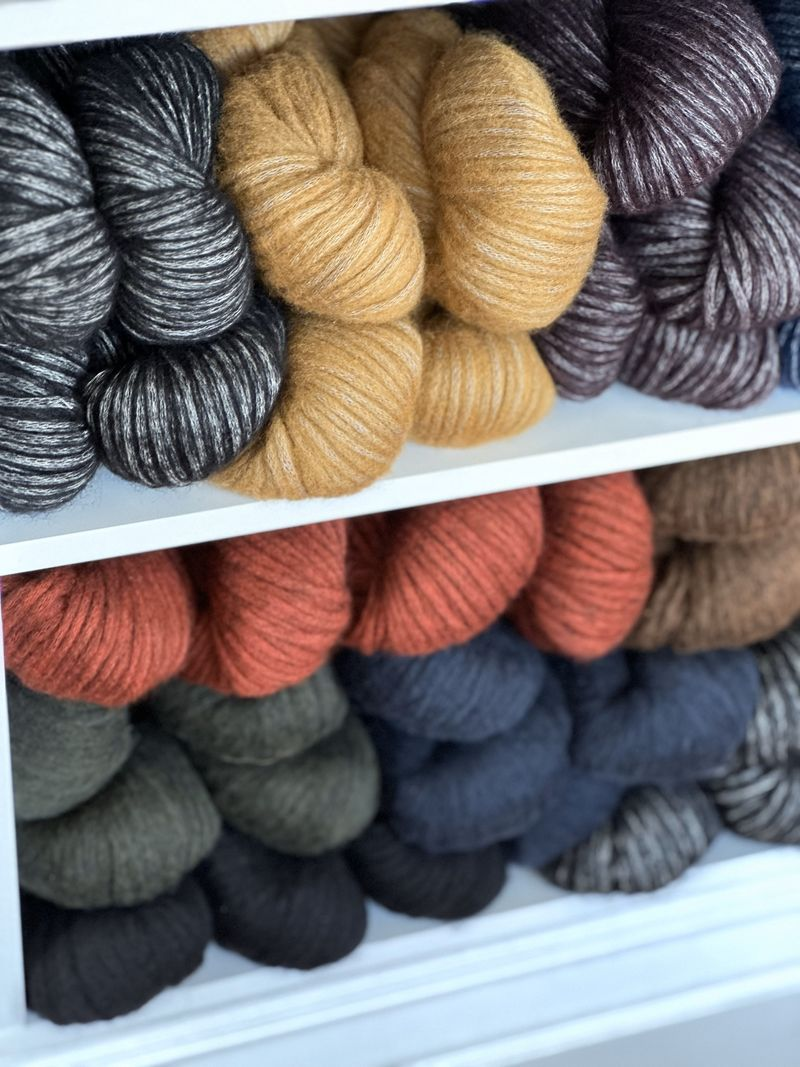
Let’s talk about the pretty skein problem.
We’ve all been there: you see a color that makes your heart do a little dance to ABBA’s ‘Dancing Queen.’ Or a yarn is on sale and you think, ‘This is destiny,’ even though you’re not totally sure what you’ll make with it yet
Sometimes it is! Sometimes it’s absolutely the right yarn and you just got lucky.
But sometimes… a beautiful yarn on sale is still the wrong fit for the project you had in mind.
And that doesn’t mean you made a “bad choice.” It just means your project had needs you didn’t get a chance to listen for yet.
Here’s the Confidence Win:
If you pause and ask one project-based question before you buy, you can save yourself a lot of frustration later.
Because it’s not fun to knit an entire garment and then realize:
it doesn’t hold its shape,
it’s too warm to wear,
it pills instantly,
or it’s impossible to care for in your actual life.
I want your knitting to feel supportive. Not like homework.
A Calm Way to Choose (Without Overthinking It)
Next time you’re yarn shopping, try this little three-step approach:
Name the project.
“This is a hat for daily winter walks.”
“This is a baby blanket.”
“This is my first sweater and I want it to be wearable.”Name the top 1–2 needs.
“Easy care + warmth.”
“Next-to-skin comfort + drape.”
“Durability + structure.”Let the yarn options narrow down naturally.
Now you’re not choosing from everything.
You’re choosing from the yarns that actually make sense for the job.
And honestly? That’s when yarn shopping gets fun again.
Gentle Close
If you’ve ever felt stuck in yarn decision spiral, I hope this gave you a little exhale.
You don’t need perfect yarn. You need yarn that fits the project—and fits you.
Want More Steady Knitting Guidance Like This?
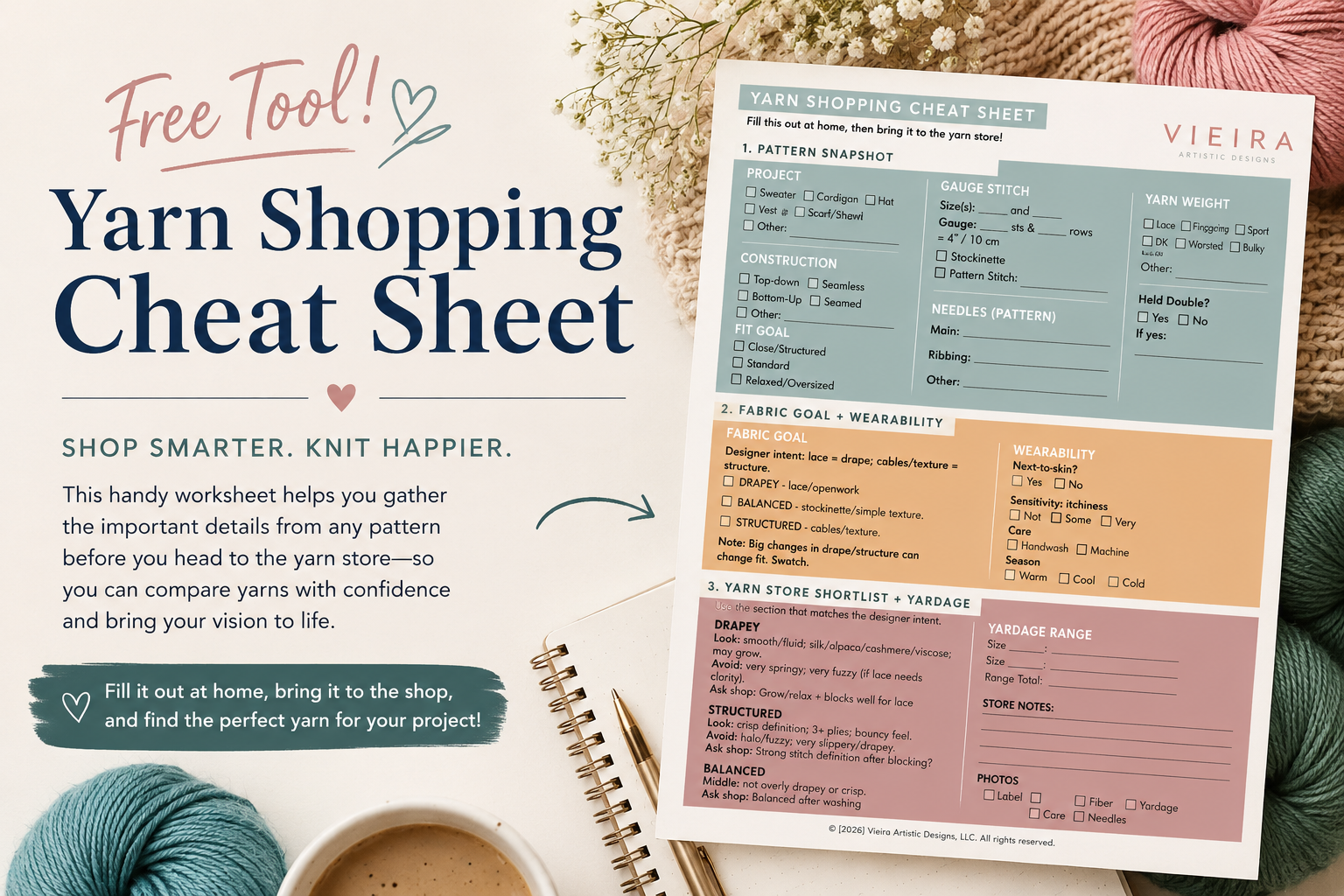
Before you head to the yarn store, grab my free Yarn Shopping Cheat Sheet—a simple worksheet you can fill out at home and bring with you, so you’re not trying to remember pattern details (or make big decisions under fluorescent lights 😅).
Inside, you’ll find space to:
capture your pattern snapshot (project type, construction, fit goal, gauge stitch + needles)
define your fabric goal (drapey / balanced / structured) and wearability needs (next-to-skin, sensitivity, care, season)
shortlist yarn options in the shop with prompts for what to look for / avoid based on your fabric goal
track yardage range, store notes, and even the photos you want to take (label, fiber, yardage, care, needles)
For gentle tips on yarn, sweaters, and building confidence one project at a time:
If you want step-by-step support as you knit your first sweater (or your first one that truly fits and feels good):
For early-to-intermediate sweater knitters (graduates of Mastering Your First Sweater or knitters who’ve made at least two sweaters) who want ongoing support, knit-alongs, workshops, and Team Sweater guidance: