The Yarn Details That Quietly Change Your Sweaters
When we first start knitting sweaters, we usually choose yarn by color and fiber content—and honestly, that makes sense. That’s what our eyes and hands notice first.
But as you knit more garments, you start realizing something kind of sneaky: two yarns can be the same fiber and same weight… and still create sweaters that feel completely different to wear.
That’s because fiber is only one part of the story. The other part is yarn construction—how the yarn is spun, twisted, and built. And while you don’t need to become a spinning expert, learning a few simple “clues” can make your sweater choices feel so much steadier.
(Inside Fiber Files, we go deeper on this. For today’s post, I just want to give you a calm foundation you can actually use.)
Woolen Spun vs Worsted Spun: Why They Feel So Different
This is one of the most noticeable construction differences in sweater yarns—because it changes both the look and the feel of the finished fabric.
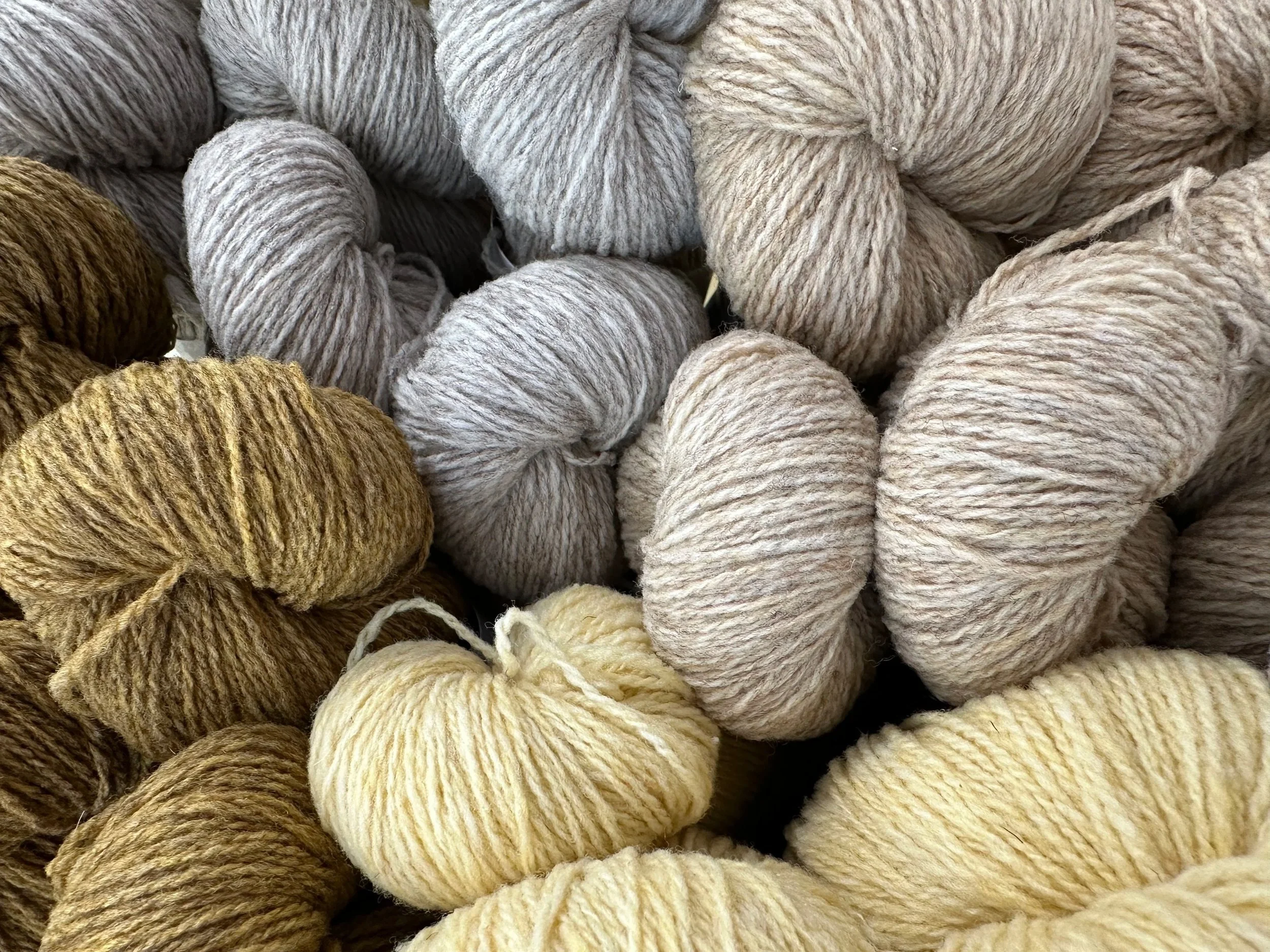
Woolen spun yarns tend to feel:
lofty and airy in your hands
a little fuzzier or more matte
warm for their weight (they trap more air)
more forgiving in your stitches (especially if you’re still building confidence) as they bloom nicely
Lighter feeling when worn as there is less actual fibers and more air
They often create sweaters that feel cozy, soft-edged, and “cloud-like.”
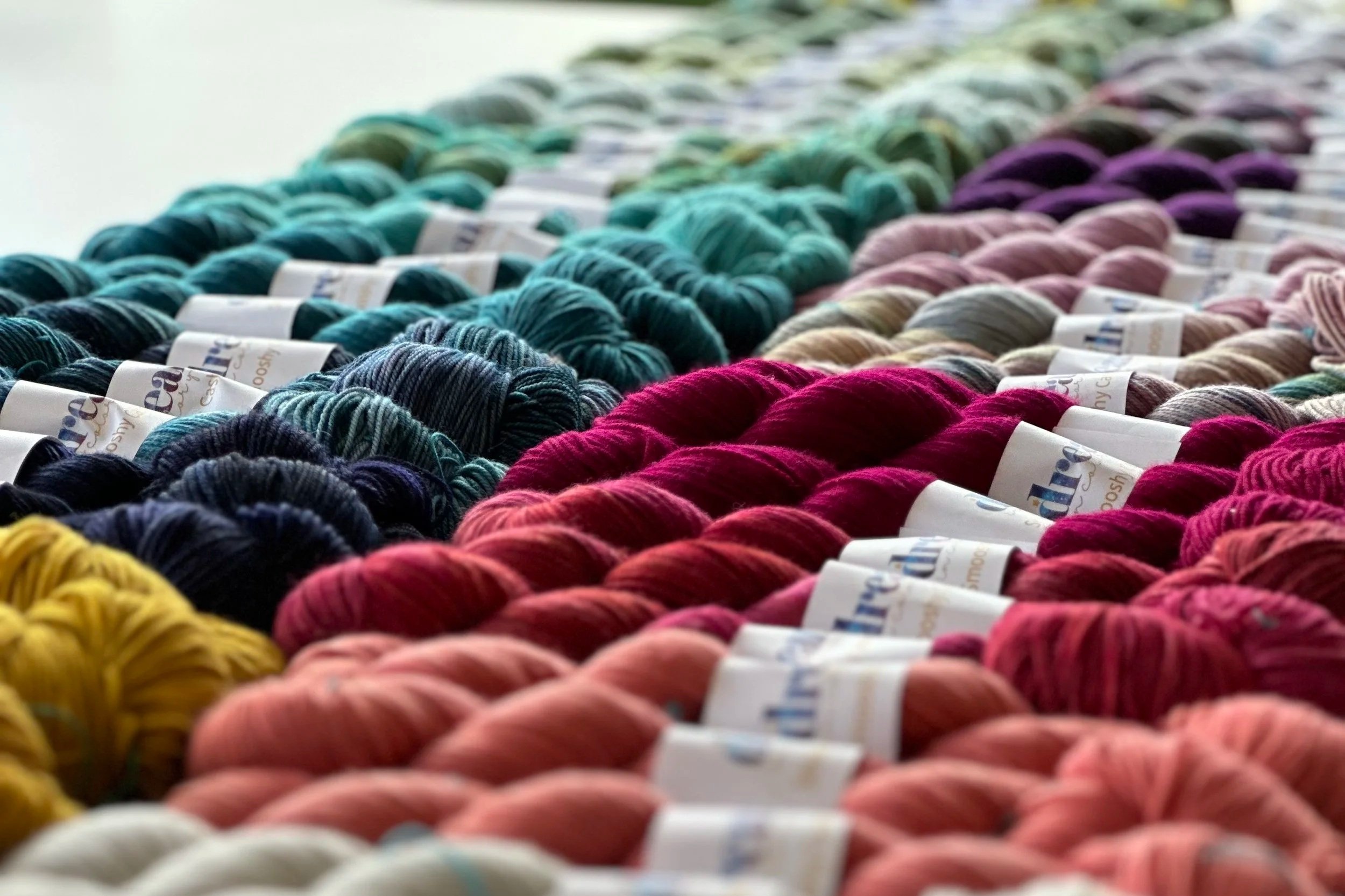
Worsted spun yarns tend to feel:
smoother and more compact
a little crisper in stitch definition
sometimes slightly shinier (depending on fiber)
more structured in the finished fabric
Heavier if your knitting a larger garment
They often create sweaters that look cleaner and more defined—especially with texture, cables, or crisp stitches.
Neither one is “better.” They’re just different tools. Woolen spun often shines when you want softness and warmth. Worsted spun often shines when you want definition and structure.
Twist: The Tiny Detail That Changes Durability
Twist is one of those things knitters don’t notice… until they do.
A yarn with MORE twist usually:
feels a bit firmer or “energetic”
holds up better to wear
often shows clearer stitch definition
tends to pill less (not never—just often less)
A yarn with LESS twist often:
feels softer and airier
may have more halo
can look gentle and dreamy in fabric
may be more prone to pilling or wear (especially in high-friction spots)
Think of twist as part of the sweater’s “real life” plan. If you want a rugged everyday sweater, twist matters. If you want something soft and floaty, lower twist might be exactly the vibe—just with a bit more care in how you wear it.
One More Thing to Know: Specialty Constructions
Some yarns aren’t just “spun.” They’re built in a different way entirely. You don’t need to memorize these—just know they exist, because they can explain why a yarn surprises you.
A few you might see:
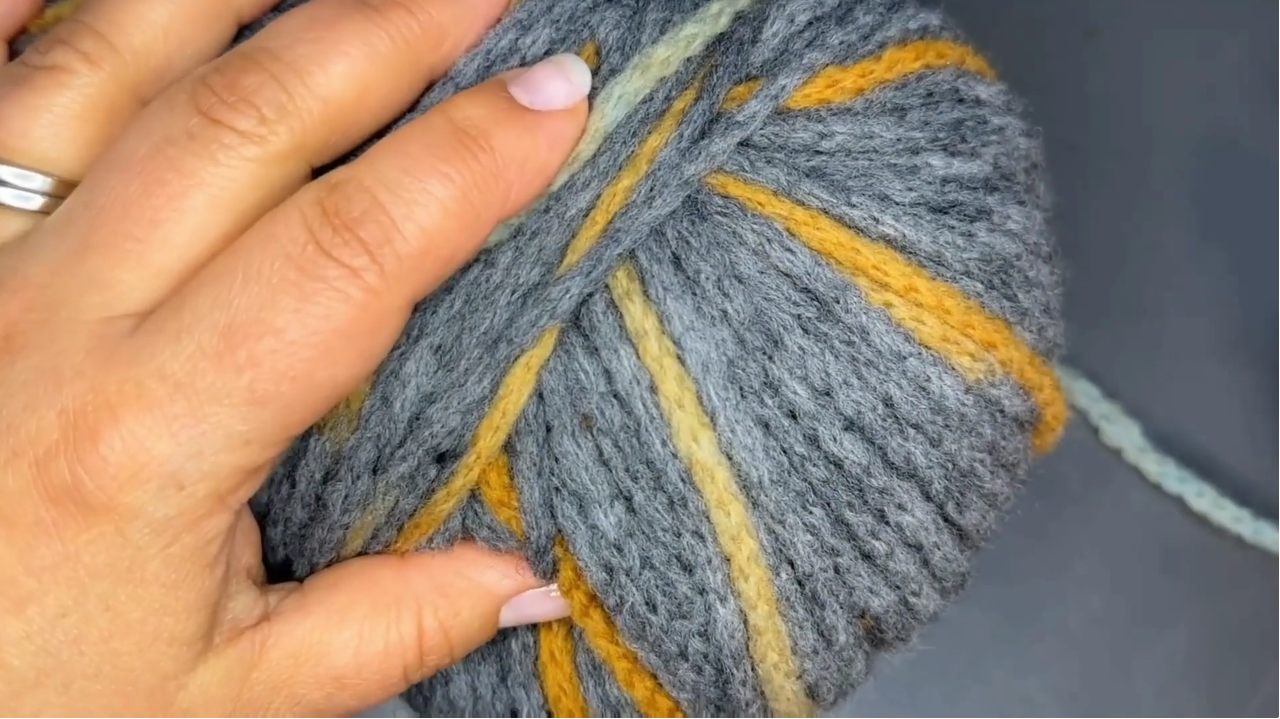
Chainette / Chained Yarns
Often feel lightweight and lofty, and can add a little bounce even in blends that would normally feel less elastic.
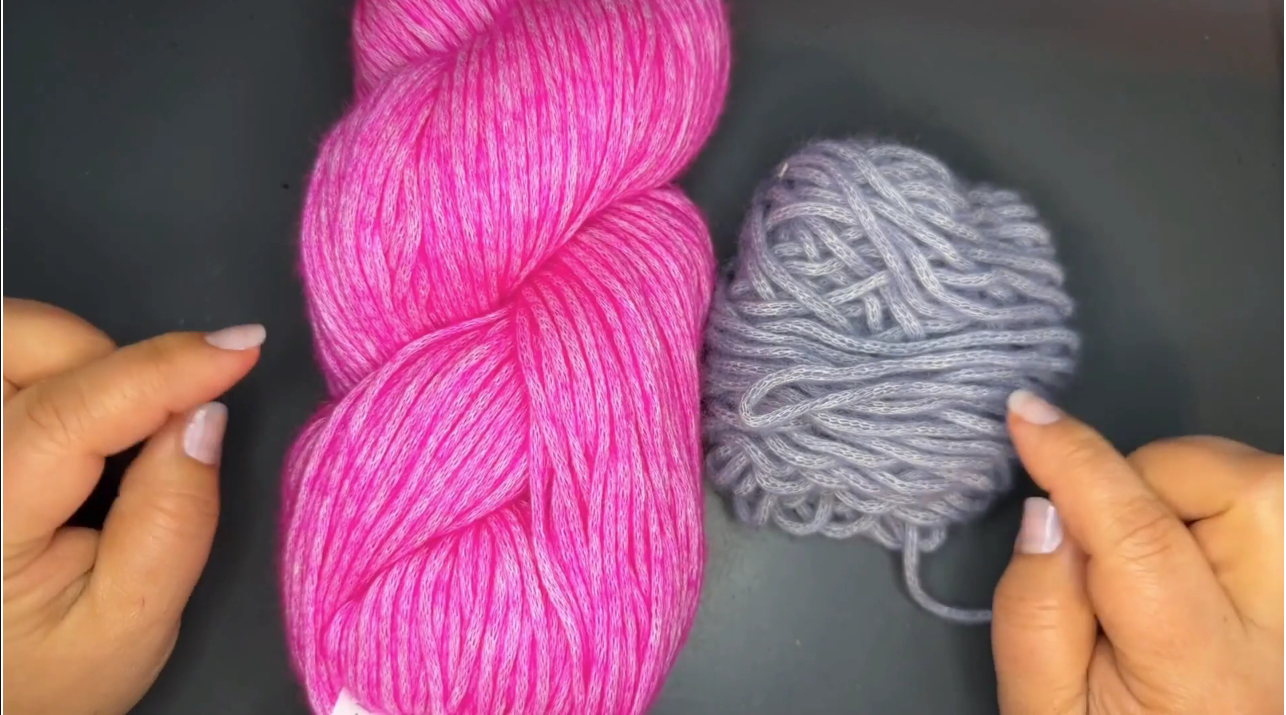
Tube Yarns
can create warmth without feeling as heavy as you’d expect.
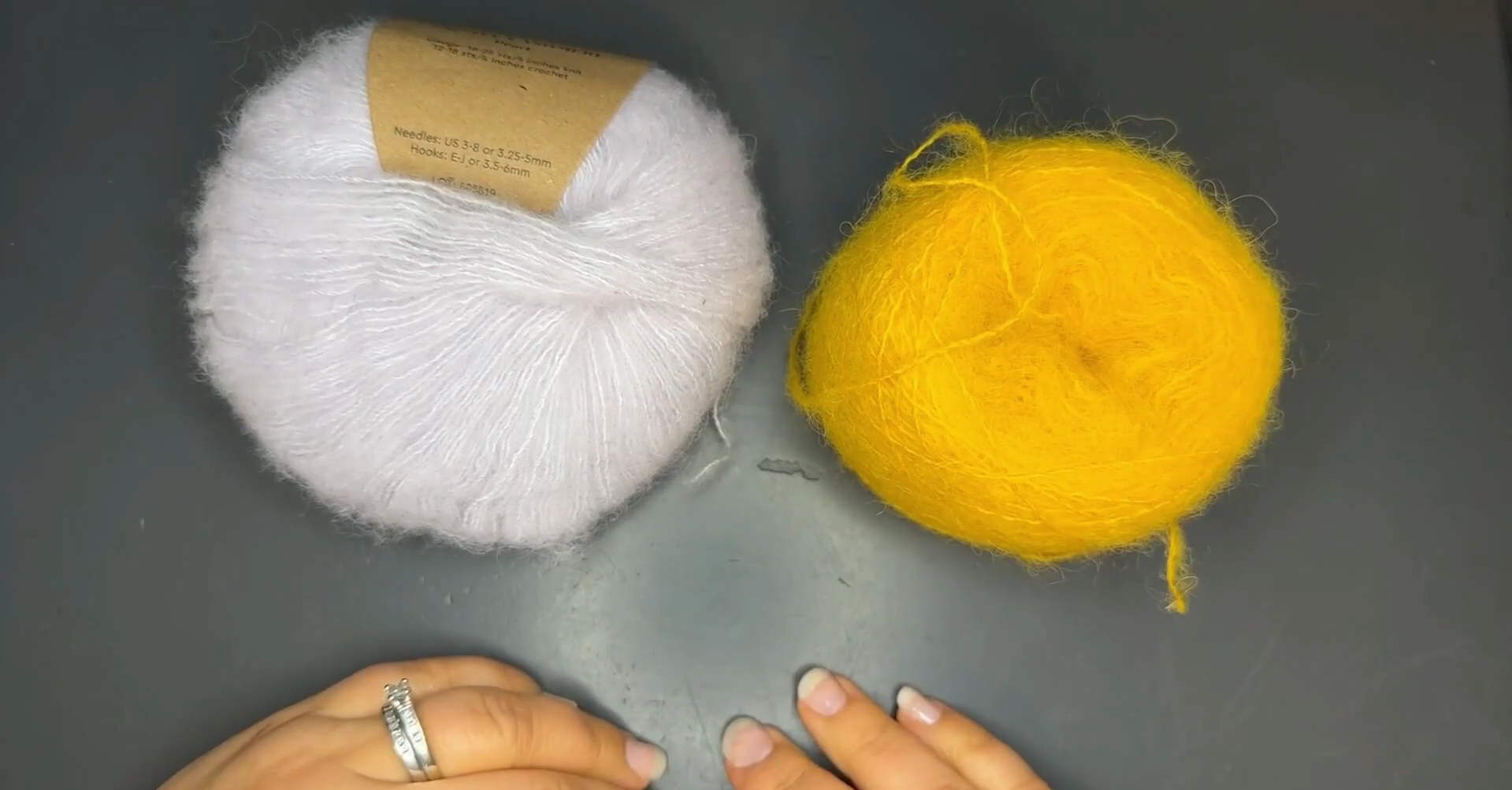
Brushed Yarns
Give halo and softness, but can blur stitch definition (which can be a feature, not a flaw).
These constructions can be amazing even giving your fabric a special look to it—they just have different outcomes than a classic plied sweater yarn.
What to Notice When You’re Choosing Yarn
You don’t need a checklist a mile long. Just start with gentle noticing.
Next time you’re looking at sweater yarn, ask:
Does this look matte or shiny?
Does it feel airy or dense?
Does it feel bouncy or drapey?
Does it look like it will give crisp stitches… or a softer, hazier fabric?
And if you’re shopping in person, here’s a calm little “hands test”:
Hold the yarn and give it a tiny pinch between your fingers. Does it feel springy and structured—or soft and collapsible? Neither is wrong. It just tells you what kind of fabric it wants to become.
This kind of awareness builds over time. You’re not behind if you’re only starting to notice it now—this is exactly what sweater knitters learn as they gain experience.
A Gentle Reminder
There is no perfect yarn. There’s just the yarn that matches the sweater you want to make and the way you want it to live in your real life.
The win isn’t perfection. The win is feeling like your sweater choices make sense—and that you can predict the outcome more often than you’re guessing.
Want to Shop for Sweater Yarn with More Confidence?
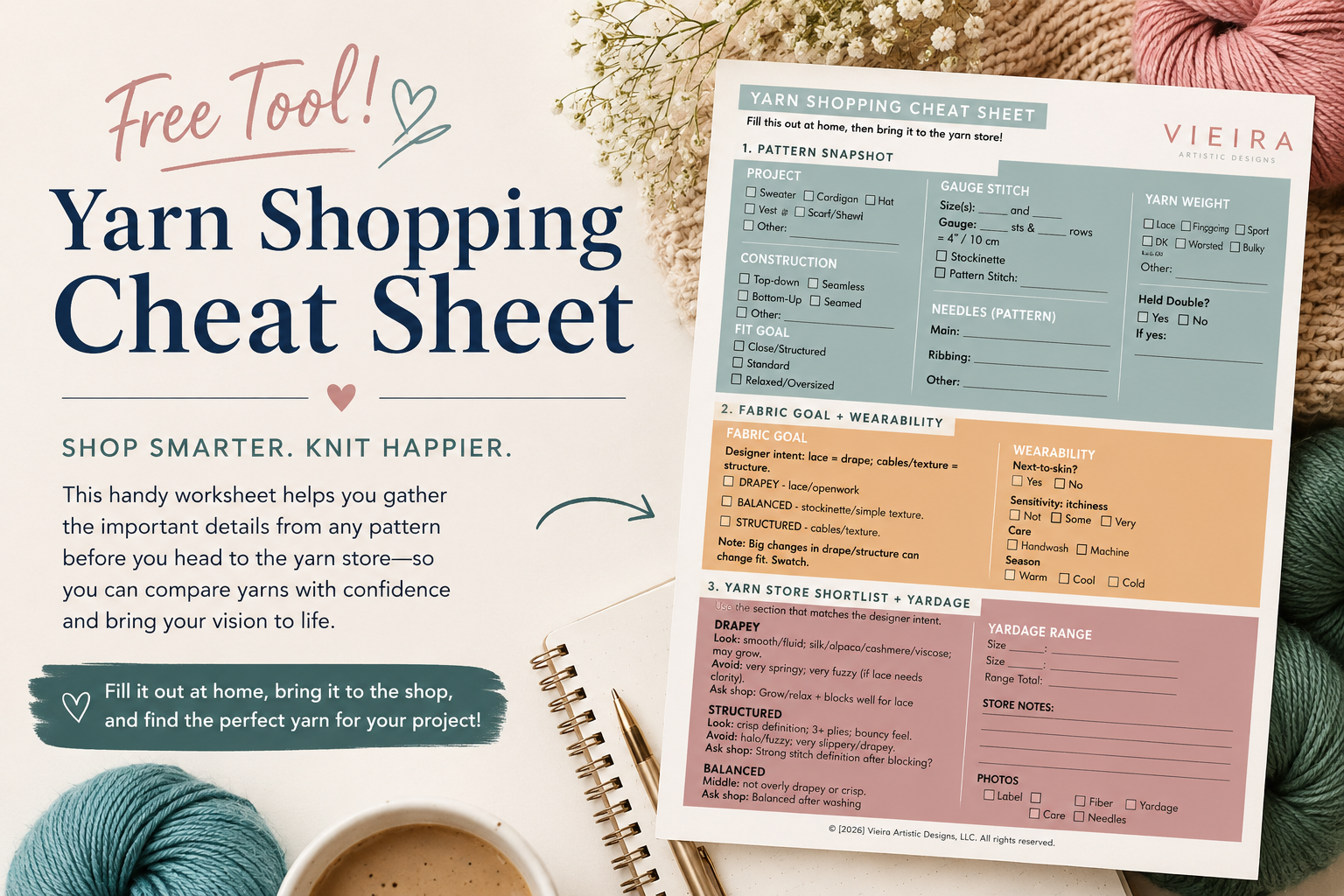
Before you head to the yarn store, grab my free Yarn Shopping Cheat Sheet—a simple worksheet you can fill out at home and bring with you, so you’re not trying to remember pattern details (or make big decisions under fluorescent lights 😅).
Inside, you’ll find space to:
capture your pattern snapshot (project type, construction, fit goal, gauge stitch + needles)
define your fabric goal (drapey / balanced / structured) and wearability needs (next-to-skin, sensitivity, care, season)
shortlist yarn options in the shop with prompts for what to look for / avoid based on your fabric goal
track yardage range, store notes, and even the photos you want to take (label, fiber, yardage, care, needles)