Your Knitting Shouldn’t Feel Like a Fight
Part Three of the series: What Your Knitting Is Telling You
By now in this series, we have listened to the fabric. We looked at tension, uneven rows, and the way our stitches can give us information without immediately accusing us of ruining everything. Very generous of them, really.
But there is one more part of our knitting that is always giving us information: our bodies. Our hands, wrists, shoulders, necks, backs, and even our breathing can tell us a lot about how we are knitting. And sometimes the message is not subtle.
Sometimes it is less of a gentle whisper and more of a tiny shoulder goblin saying, “Excuse me, why are we sitting like a shrimp?”
Knitting is Physical
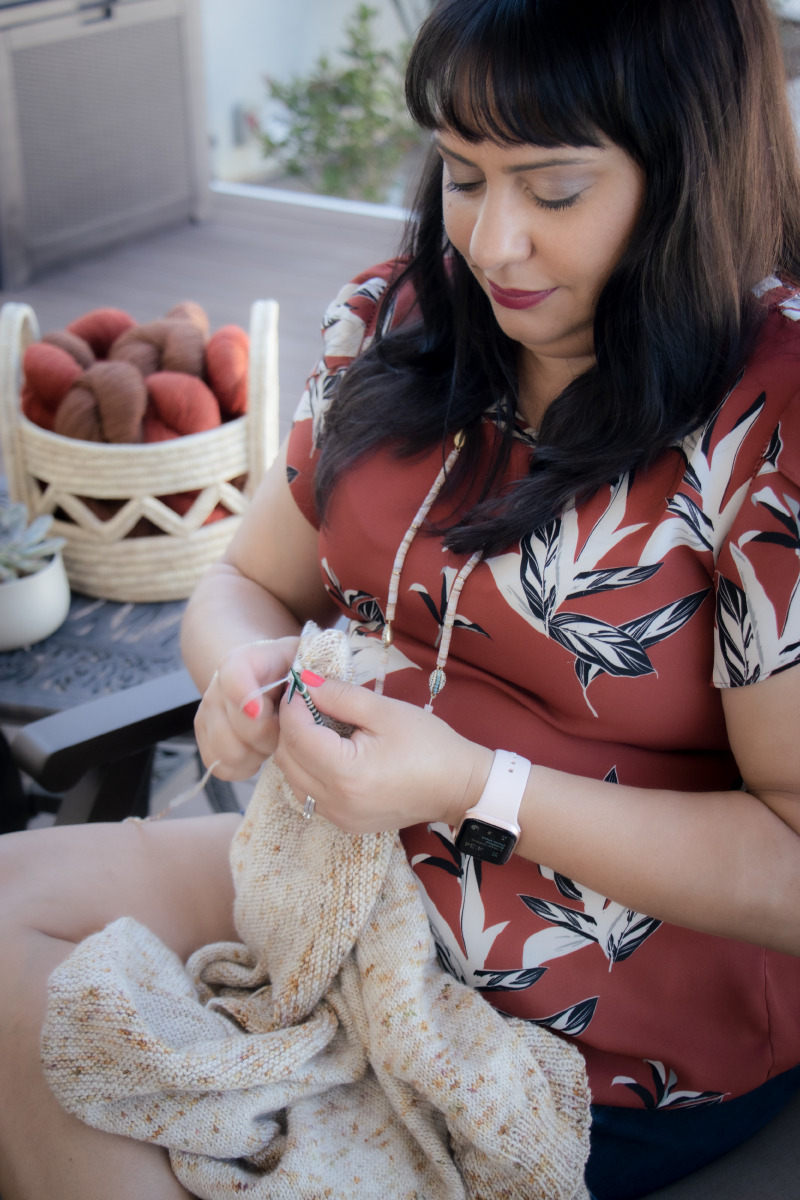
I know knitting often gets described as relaxing. And it can be. There is something wonderful about the rhythm of the needles, the texture of the yarn, and the quiet satisfaction of watching fabric grow stitch by stitch.
But knitting is also a physical activity. Before I became a knitting teacher, I spent time as a massage therapist and health educator. I saw how repetitive movements, awkward positions, and everyday habits could show up in people’s bodies over time. Fast forward a few years lol, now as a knitting teacher, I see and hear similar things from knitters all the time: tired hands, sore shoulders, neck tension, and a grip that gets tighter and tighter the more complicated the instructions become.
This does not mean knitting is dangerous, and it does not mean we need to turn every project into an ergonomic research study. But it does mean our bodies are part of the making. Knitting uses small, repeated movements. It asks our hands to hold tools, guide yarn, form stitches, manage fabric, and sometimes wrestle an entire sweater-in-progress while pretending the growing pile of wool in our lap is not slowly becoming a weighted blanket.
So when our hands feel tired, our shoulders creep upward, or our neck starts sending strongly worded letters, it is worth paying attention. Not panicking. Not deciding we are doing everything wrong. Just noticing.
Awkward is Different From Painful
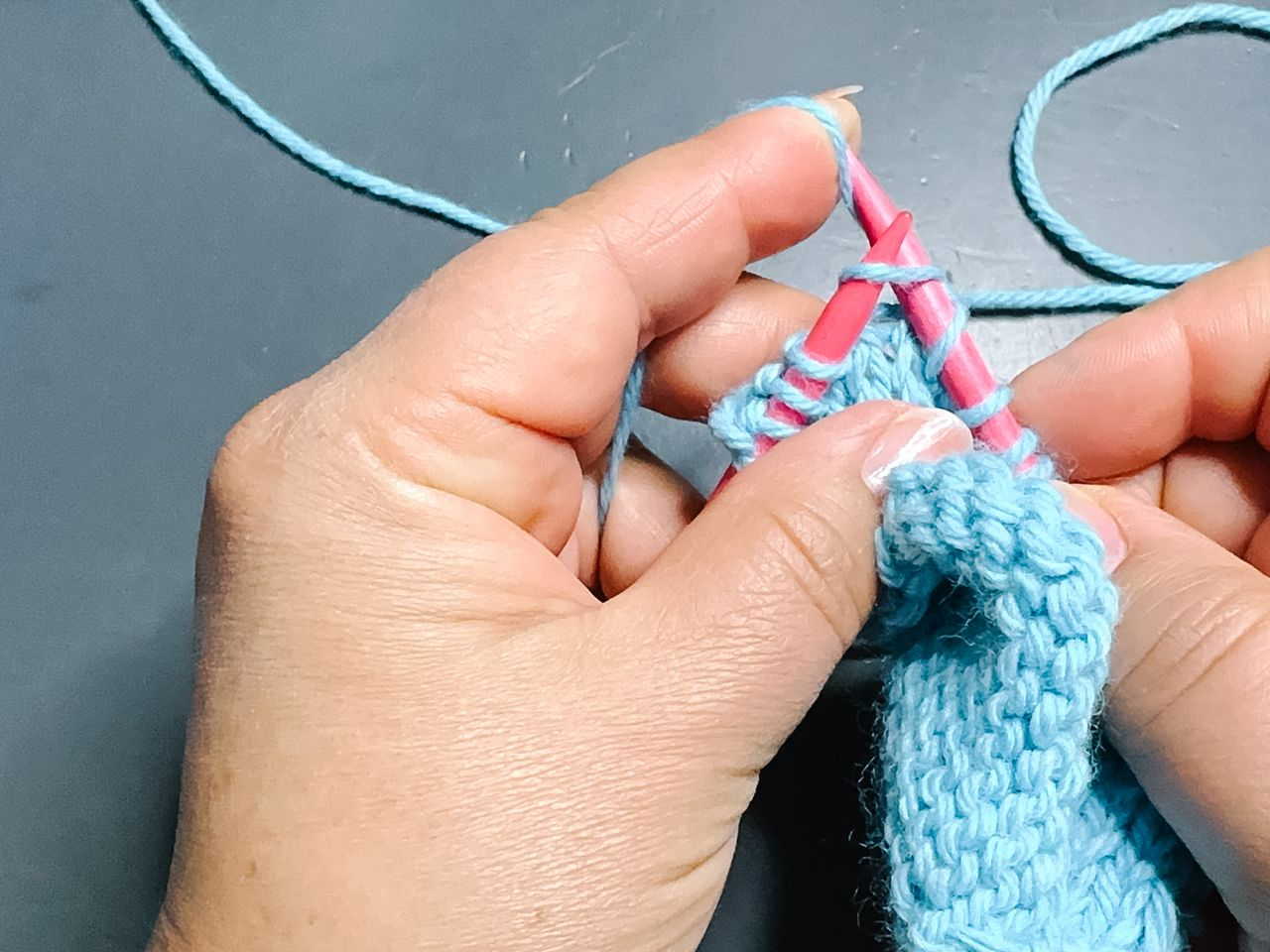
When we are learning something new, it may feel awkward at first.
A new cast-on, a different purling method, a new way of holding the yarn, or working with circular needles for the first time can all make our hands feel a little confused. That kind of awkwardness is normal.
Our brain and hands are figuring out a new pathway, and sometimes that looks like fumbling around while muttering, “Wait, where did this yarn go?” But pain is different. Persistent pain, numbness, tingling, or discomfort that keeps returning is not something we need to prove we can knit through.
Knitting is supposed to be part of a creative life, not an endurance sport with yarn. If something hurts consistently, that is useful information. It may be time to pause, make an adjustment, or check in with a qualified professional. Your body is allowed to have opinions. Honestly, it usually does.
Notice what happens while you knit
This does not need to become complicated. You do not have to set up a full ergonomic command center before every project. Although, if you have a favorite chair, good lighting, a cup of tea, and your notions within reach, I fully support this cozy little headquarters.
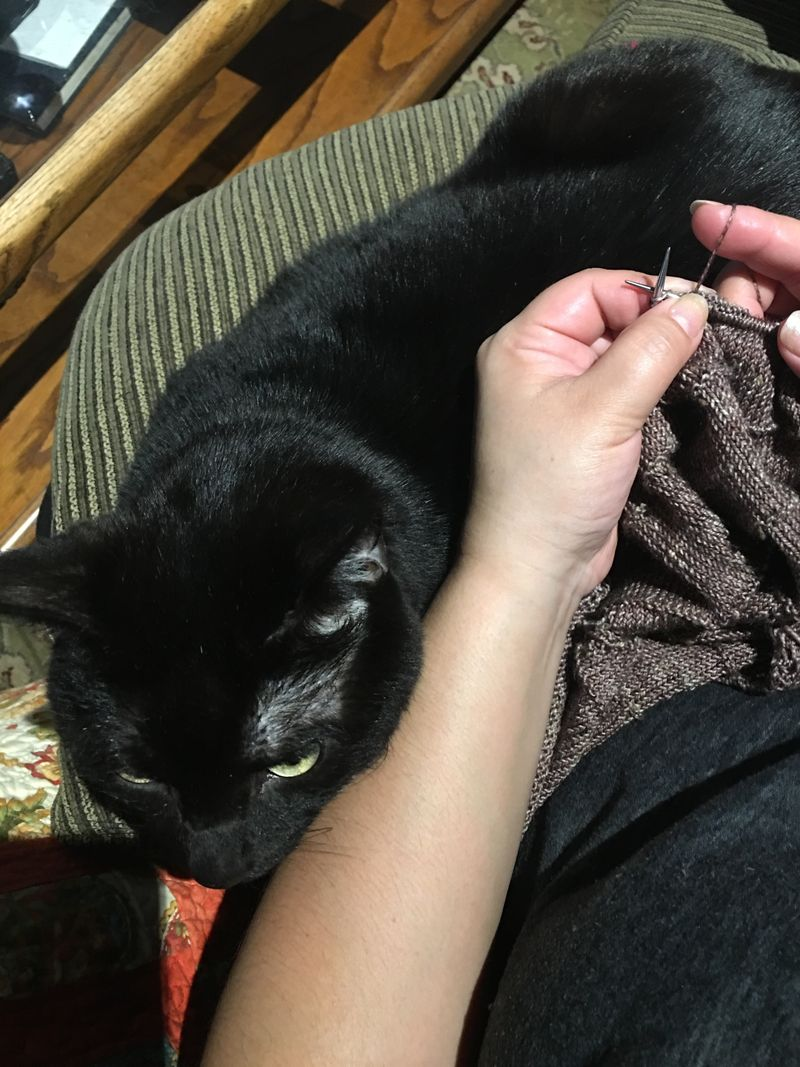
Start by noticing what happens as you knit.
Do your shoulders lift while you concentrate?
Are you gripping the needles tightly?
Are you pulling the yarn firmly after every stitch?
Do your hands feel tired after a few rows?
Are you holding your breath during a tricky section?
Does your posture change as the project gets heavier?
These small observations can tell us a lot.
Sometimes the issue is not the stitch itself. It is the way we are holding our tools, supporting the fabric, sitting in the chair, or trying to knit “just one more row” when our body has very clearly requested a meeting. And yes, “just one more row” is how many of us end up knitting twelve more rows. Ask me how I know.
Comfort is Part of Skill
I think sometimes we treat comfort as a bonus, as though first we become good knitters and then later, if there is time, we can think about whether our hands are clenched into tiny yarn claws. But comfort is not separate from skill.
The way we hold the needles, move the yarn, support the project, and take breaks all affect our knitting experience. They can also affect our tension, gauge, consistency, and how much we enjoy the process. This does not mean there is one perfect knitting position. There is no grand throne of correct knitting posture where the chosen knitter sits with perfectly relaxed shoulders and flawless gauge.
Different bodies need different support. Different projects ask different things of us. A sock, a shawl, and a full sweater do not all behave the same way in our hands. The goal is not to knit in one ideal way forever. The goal is to pay attention and make thoughtful adjustments. That is refinement.
Trying Something Different is not Starting Over.
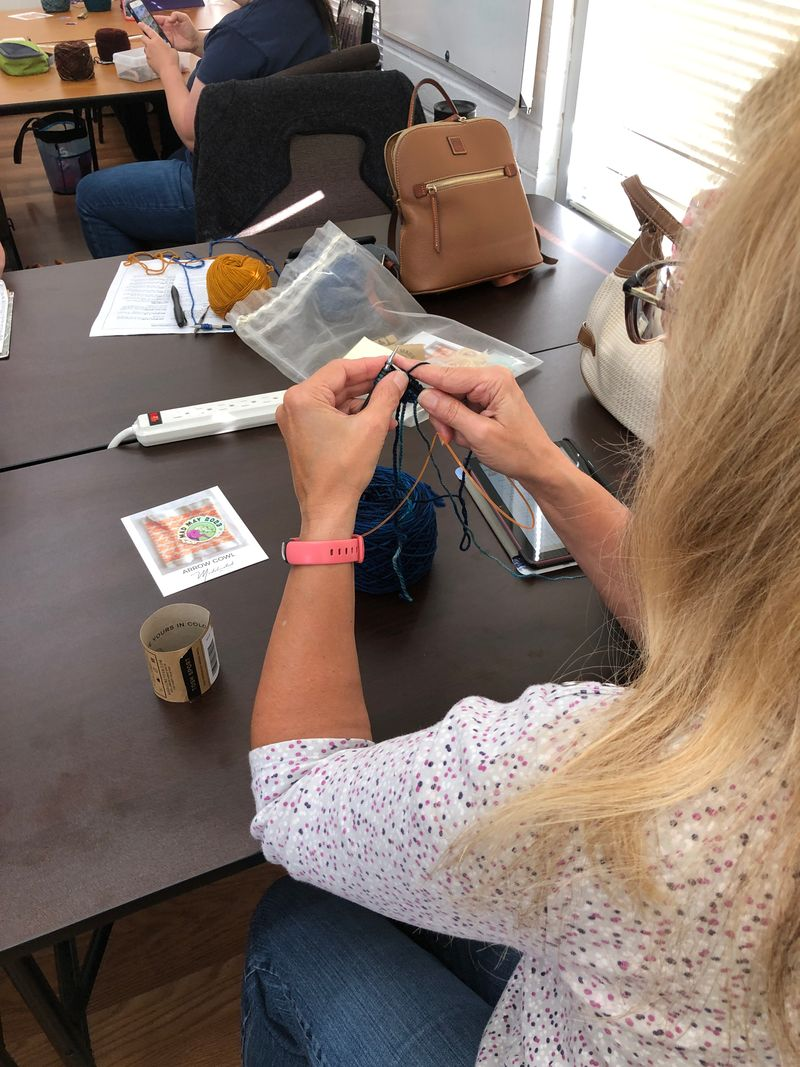
If knitting feels uncomfortable, sometimes the answer may be a small adjustment: a different needle material, a more relaxed grip, better lighting, supporting the weight of the project, or taking breaks before your body has to shout. And sometimes, it may mean exploring a different way of knitting.
That can feel intimidating, especially if you have used the same style for years. We can get attached to our way of doing things. We may even think, “But this is how I knit.” Friend, yes. And also, you are allowed to have options.
Trying a new movement does not erase everything you already know.
It does not mean your first method was wrong. It means you are adding another tool to your knitting life. You can try something and keep it. You can try something and decide it is not for you. You can try something and use it only for certain projects.
That is not failure. That is information.
A Resource for Going Deeper
If this topic interests you, Carson Demers’ book, Knitting Comfortably: The Ergonomics of Handknitting, is a wonderful resource. Carson has also been a guest in Sweater Club, and I appreciate the way he talks about knitting as something we do with our whole bodies, not just our hands.
His work gives knitters a deeper understanding of movement, posture, tools, repetition, and comfort. And that matters, because the goal is not simply to knit more. It is to knit in a way that supports the body doing the knitting.
Move Better, Knit Longer
This is also why I created Move Better, Knit Longer Workshop Series as part of the Sweater Club experience.
It is a seven-episode wellness series that brings together my love of knitting with my past experience in massage therapy and health education. In it, we look more closely at the habits surrounding our knitting: how we sit, how we move, how we hold tension, and how our bodies respond to the small repeated motions of making.
Inside that series, I also share two guided stretch tutorials designed to support knitters and help reduce the strain that can come from repetitive movements. And as a bonus, Sweater Club members also have access to my interview with Carson Demers himself.
So yes, we talk about these ideas here on the blog. But inside Sweater Club, we get to slow down and explore them with more care, more detail, and more practical support.
Not because knitting needs to become one more thing we have to optimize. No one needs their hobby to come with a performance review.
But because our creative practices deserve care.
When we care for the way we move, sit, rest, and return to our projects, we give ourselves a better chance of continuing to enjoy this craft over time.
And that matters.
Because knitting is not a race. It is not a test. It is not a performance where the audience is secretly grading your shoulder position and tension.
It is a relationship—with the yarn, the fabric, the tools, the pattern, and yourself.
What is your knitting telling you?
Over this series, we have looked at tension, rowing out, and ergonomics as clues. Not flaws. Not proof that you are doing everything wrong. Clues.
Your fabric may tell you something about your tension. Your rows may tell you something about how your knit and purl stitches are being formed. Your body may tell you something about your habits, tools, posture, or pace.
You do not have to solve everything at once. You do not have to reinvent the way you knit overnight. You do not have to turn every observation into homework. Sometimes the most helpful thing we can do is simply notice.
Then, with curiosity and kindness, we can ask: What is working? What feels harder than it needs to? What might I try differently next time?
That is how confidence grows. Not from perfection. Not from pushing through. Not from pretending we already know everything. Confidence grows when we learn to listen, understand, and make thoughtful choices from there.
So the next time your knitting feels a little off, pause before blaming yourself. Look at the fabric, watch your hands, and listen to your body. Your knitting may not be asking you to start over. It may simply be telling you something worth noticing.