
Why Do My Knit and Purl Rows Look Different?
Part Two of the series: What Your Knitting Is Telling You
You are knitting along, feeling reasonably pleased with yourself, when you hold up the fabric and notice something.
Every other row looks a little different.
One row seems smooth and tidy. The next looks looser, bumpier, or slightly larger. Then the first one returns as though nothing unusual has happened.
At this point, many knitters begin staring at the fabric like it has been keeping secrets.
Why do my rows look striped when I am using the same yarn, the same needles, and the same two hands?
This can happen when we knit stockinette fabric back and forth, working a knit row followed by a purl row. The stitches may look similar from the front, but our hands do not always form them in exactly the same way.
That difference can show up in the fabric.
And yes, there is a name for it.
Meet Rowing Out!
When alternating rows appear noticeably different because one row is worked at a different tension than the other, knitters often call it rowing out.
Usually, one set of stitches is slightly larger than the next. In flat stockinette, that may mean the stitches formed on the purl rows use a little more yarn than the stitches formed on the knit rows—or the other way around. And believe it or not the knit and purl stitch are not identical in size and shape.
Once you see it, you may suddenly feel as though it is the only thing visible in the entire project.
Friend, it probably is not.
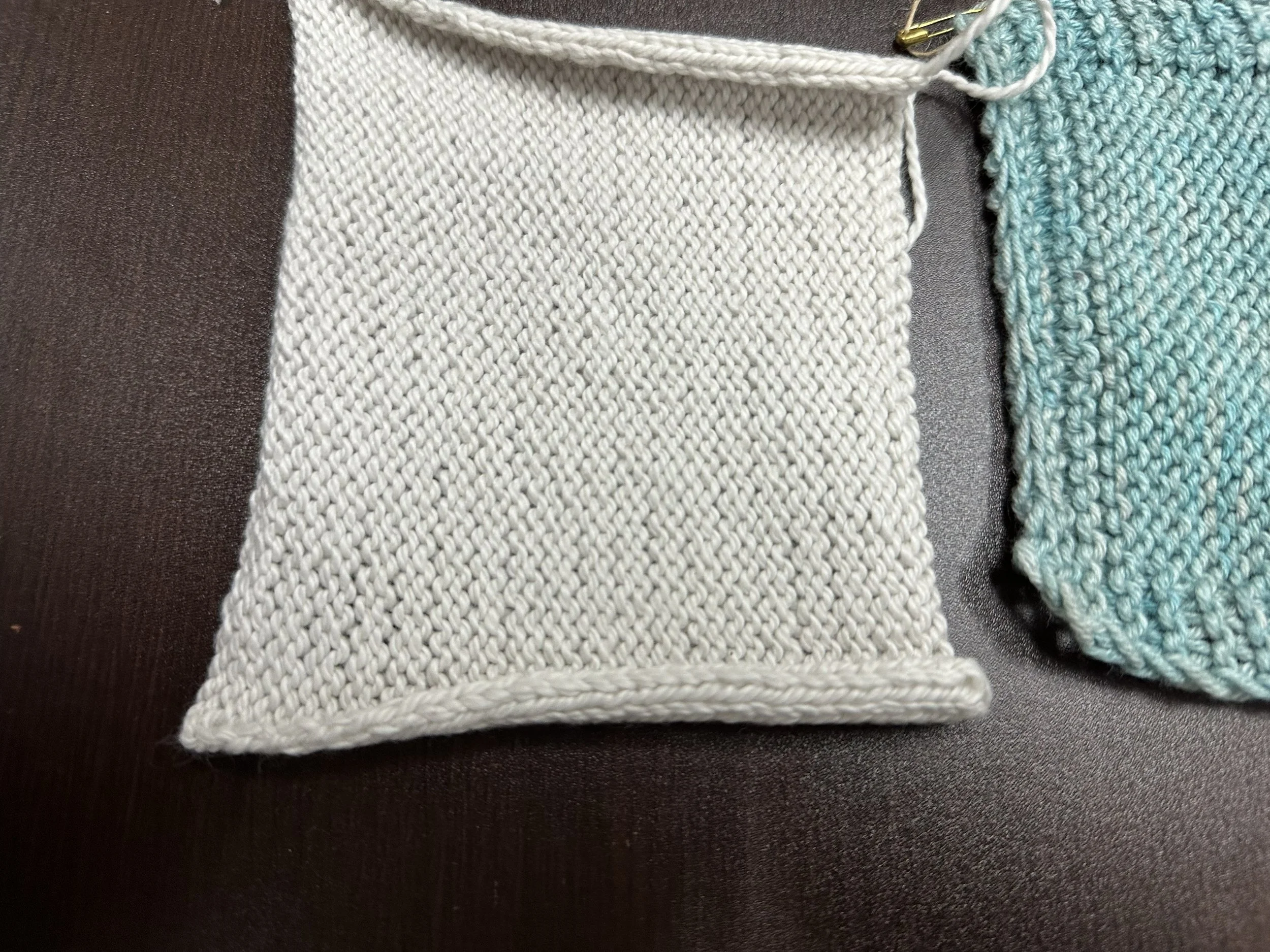
Rowing out can be subtle or dramatic. It may show up with one yarn and disappear with another. It can happen to new knitters, experienced knitters, and people who have been knitting long enough to own several tape measures but can never find one when needed.
It is not proof that you have failed to master knitting.
It is information about how your hands are forming the stitches.
Knit and Purl are Not Mirror-Image Movements!
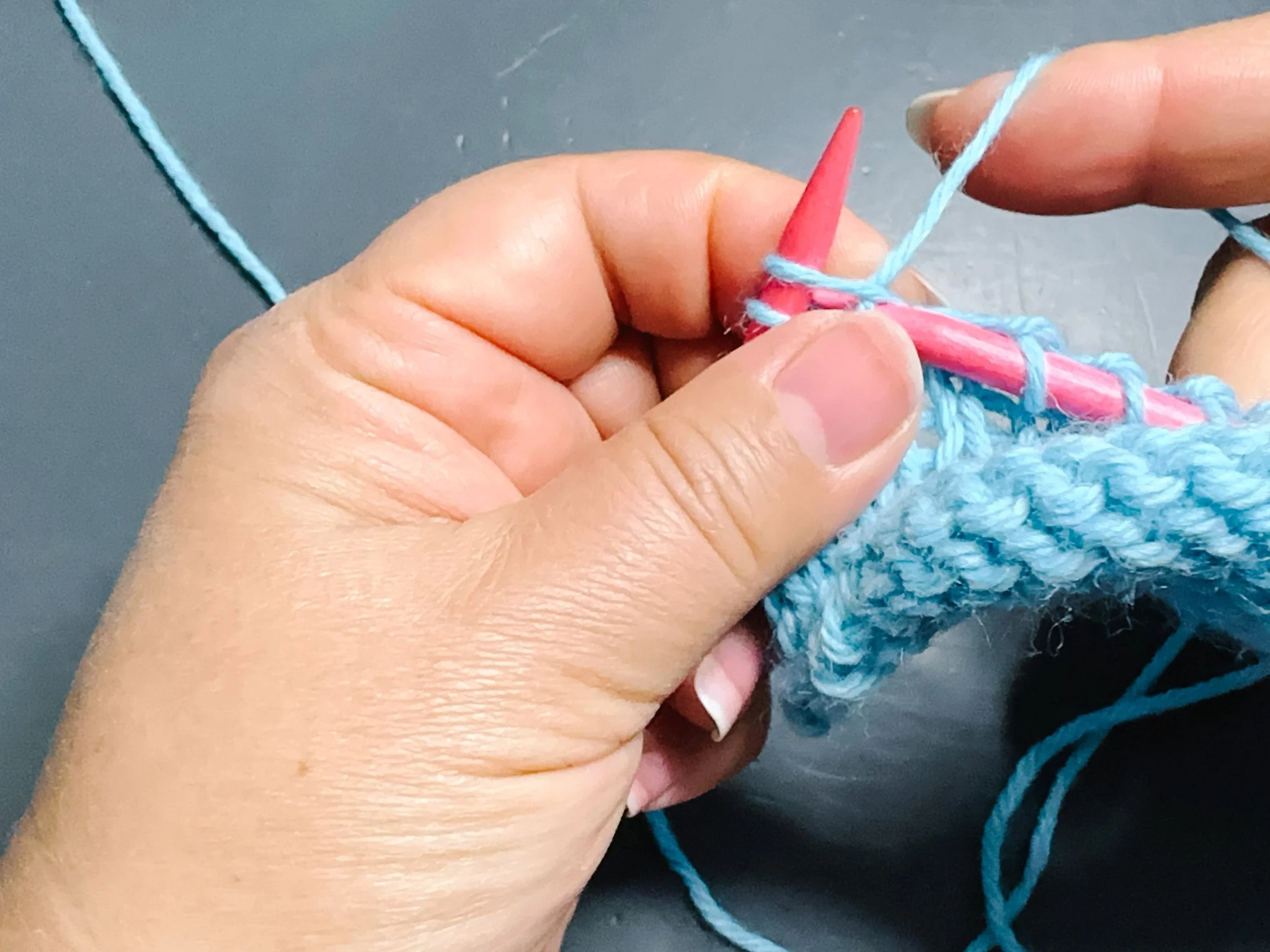
Knit and purl stitches are closely related. In fact, they are two sides of the same fabric.
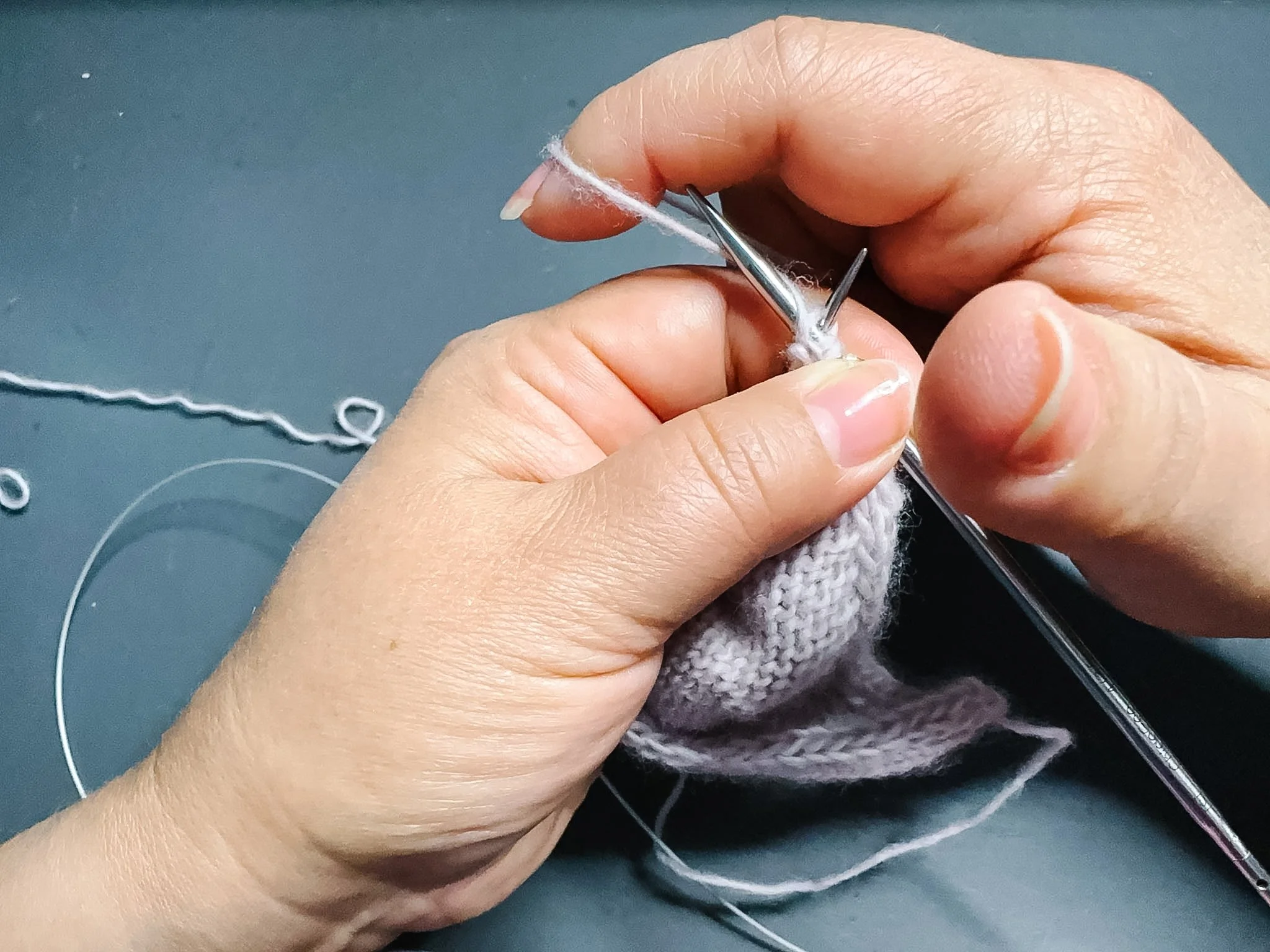
But the movements we use to create them are not always identical. Therefore changing their shape a bit.
We may hold the yarn at a different angle. We may move one needle farther than the other. We may tug the yarn after one stitch but not the next. Sometimes we unconsciously give the purl stitch a little extra room because it feels more awkward.
Our hands are clever, but they are also very good at inventing shortcuts without submitting the proper paperwork.
This is one reason the knit side and the purl side may produce slightly different stitch sizes.
The yarn is not misbehaving.
The needles are not plotting against you.
Your hands are simply using two related—but not identical—movements.
Look at the Whole Fabric
As in Part One, it helps to step back before deciding something must be fixed.
How noticeable is the difference?
Does it change the drape or density of the fabric?
Does the fabric still suit the project?
Is the variation bothering you because it affects the finished piece—or because you now know it is there and cannot stop looking at it?
Those are not the same problem.
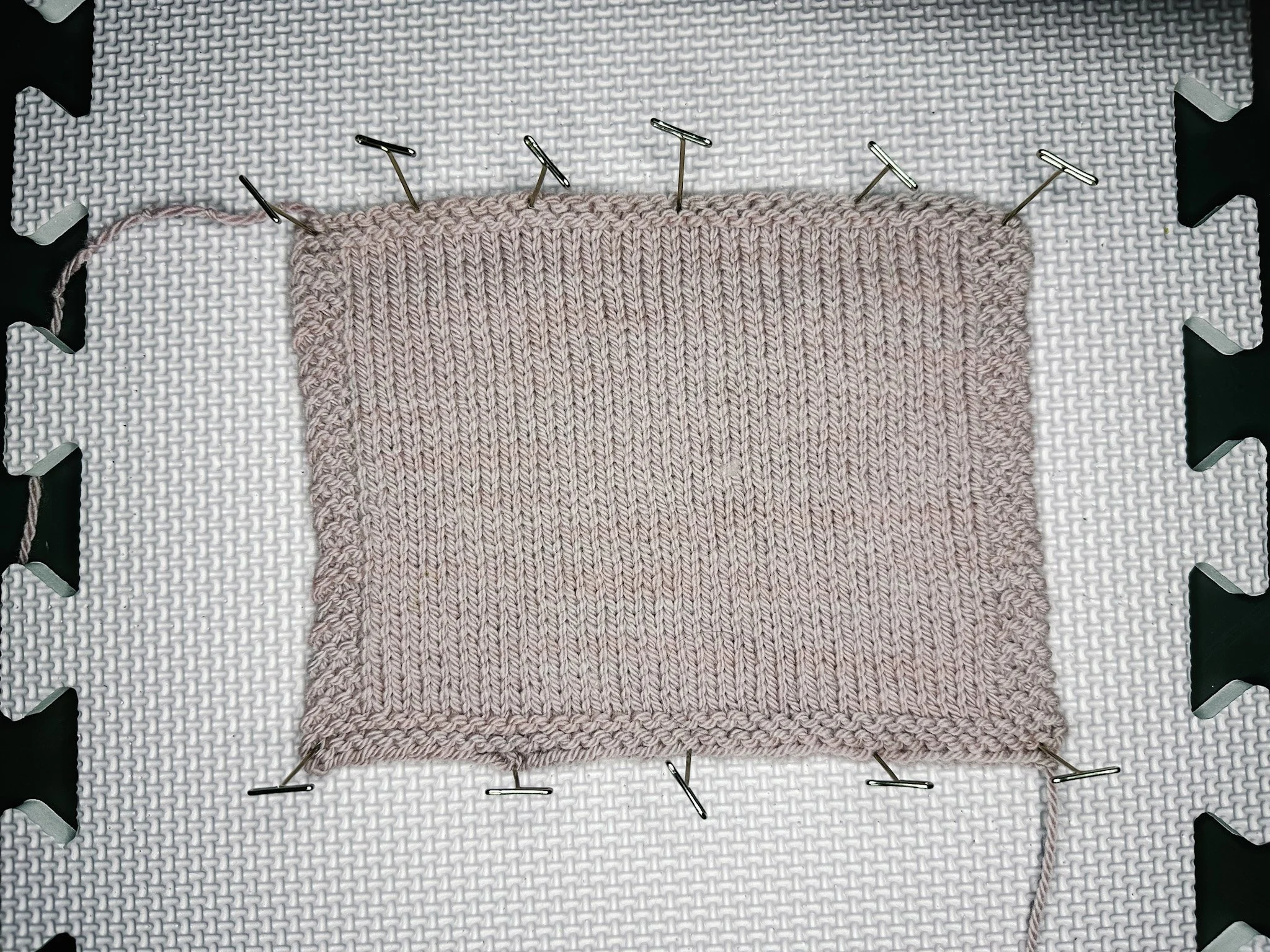
Sometimes the uneven rows soften after washing and blocking. The yarn relaxes, the stitches settle, and the difference becomes less obvious. Especially with wool.
Sometimes the rows remain visible, but the fabric still works beautifully.
And sometimes the difference is strong enough that we may want to explore how the stitches are being formed.
A rustic wool sweater may forgive—or even disguise—small variations. A smooth, light-colored yarn worked in plain stockinette may put every stitch under a spotlight.
Some yarns are discreet friends.
Others arrive with a microphone and announce everything.
Should You Try to Change it?
Maybe.
That is not a very dramatic answer, but knitting rarely gives us one solution that works for every person, yarn, and project.
If the fabric feels good, the gauge is working, and the unevenness is minor, you may decide to keep knitting.
More practice may naturally make the movements more consistent. Blocking may help the stitches settle. A different yarn may behave differently next time.
If the rowing is noticeable or affects the fabric you want, it may be worth becoming curious about your movements.
Are you pulling the yarn after one type of stitch?
Are your needles too slick or to grippy with that yarn?
Does your purl stitch use a larger motion than your knit stitch?
Do you grip the needles more tightly when purling?
Have you swatched with this yarn and wet blocked it yet? Things might just relax and even out.
You do not need to answer every question at once. Simply noticing what your hands are doing can be useful.
This is also where learning with another knitter or teacher can make a real difference. A small movement that is nearly invisible to you may be easier for someone else to spot.
Trying Another Style is not Starting Over
Sometimes knitters discover that another way of holding the yarn or forming a stitch feels more natural.
This can be surprisingly emotional and feel like something just clicked.
We become attached to the first method we learned. It can feel like our knitting identity.
“I am an English knitter.”
“I knit continental.”
“I hold the yarn this way because this is how my grandmother taught me, and I assume changing it would cause some sort of ancestral disturbance.”
But trying a different movement does not erase what you already know.
It gives you another tool.
You may try a different purling method and decide you love it. You may try it and immediately return to your old method with renewed appreciation after saying, no thank you to that method. Both results teach you something.
There is no prize for using the same knitting style for every yarn, stitch pattern, and project.Our hands change. Our projects change. What feels comfortable or effective can change too. Sometimes refinement means being curious enough to try another way.
I started out as a Continental knitter and due to a repetitive stress injury while purling, I completely switched to English and knit pain free again. Now knitting with both hands for stranded colorwork is a breeze. My knitting became more uniform and I even knit faster than I did before.
A Resource for Going Deeper
If you enjoy understanding the mechanics behind your knitting, Patty Lyons’ book, Patty Lyons’ Knitting Bag of Tricks, is a wonderful place to continue exploring. Patty has also been a guest in Sweater Club, and one of the things I appreciate about her teaching is the way she asks us to look beneath the surface of a stitch. Instead of simply telling us to move the yarn from here to there, she helps explain why the yarn behaves the way it does.
Her book digs more deeply into stitch formation, tension, and the small habits that can change our fabric. Once we know why something is happening, we have more choices about what—or whether—we want to change.
Your Knitting is not Tattling on You
Uneven rows can feel as though the fabric is announcing that we did something wrong. But your knitting is not tattling on you. It is showing you how the stitches were made.
Maybe the difference will settle with blocking.
Maybe it will become less noticeable with practice.
Maybe it will invite you to experiment with another way of forming a stitch.
Or maybe you will decide the fabric works perfectly well and continue knitting.
The important part is learning to notice what is happening without immediately turning that observation into a judgment.
Look at the fabric. Watch your hands. Ask whether the difference matters for the project you are making.
Then let curiosity—not panic—decide what happens next.
In Part Three of What Your Knitting Is Telling You, we will move beyond the fabric and pay attention to what our hands, shoulders, and bodies may be saying while we knit.