What I Learned About Wool in Spain and Why It Made Me Look at My Yarn Differently
One of the things I love about Sweater Club is that we do not only talk about how to knit sweaters.
Of course, we talk about sweaters—a lot. Fit, gauge, construction, yarn choices, fixing the things that inevitably go sideways... all the usual knitting adventures.
But I also want Sweater Club to help us understand more about the larger knitting world we are part of. That is how my recent conversation with Ramon and Bea from WoolDreamers came about.
I already knew a little of their story. I had also fallen in love with their yarns and brought a couple of them into my yarn shop at In Between Stitches. But the more I learned about WoolDreamers, the more questions I had. I wanted to understand what was happening with the wool industry in Spain. I wanted to hear more about this family whose lives have revolved around wool for generations. And I really wanted Sweater Club members to think about something I do not think many of us knitters spend enough time considering:
What actually happens between the sheep and the skein?
Because yarn does not magically appear beautifully twisted, labeled, and arranged by color on the yarn-shop wall—although, admittedly, that would make my job as a yarn-shop owner considerably easier.
So I invited Ramon and Bea to talk with us.
And I came away from that conversation with even more appreciation for the yarn in my hands.
Wool and Family
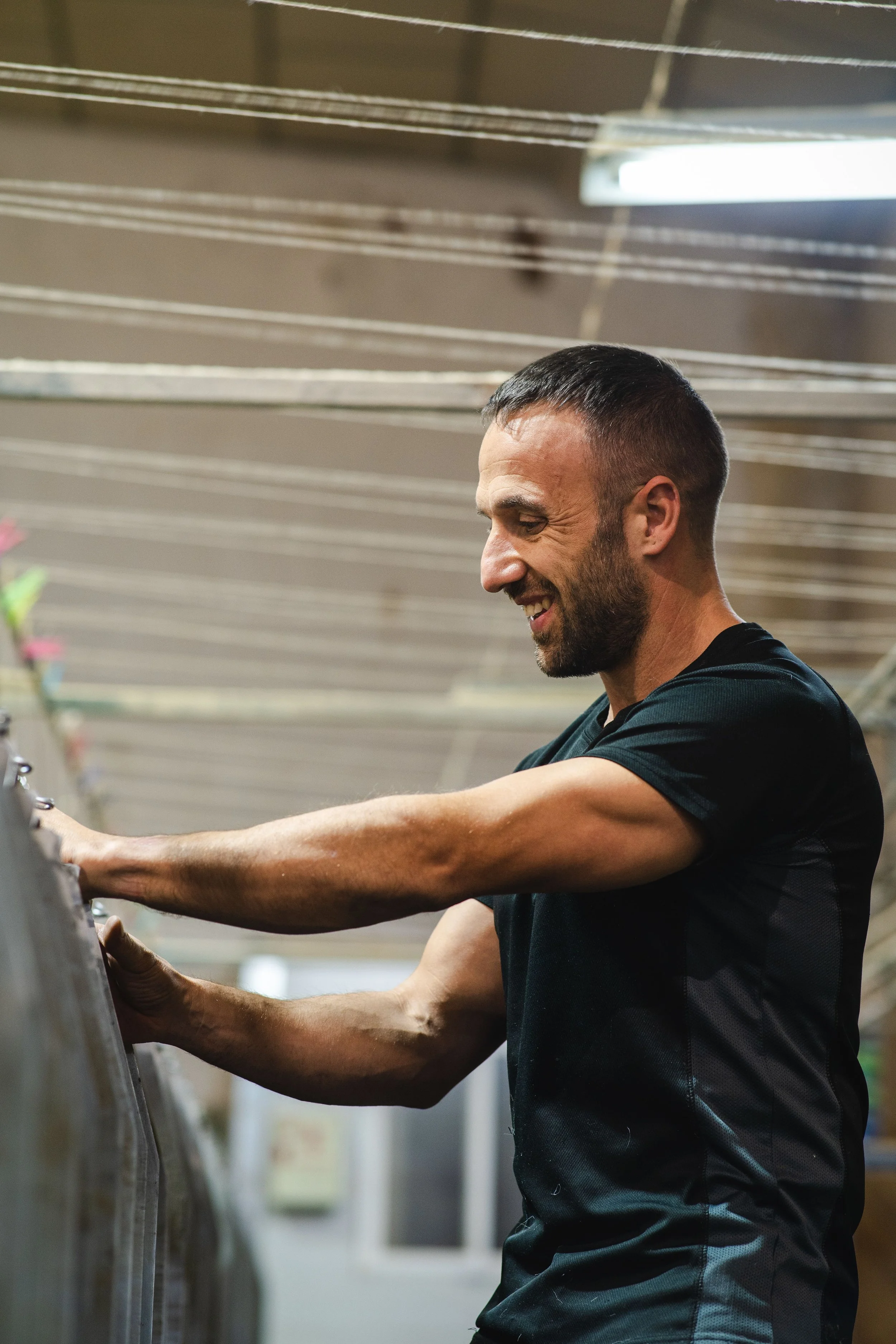
At one point Ramon described his life very simply:
“My life is only wool and family.”
That line really stayed with me.
Ramon grew up in his family’s mill, which has been working with wool for more than 100 years. He remembers being around nine years old and spending his summers learning to classify fleeces. The sorting table was too tall for him, so he had to stand on a box just to reach it.
I mean, seriously—while some of us were spending our summers riding bikes, playing with Barbies, and trying not to be bored, Ramon was learning how to classify wool.
And he was not doing it alone. His memories include his sister, cousins, father, grandfather, and uncle all working around him. Wool was not an industry he discovered later in life. It was simply part of growing up.
Years later, when he began WoolDreamers, he was looking at an industry that was shrinking. Shepherding was declining. Wool-processing infrastructure was disappearing. And at the same time, Ramon had become a father himself.
He wanted his son to have the possibility of a future in wool, if that was something he someday chose.
That is where this story becomes about much more than starting a yarn company. It is about taking generations of knowledge and asking:
How do we make sure there is somewhere for this knowledge to go next?
More Than 100 Wool-Scouring Mills... Down to Three
This was one of those moments in the interview where I thought, Wait. Did I hear that correctly?
According to Ramon, Spain once had more than 100 scouring mills—mills that wash raw wool.
Today, there are three.
Three.
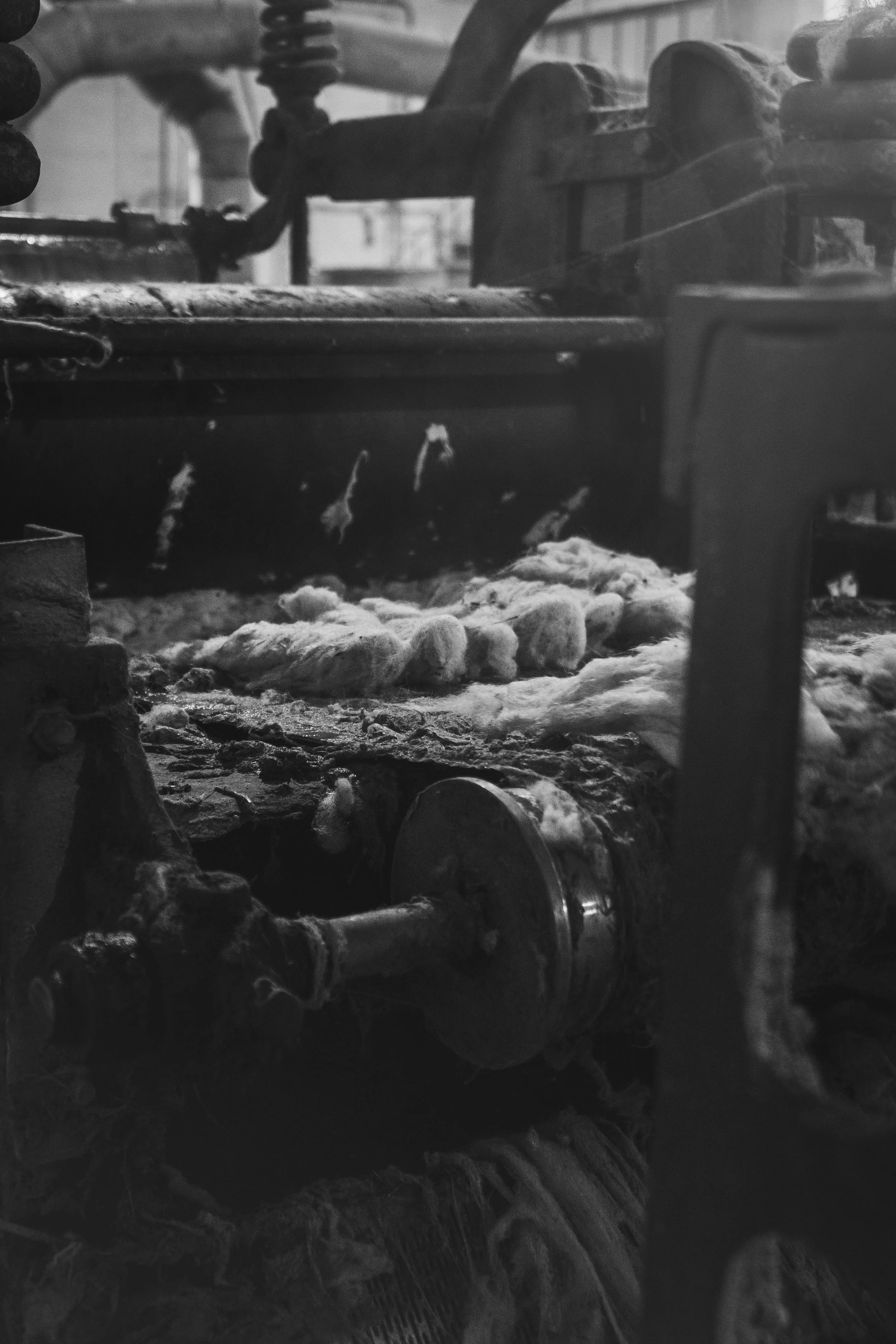
His family’s mill is especially unusual because they are still able to handle so many parts of the wool process within the family operation, from sorting and washing the wool to dyeing, carding, spinning, and weaving.
Think about what disappears when those facilities disappear. It is not only the machinery. It is the knowledge of how to look at a fleece and understand what you are holding. How wool should be sorted. How fibers can be blended. How color will behave. How wool should be spun to create the yarn you are trying to make.
That kind of knowledge is built over years and, in many cases, over generations.
And this is one of the things I really admired while listening to Ramon. His goal is not simply, How do I sell more WoolDreamers yarn? He talked repeatedly about wanting to bring value back to wool itself.
Their mill works with other small wool projects that do not have their own processing equipment. They help connect people with shepherds. They create opportunities for people to learn more about wool and the traditional systems surrounding it.
In other words, keeping their mill alive helps create opportunities beyond their own company.
That feels important.
So...What Actually Happens After the Sheep Is Shorn?
This was one of the questions I particularly wanted Ramon to walk us through during the interview, because as knitters, we enter this process very late.
Our version usually looks something like this:
Walk into yarn shop. See yarn. Squeeze yarn. Fall in love with yarn. Buy yarn. Possibly hide yarn from family members. Cast on.
There are quite a few steps missing there.
Before we ever get our hands on that skein, the sheep have been raised and cared for. They are shorn. The fleeces are collected from different farms. Then someone has to open those fleeces and classify the wool.
And wool is not simply...wool.
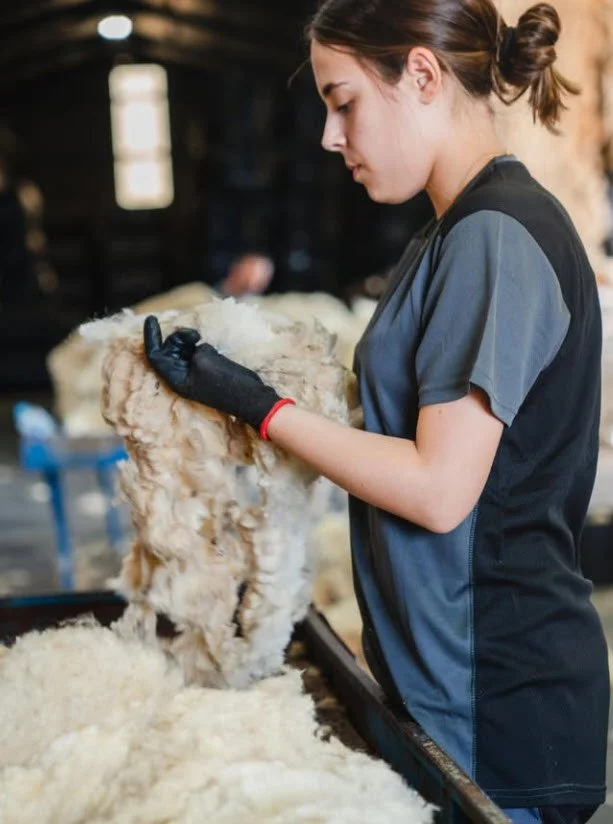
Different parts of a fleece can have different qualities. Different sheep produce different fibers. The wool has to be evaluated and separated according to how it can best be used.
Then comes scouring, which is the process of washing the raw fleece and removing grease, dirt, and everything else a sheep has managed to collect while spending its days being, well, a sheep.
From there, depending on the yarn being created, the wool may be dyed or blended, carded, spun, plied, washed again, and finished.
And at every stage, someone is making decisions.
That was probably one of my biggest takeaways from this conversation:
A beautiful yarn is the result of a lot of decisions made by people who understand wool.
Long before we decide whether we are going to knit a cardigan or a pullover, someone else has already spent an enormous amount of time deciding what that particular fiber can become.
The Stories Inside the Yarn
This is also why I find WoolDreamers yarns so interesting. The yarn itself often carries a piece of the larger story.
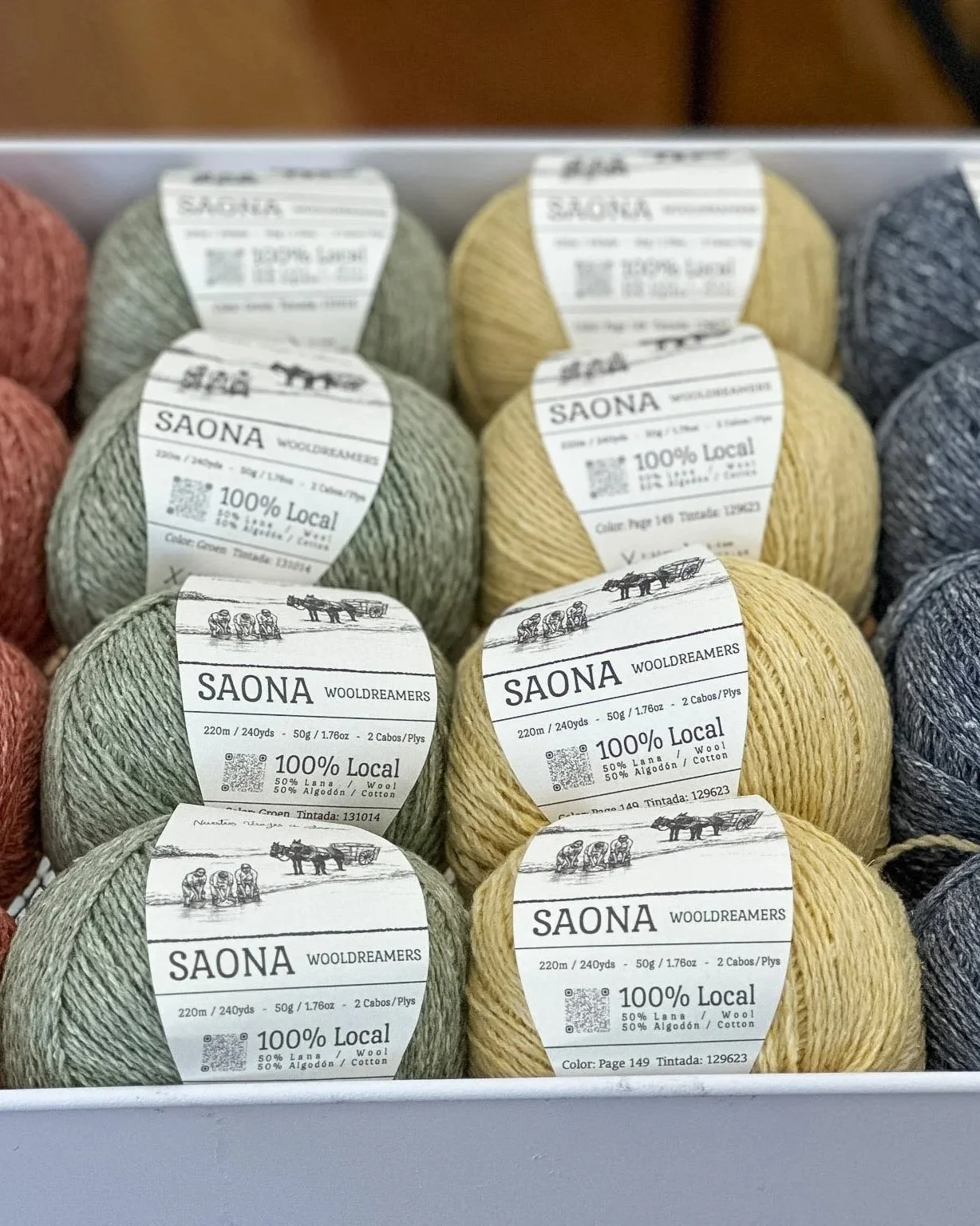
Saona combines Spanish wool with cotton grown in Andalusia. The cotton is left undyed while the wool is dyed, which gives Saona those beautiful, soft, heathered colors. I love this yarn for our California climate because it is one of those wonderful transitional-weather yarns. You still get the warmth and character of wool, but the cotton gives the fabric breathability and keeps it from feeling too heavy.
Spring? Yes. Fall? Absolutely. One of those California days where it is 52 degrees in the morning and somehow 78 by mid-afternoon? Also yes.
But then Ramon told us where the name came from.
Saona is named after the river where his grandfather, uncle, and father used to wash their wool fleeces by hand.
And suddenly that name on the label means something completely different. It is not just branding. There is a family memory sitting inside that skein.
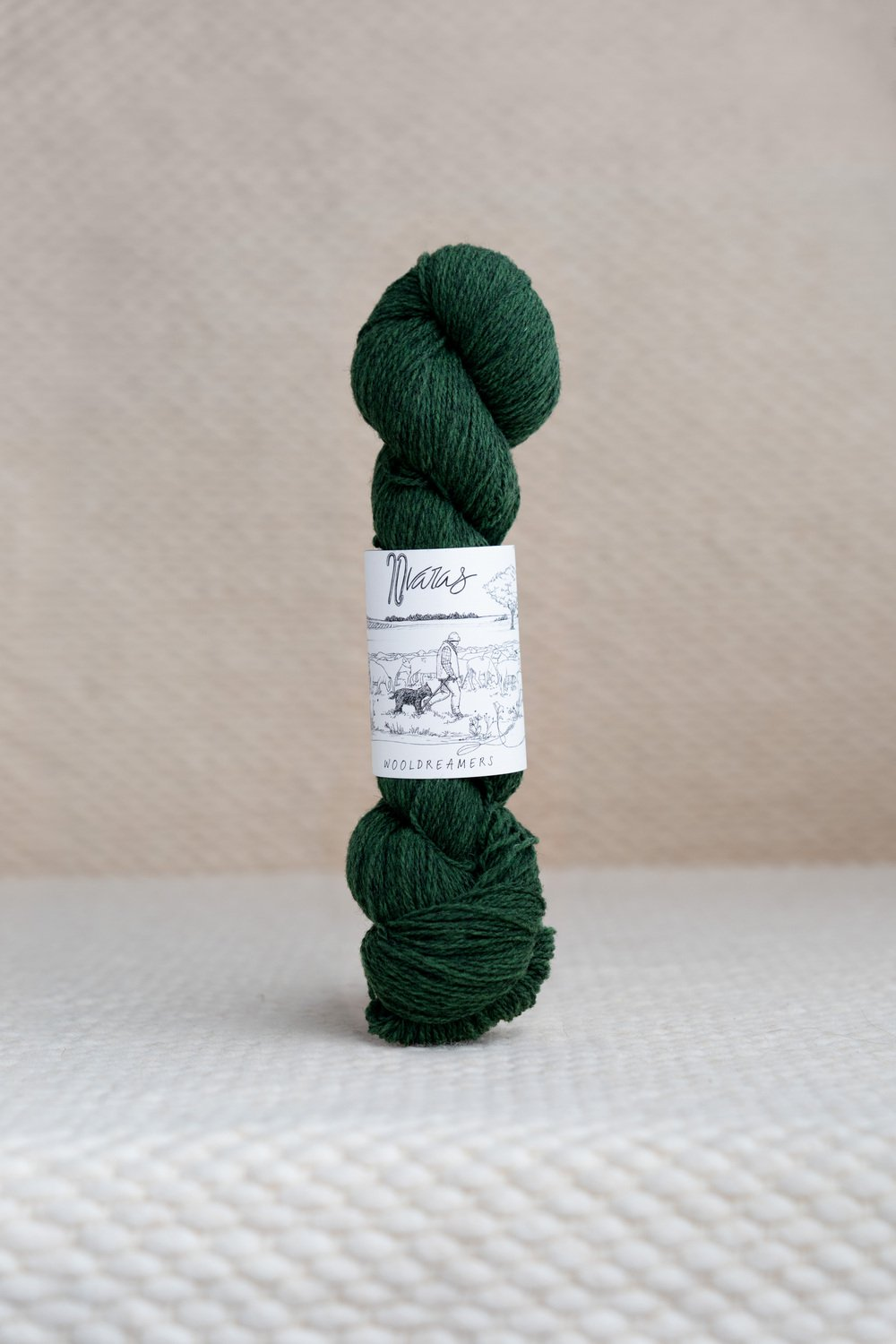
The story behind this yarn is tied to transhumance, the tradition of shepherds moving seasonally with their flocks across Spain. These sheep are not staying in one pasture all year. The shepherds travel with them, moving north and south according to the seasons and continuing a way of managing sheep and landscape that has existed for generations.
That alone gives you a lot to think about while you are knitting.
But I also happen to really like the yarn itself. It has this wonderfully woolly, slightly rustic appearance, so you might pick it up expecting it to feel fairly rustic too.
And then you knit it. Wash it. And—surprise.
It is remarkably soft and very lightweight.
It also comes in 50-gram skeins, which makes it such a fun option for Fair Isle and other colorwork projects because you can play with several colors without needing a giant skein of every single one.
And Ramon spent more than two years developing 90 Varas, working through different blends and colors and actually knitting with them to see how the yarn behaved.
Two years.
The next time I get impatient because my swatch is taking too long, I may need to remind myself of this.
We Are Part of This Story Too
Toward the end of our conversation, Bea brought up something that I think is really important.
For years, Ramon had been asking why Spanish wool was not being used more. How do you get people interested in it again? How do you help create value for something that has been increasingly treated as a byproduct or, in some cases, a burden?
Part of the answer is us.
Knitters. Crocheters. Weavers. Makers.
We are at the far end of this very long chain, but we are still part of it.
I am not saying every yarn purchase has to turn into a research assignment. Please do not stand in your local yarn shop frantically Googling the life history of every sheep before you are allowed to buy a skein.
Sometimes you love the color. Sometimes you love the feel. Sometimes you have absolutely no business buying more yarn and somehow it comes home with you anyway.
I understand.
But I do think there is something wonderful about becoming more curious about our materials. Where did this wool come from? Who cared for the sheep? Where was it washed and spun? What had to happen for that yarn to eventually end up running through our fingers?
The more I know, the more appreciation I have for what I am working with.
I Went Looking for Wool and Found a Family Story
I started this interview because I wanted to learn more about the state of wool in Spain.
And I did.
But what I have continued thinking about afterward is how closely wool, family, knowledge, and community are all tied together.
A little boy standing on a box so he could reach a fleece-sorting table. A father teaching his children what he knows. Shepherds still traveling with their flocks. A mill that has survived while so many others have disappeared. A family asking how they can make sure wool still has value for the next generation.
And then, eventually, there is us.
Sitting on the couch with our knitting.
We may be the last hands in the sheep-to-skein journey, but we are part of the story too.
And I think knowing a little more about everything that came before our stitches makes those stitches feel just a little more special.
Want to Keep Exploring?
You can visit WoolDreamers to learn more about Ramon, his family, their yarns, and the work they are doing with Spanish wool.
If you would like to meet a couple of their yarns in person—or add some to your own knitting basket—you can explore Saona in the shop.
This conversation with Ramon and Bea was originally recorded for Sweater Club. Along with knitting sweaters and building our skills, these are exactly the kinds of conversations I love bringing to the Club—opportunities to meet designers, makers, and people throughout the fiber industry so we can understand a little more about the world behind our knitting.
And if you would like more knitting education, fiber stories, behind-the-scenes notes, and whatever else I have become curious about lately,