Is Your Knitting Tension Actually a Problem?
Part One of the Series: What Your Knitting Is Telling You
We have all done it. Held our knitting up to the light. Tilted it one way. Tilted it the other way. Squinted at one questionable stitch as though it has personally betrayed us.
Then comes the question: Am I doing this wrong?
Tension is one of those knitting words that can sound like a test. We hear about “good tension,” “even tension,” and sometimes even “perfect tension,” as though experienced knitters create identical little stitches while woodland creatures quietly applaud.
But tension is not really about making every stitch look exactly the same. It is about the relationship between your hands, your yarn, your needles, and the fabric you are trying to create.
So before we decide anything needs to be fixed, let’s ask a better question: Is your tension actually causing a problem?
Your Stitches have Something to Say!
When we worry about tension, we tend to inspect our stitches as though they are suspects in a very tiny yarn-related crime.
That stitch is bigger.
That one is leaning.
And what exactly is happening over there?
Appearance can give us useful clues,
but tension is not only about how the stitches look.
It is also about how the knitting feels while we are making it.
If your tension is very tight…
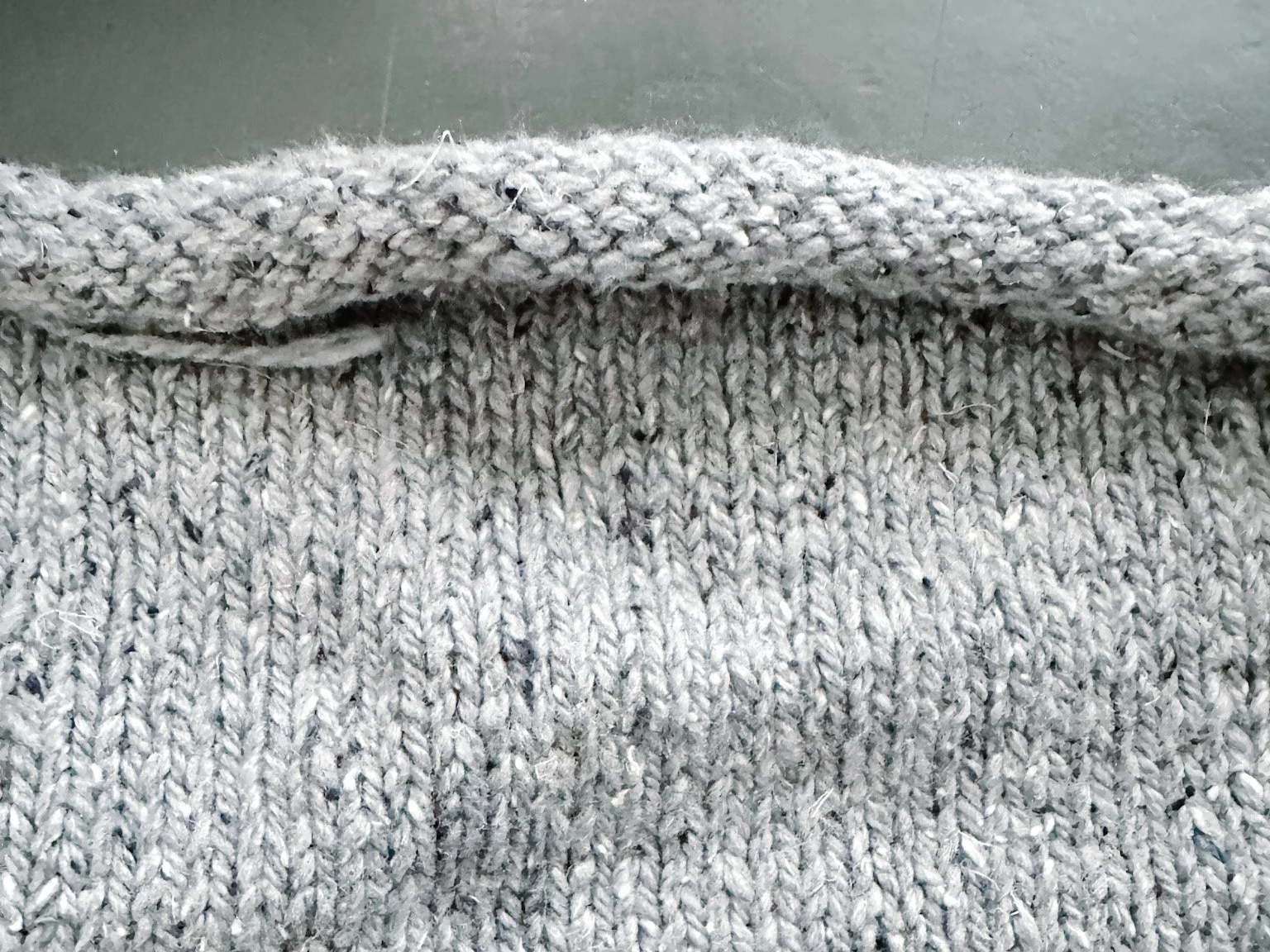
Getting the needle into the next stitch may feel like trying to squeeze into jeans that have mysteriously shrunk in the wash.
The stitches refuse to budge, and your hands are doing far more work than they signed up for.
If your tension is very loose…
The stitches may be a little too eager to explore life beyond the needles.
They can slip off easily, feel floppy, or create a fabric that is more open than you intended.
Somewhere between those two experiences is tension that feels cooperative.
Not necessarily perfect. Cooperative.
The stitches move along the needles without putting up a fight, but they stay secure enough that you are not chasing escapees across the floor.
Instead of asking only, “Do my stitches look even?” try asking:
Are the stitches moving comfortably?
Does the fabric feel the way I hoped it would?
Are my hands relaxed, or am I white-knuckling my wool?
Does this fabric suit the project it is becoming?
Your stitches do not need to stand in perfectly identical rows like they are posing for school pictures. They need to create a fabric that works, for the project and for the person making it.
The Fabric Gets a Vote
A single stitch does not tell us very much on its own. It is part of a fabric, and that fabric may be soft and fluid, firm and structured, dense and warm, or open and airy. None of those qualities is automatically better than another. They simply work for different things.
A beautifully drapey fabric may be exactly what you want for a scarf.
That same fabric might not give you the structure you want in a sweater neckline.
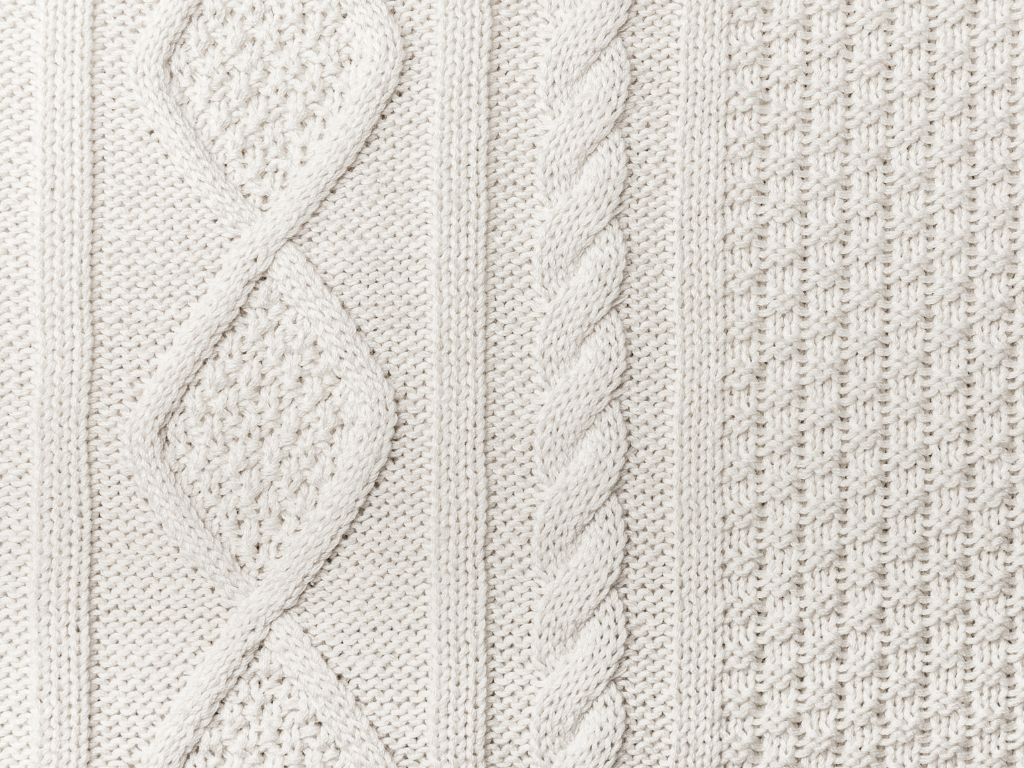
A firm fabric may work wonderfully for a mitten.
Use it for an entire cardigan, though, and you may find yourself knitting a small suit of armor.
This is why there is no single “correct” tension for every yarn and every project.
When I teach sweater knitters, I encourage them to spend time looking at and touching the fabric—not only checking the numbers.
Does it feel like something you would want to wear?
Does it move the way you hoped?
Can you imagine it becoming the finished garment?
The numbers matter, especially in a sweater, but the fabric matters too. Learning to notice both is part of learning to trust yourself as a knitter.
When Gauge Matters
Gauge tells us how many stitches and rows fit within a particular measurement. It matters most when size and fit matter. In a sweater, cardigan, fitted hat, or another shaped project, a small difference in gauge can become a much larger difference across the finished piece. A quarter of a stitch may not sound dramatic. Multiply it across an entire sweater, though, and suddenly that small difference has invited several friends. This does not make gauge a pass-or-fail test.
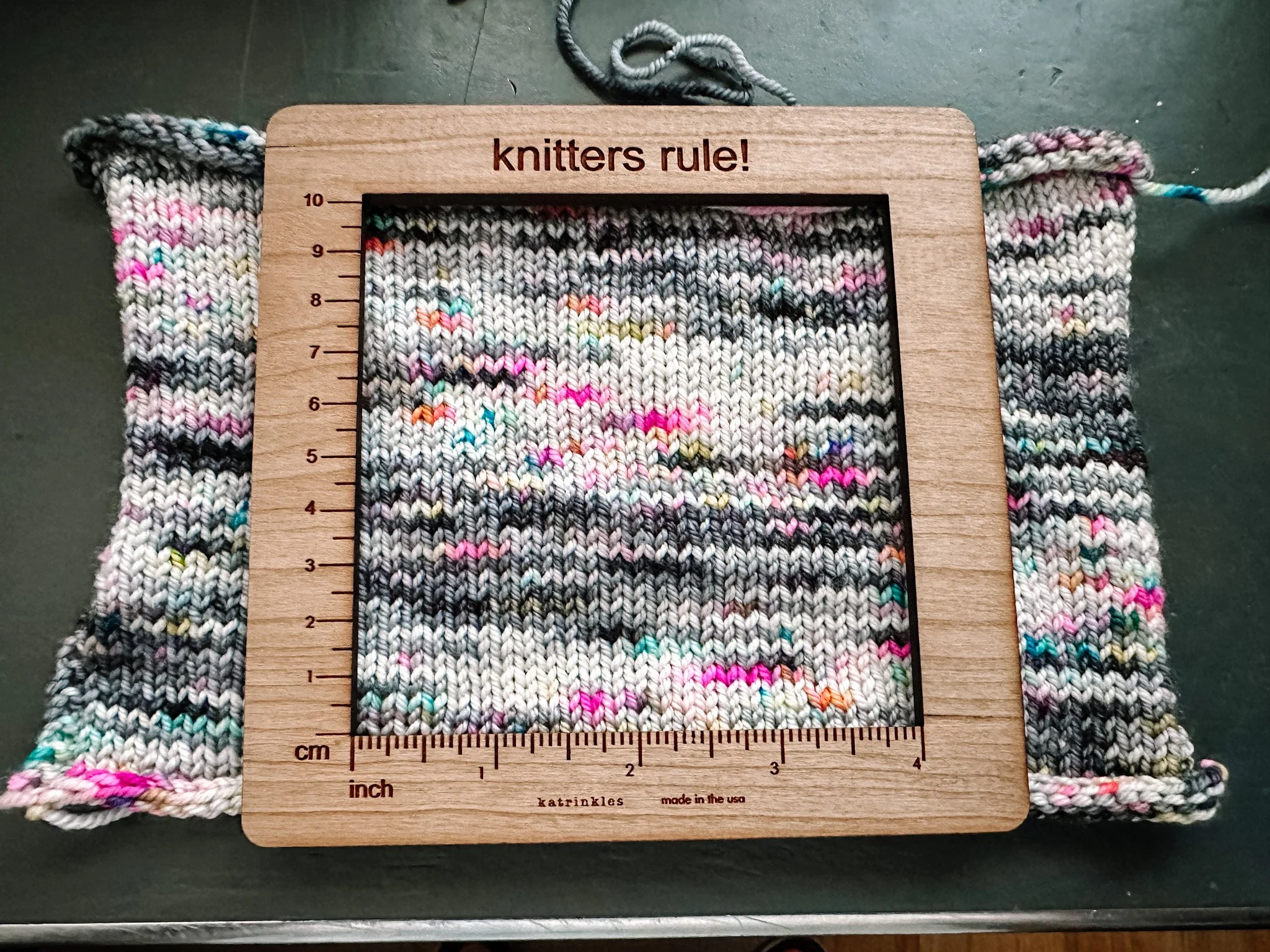
Gauge is information.
It helps us understand whether the fabric we are making is likely to become the size and shape we expect. There are also projects where exact gauge may matter less. A scarf, blanket, dishcloth, or simple cowl can often tolerate more variation, especially when the finished dimensions are flexible.
Gauge still affects the fabric, the size, and the amount of yarn we use. But the consequences of being slightly different may be smaller.
Not every project requires the same level of precision.
Sometimes close enough really is close enough.
A sweater, however, tends to be a little more opinionated.
Uneven Does Not Always Mean Incorrect.
Newer knitters often see uneven stitches and assume they need to correct them immediately. Friend, we are not going to panic over one stretched-out stitch today. Sometimes unevenness is worth exploring. It may point to a difference in how certain stitches are formed or how the yarn is moving through the hands.
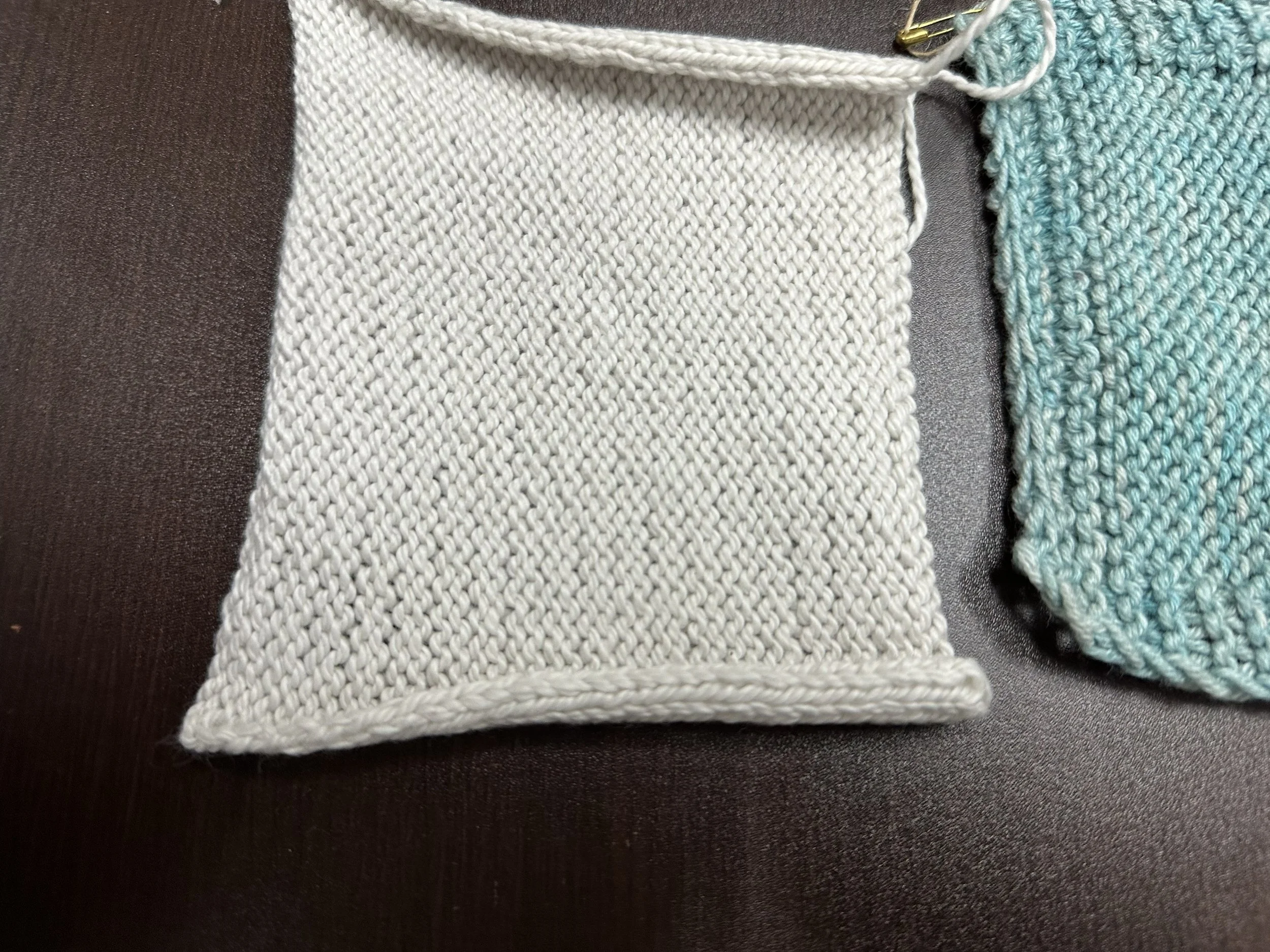
But uneven stitches can also be part of learning.
Knitting asks our hands to coordinate several small movements at once. We hold the needles, guide the yarn, enter the stitch, form the loop, and move the completed stitch along—all while pretending this is a relaxing hobby.
At first, every part of that process requires attention. With practice, the movements become more familiar. Our hands begin to understand how much space they need, and the yarn starts to move more naturally. The fabric often becomes more consistent, not because we demanded perfection from ourselves, but because we gave ourselves time.
Fresh knitting also does not always show us its final form. Stitches can look uneven while they are still sitting on the needles. Washing and blocking give the yarn and stitches a chance to settle into the fabric. Now, blocking is wonderful, but it is not magic. It cannot turn the wrong gauge into the right one, fix every tension issue, or erase every decision we made while knitting—no matter how politely we ask. But it can soften some of the small variations that look much more dramatic while the knitting is still in progress.
Sometimes the fabric just needs a bath and a little personal space.
Honestly, don’t we all?
What Problem are We Trying to Solve?
This may be the most useful question of all.
If the stitches are slightly uneven but the fabric feels good, the gauge works, and the knitting is comfortable, there may not be a problem. There may simply be variation.
If the needles are difficult to insert, the fabric is much firmer or looser than intended, your hands are working too hard, or your measurements are drifting far away from the pattern, then your tension may be giving you information worth exploring.
We do not need to fix every difference we can see. Refinement begins with attention.
We notice what is happening. We consider what the project needs. Then we decide whether a change would genuinely help. Your knitting tension is not a grade. It does not tell us whether you are talented enough, experienced enough, or a “real knitter.” It tells us something about the fabric you are making today, with this yarn, these needles, and the movements your hands currently know. That information may change as you knit more, work with different fibers, try new tools, and become more familiar with your own movements.
That does not mean you were knitting incorrectly before. It means you are learning how you knit. So the next time you notice an uneven stitch or fabric that feels different from what you expected, pause before deciding something has gone wrong.
Look at the fabric.
Notice your hands.
Think about what the project needs.
Your knitting may not be asking you to fix everything.
It may simply be telling you something worth noticing.
In Part Two of What Your Knitting Is Telling You, we will look at why knit and purl rows can sometimes appear different, and what those uneven rows may be trying to tell us.
If You Enjoyed this Post,
I'd love to send more sweater knitting tips, tutorials, and encouragement straight to your inbox. My newsletter is where I share practical knitting advice, helpful resources, and a little extra support to help you knit more sweaters with confidence.