What Should You Knit With This Fall? A Guide to Choosing the Right Fiber
There is something about the first hint of fall that makes knitters want to cast on something new.
The mornings feel cooler. The evenings arrive a little earlier. The light begins to change, and suddenly that basket of yarn in the corner seems to be calling your name. Apparently, yarn gets louder as the days get shorter.
Of course, fall does not feel the same everywhere. Here in Northern California, a crisp morning can turn into a surprisingly warm afternoon. You may leave the house happily bundled up at breakfast and be carrying that extra layer over your arm by lunchtime. In other places, fall brings genuinely cold temperatures and the return of heavier knits.
That is why choosing yarn for a fall project is not simply a matter of finding the warmest, woolliest yarn you can. The right fiber depends on your climate, the kind of project you are making, and how you want to wear it when it is finished.
Before you fall completely in love with a color—and yes, I know that may already have happened—let's look at what different fibers bring to your knitting.
Begin With the Fall Weather You Actually Have
When we picture fall knitting, many of us imagine cool air, changing leaves, and piles of cozy wool. It is a lovely picture, but it may not match the weather outside your own window.
For some knitters, fall is the beginning of several truly cold months. For others, it is more of an in-between season: cool in the morning, warm in the afternoon, and cool again once the sun goes down. A cozy knit that feels wonderful on an evening walk may feel like a personal sauna inside the grocery store unless you're hanging out in the freezer aisle.
Before choosing your yarn, think about when and where you expect to wear the finished project.
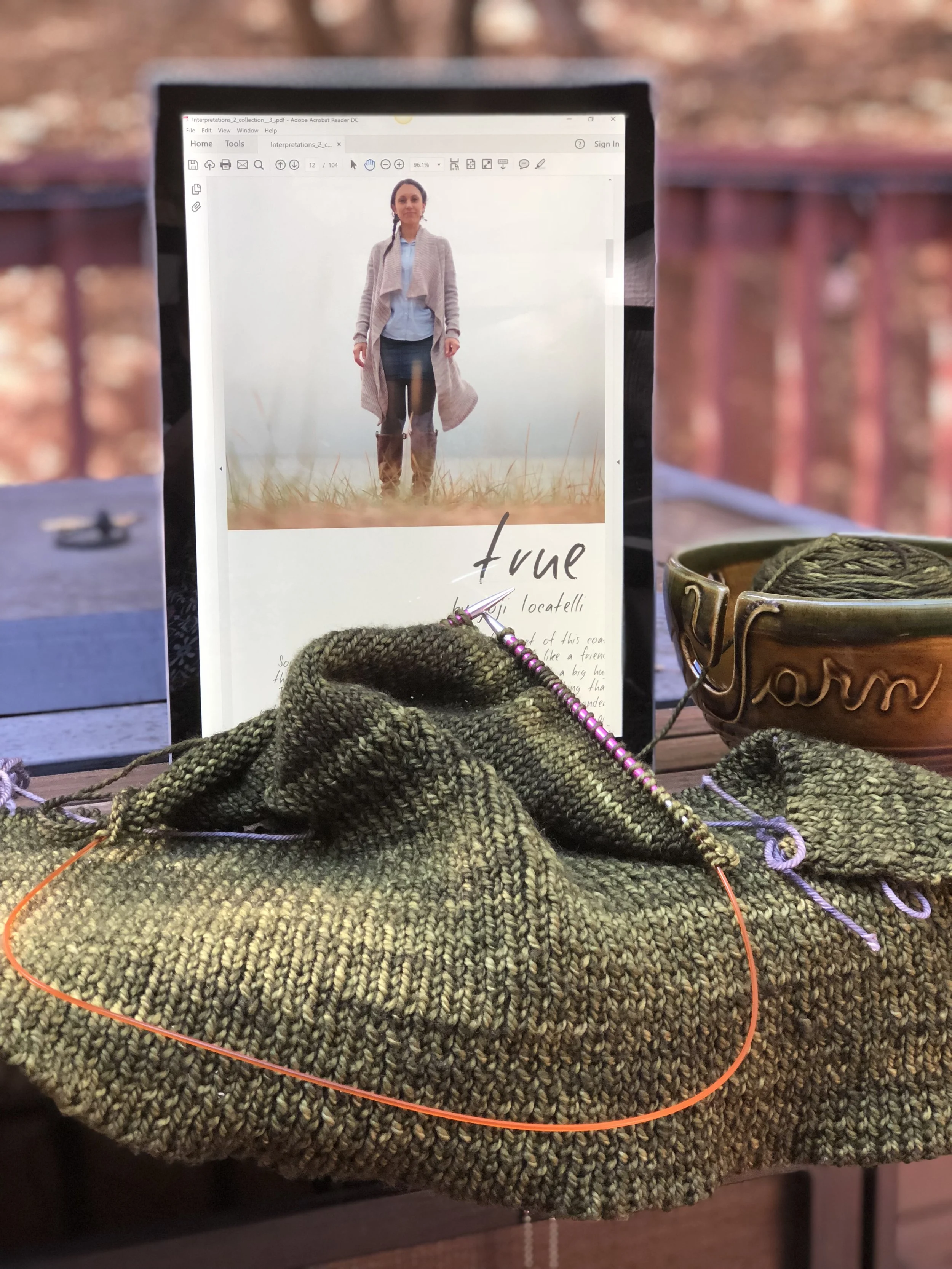
Will it be a shawl for cool evenings? A hat or pair of mittens for genuinely cold mornings? A cardigan you can take on and off? Perhaps you are ready for a larger project such as a sweater or blanket—or maybe you want a quick cowl that lets you enjoy a beautiful yarn without committing to months of knitting.
There is no single perfect fall fiber—only the fiber that makes sense for the project you want and the way you live. Of course, if the fiber looks like a pumpkin and tastes and smells like pumpkin spice, then it is a perfect fiber for fall, but alas, I have yet to find it.
Cotton: Comfortable and Breathable
Cotton is often thought of as a summer fiber, but it can be a wonderful choice for fall—especially in warmer climates or for projects worn indoors. It is breathable, absorbent, and comfortable against the skin. A cotton top, wrap, or lightweight sweater can give you that cozy covered feeling without holding as much warmth as many animal fibers.
Cotton behaves differently from wool, though. It does not have the same natural elasticity or memory, so it may not spring back into shape as readily. In a large garment, cotton can also become heavy and may stretch under its own weight.
That does not make cotton a poor choice. It simply means the project, gauge, and construction matter. A swatch can show whether the fabric feels fluid and comfortable or heavier than you would like. And yes, this is when I gently remind you to wash your swatch. You knew I was going to say it eventually. Treat the fiber as you plan on caring for the project.
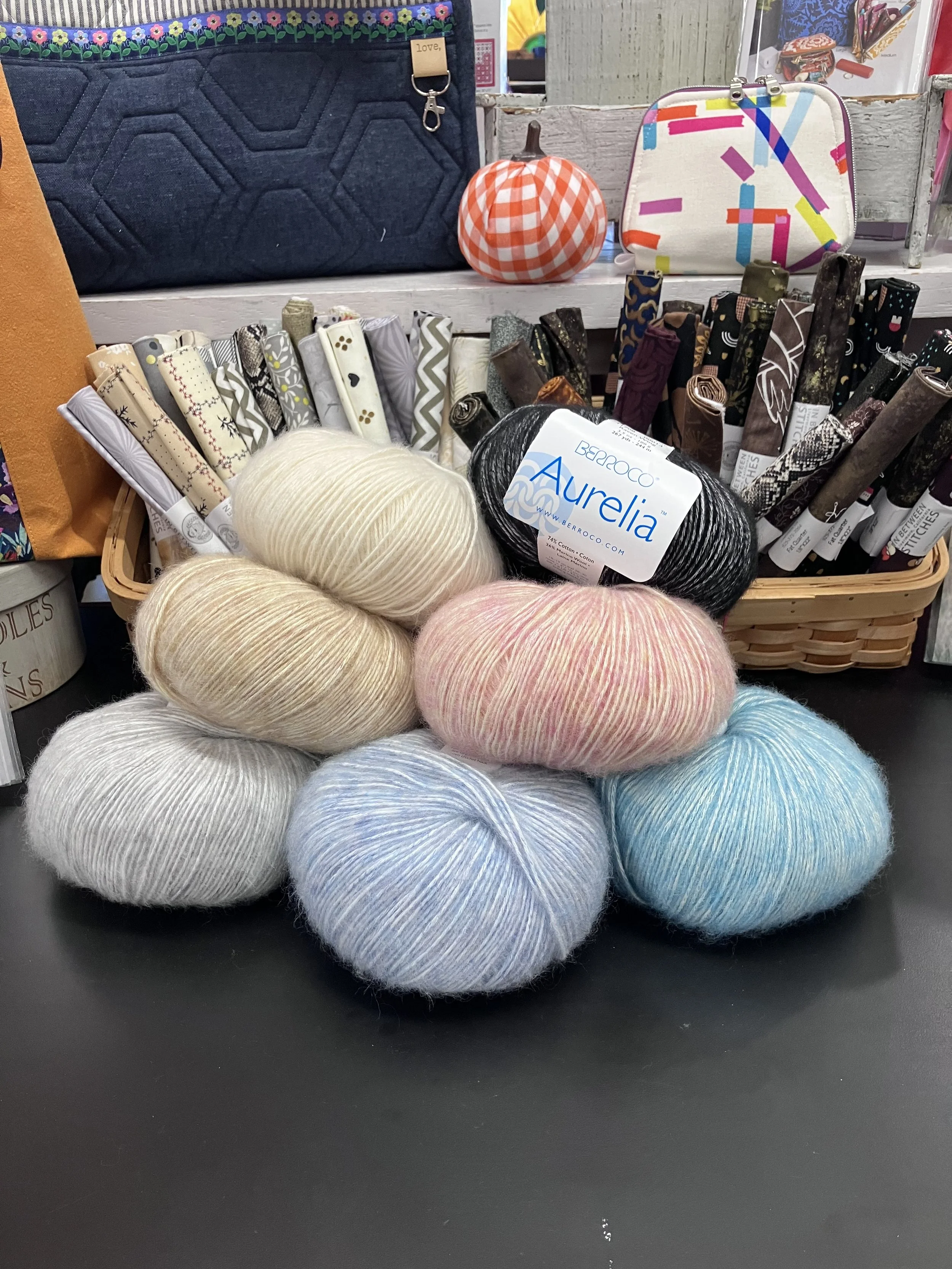
One example is Aurelia by Berroco, a yarn I carry in the shop. It is 74% cotton and 26% merino wool, so it has the soft, cozy appearance we often associate with wool while remaining surprisingly breathable because of its high cotton content. It is a lovely reminder that a yarn can look warm and woolly without necessarily creating a heavy or overly warm fabric.
Linen: Lightweight With Beautiful Drape
Linen is another fiber we associate with summer, but it can carry beautifully into early fall. It is breathable and lightweight, making it useful when your version of autumn still includes warm afternoons.
Linen often feels crisp while you are knitting it, but it softens with washing and wearing. Over time, it can develop a relaxed, lived-in quality that is quite beautiful. It creates lovely drape, which makes it well suited to shawls, wraps, easy-fitting pullovers, open cardigans, and other projects designed to move rather than hold a firm shape.
Like cotton, linen has little natural elasticity. Ribbing may not pull in as it would in wool, and the finished project may relax with use. That may be exactly what the design intends, but it is something to know before you have knitted the whole thing and started negotiating with it. A sloppy hat ribbing can be a sloppy hat that falls off and never comes out of your drawer again.
If you enjoy fabric with soft movement and do not need a lot of warmth, linen or a linen blend can be a lovely bridge between summer and fall.
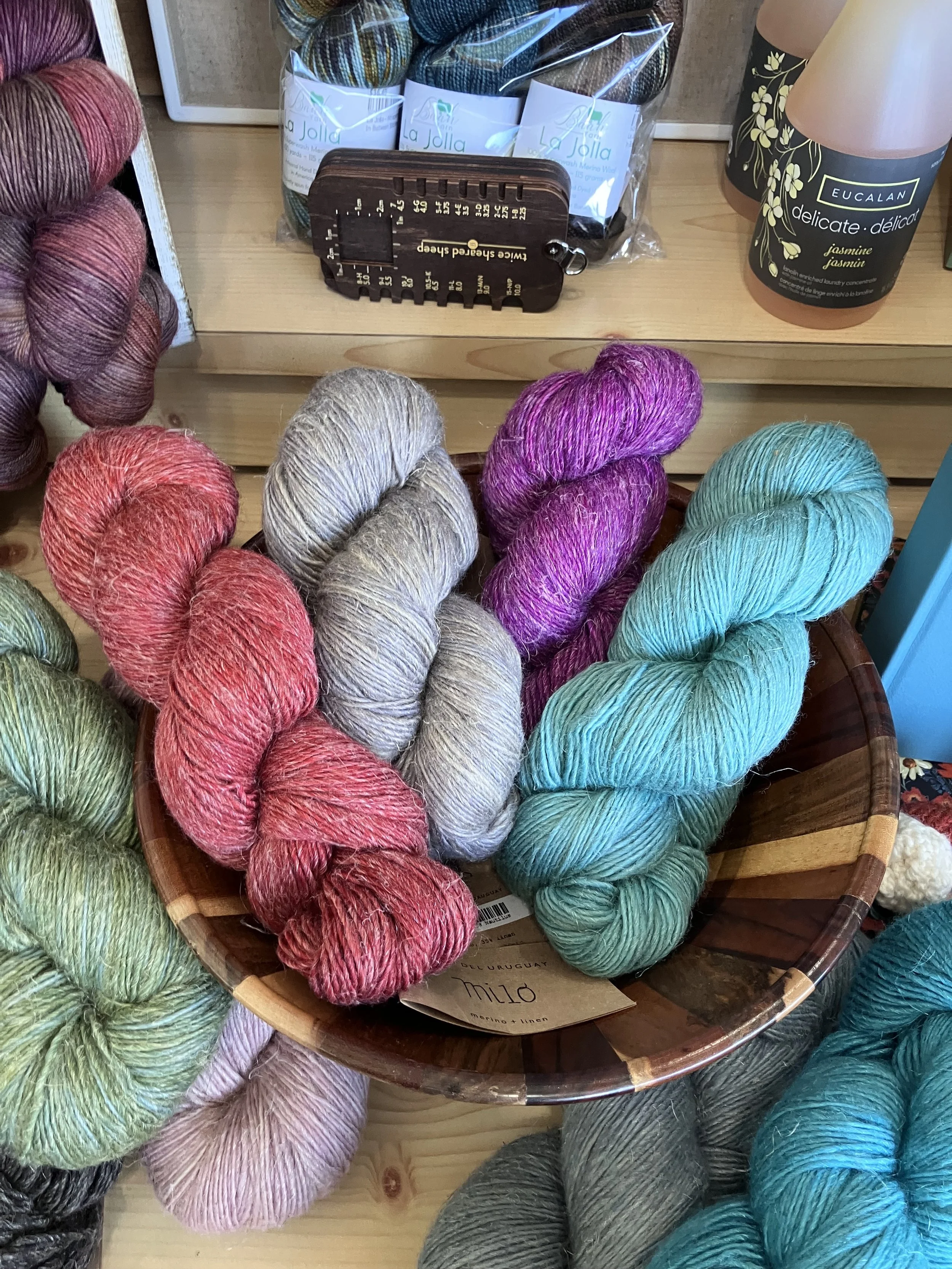
One of my favorite examples is Milo by Manos del Uruguay, a blend of 65% merino wool and 35% linen. I knitted a sweater with it last fall, and it has become one of my favorite things to wear now that our Northern California weather has settled into those wonderfully cool mornings and evenings. The merino gives it that cozy sweater feeling, while the linen keeps the fabric breathable and comfortable as the temperature changes.
Wool: Warmth Is About More Than Yarn Weight
Wool is a natural favorite for fall knitting—and it is certainly one of my favorites—but wool can become too warm surprisingly fast. The good news is that choosing a wool yarn for fall is not simply a choice between lightweight and bulky. Yarn weight matters, but the way the yarn is made matters too.
When I am choosing a superwash wool for our milder fall weather, I tend to look for fingering- or sport-weight yarn. Many superwash yarns create a smooth, fluid fabric that can become dense—and therefore warmer—at heavier weights. A lighter yarn gives me the elasticity and stitch definition I love about wool without surrounding me with quite so much wool. Because sometimes the difference between cozy and why am I so hot? is surprisingly small. I want to wear the garment, not rip it off and throw it across the room.
With a non-superwash wool, I may be able to use a DK-, worsted-, or even bulky-weight yarn if its construction is light and airy. A woolen-spun yarn contains more air and less actual fiber than a dense yarn of the same thickness. Chainette-style yarns can create a similar effect: they look substantial and cozy, but their airy construction keeps the finished garment from feeling as heavy or dense as its yarn-weight label might suggest.
That does not mean every woolen-spun or chainette bulky yarn will be right for a warm fall day. Wool is still warm, and gauge and fabric density still count. But you cannot judge the finished project by yarn weight alone. A lofty worsted-weight yarn may produce a lighter fabric than a dense, tightly plied sport-weight yarn.
Merino is one versatile type of wool because it offers warmth, elasticity, and memory while also managing changes in temperature well. It can be especially useful for ribbing, cables, and garments that need enough bounce to retain their shape. The trick is to consider the whole yarn—fiber, weight, construction, and gauge—rather than stopping at the word wool on the label.
Alpaca: Soft, Drapey, and Warmer Than It Looks
Alpaca has a way of drawing people in. It is soft, beautiful, and often feels wonderfully luxurious in the skein. It can also be much warmer than its light and fluffy appearance suggests. Alpaca is basically a tiny portable furnace wearing a very elegant disguise.
That warmth can be wonderful for someone who runs cold or lives in a cooler climate. In a mild fall climate, however, a project worn close to your body may be much warmer than you expect.
Alpaca generally has less elasticity and memory than wool, so the fabric tends to drape and may grow with use. That can be beautiful in a shawl or scarf but less suitable for something that relies on firm structure.
For that reason, I generally do not recommend using 100% alpaca for a sweater. Save those beautiful skeins for projects where alpaca's softness and drape can shine, such as shawls, scarves, hats, and mittens. For garments, an alpaca blend is usually a better choice because the companion fiber can add structure and help the fabric recover. You still get that wonderful alpaca softness—along with plenty of warmth—but with a little more support holding everything together. That saying-"knit a cropped sweater out of 100% Alpaca, and in a few weeks it turns into a dress"-has some major truth to it. And you can’t re-block alpaca to shrink it back like you can wool.
A generously sized, washed swatch is especially helpful for any alpaca project that needs to hold a particular size or shape. Let it dry, hang it for a little while, and notice whether it lengthens. It is much easier to have that conversation with a small square of knitting than with a completed project.
Blends: Creating a Balance
Blended yarns allow each fiber to contribute something useful. They are not simply a compromise; they are often designed to balance warmth, breathability, elasticity, softness, strength, or drape.
A cotton-and-wool blend, for example, may offer some of cotton's breathability while gaining elasticity and memory from the wool. A wool-and-linen blend may feel lighter and more relaxed than pure wool while still holding its shape better than pure linen. Wool blended with alpaca can provide softness and warmth while giving the yarn more bounce and structure than alpaca might have on its own, but the alpaca will add some nice drape.
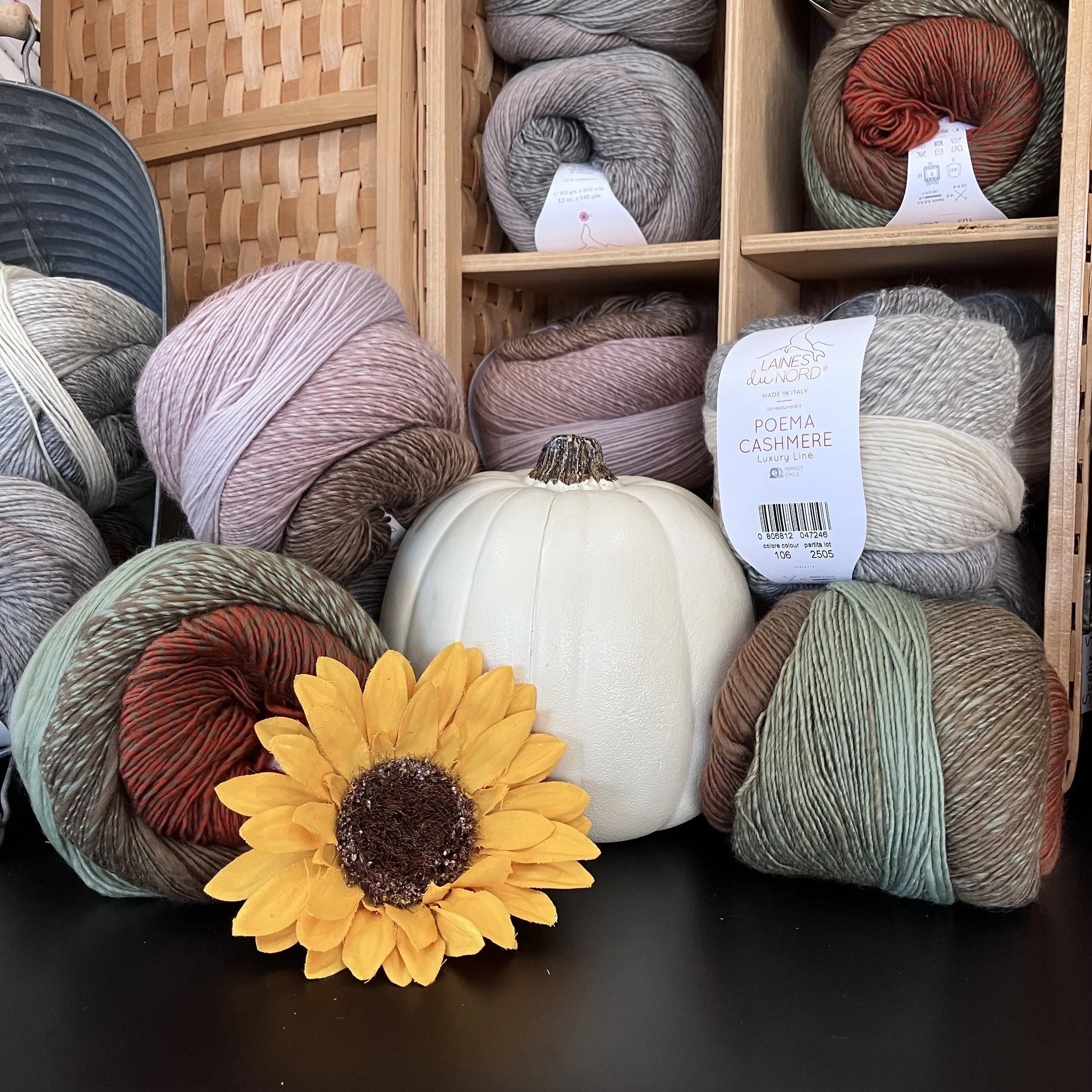
The percentages matter. A yarn containing ten percent alpaca will behave differently from one containing seventy percent alpaca, even though both labels say wool and alpaca. When comparing blends, look at which fiber appears first and how much of each fiber is included.
Blends can be particularly useful for fall because fall itself is a bit of a blend—not quite summer, not quite winter, and occasionally both before dinner.One of my favorite yarns right now to knit small neck scarves for myself (I have two lol) and for gifts that is totally checking off my fall vibes bucket is Poema Cashmere by Laines du Nord. Lots of yardage and a blend of wool and cashmere have you feeling cozy-chic not only as you knit with it but also when you wear it. Fantastic yarn and ohh so soft.
Match the Fiber to the Project
Once you understand the general qualities of the fibers, bring the pattern back into the decision.
A lightweight top or wrap may feel wonderful in cotton, linen, or a breathable blend. A wool hat or pair of mittens can provide warmth without committing you to an entire wool garment. A soft alpaca scarf might be just right for a colder climate or for the person who is always reaching for one more layer. And if you are ready to try a sweater, a lightweight merino or wool-and-cotton blend may offer a useful balance for changing temperatures.
Also consider what the design asks the fabric to do. Does a shawl need to drape softly? Do the cables in a hat need enough structure to stand out? Does a cuff rely on ribbing to recover? If you are making a garment, could a fiber that grows turn “relaxed fit” into “I appear to have borrowed this sweater from Lurch from the Addams Family.”
These questions help explain why one beautiful yarn may be perfect for one project and frustrating in another.
Let Your Swatch Help You Decide
A yarn label can tell you what is in the skein, but it cannot show you exactly how those fibers will behave in your chosen pattern, at your gauge, and in your hands. Your swatch can.
As you swatch, pay attention to more than stitch gauge. Feel the fabric. Hold it up. Let it hang. Notice whether it feels airy, dense, springy, fluid, or heavy. Then wash it the way you plan to wash the finished project and check it again.
Did it soften? Did it grow? Did the stitches relax? Does it feel warmer or heavier than you expected? Most importantly, can you picture yourself happily using or wearing a whole project made from this fabric?
The goal is not to find a universally perfect yarn. It is to create a fabric that works for this project and for you.
What Will Fall Feel Like for You?
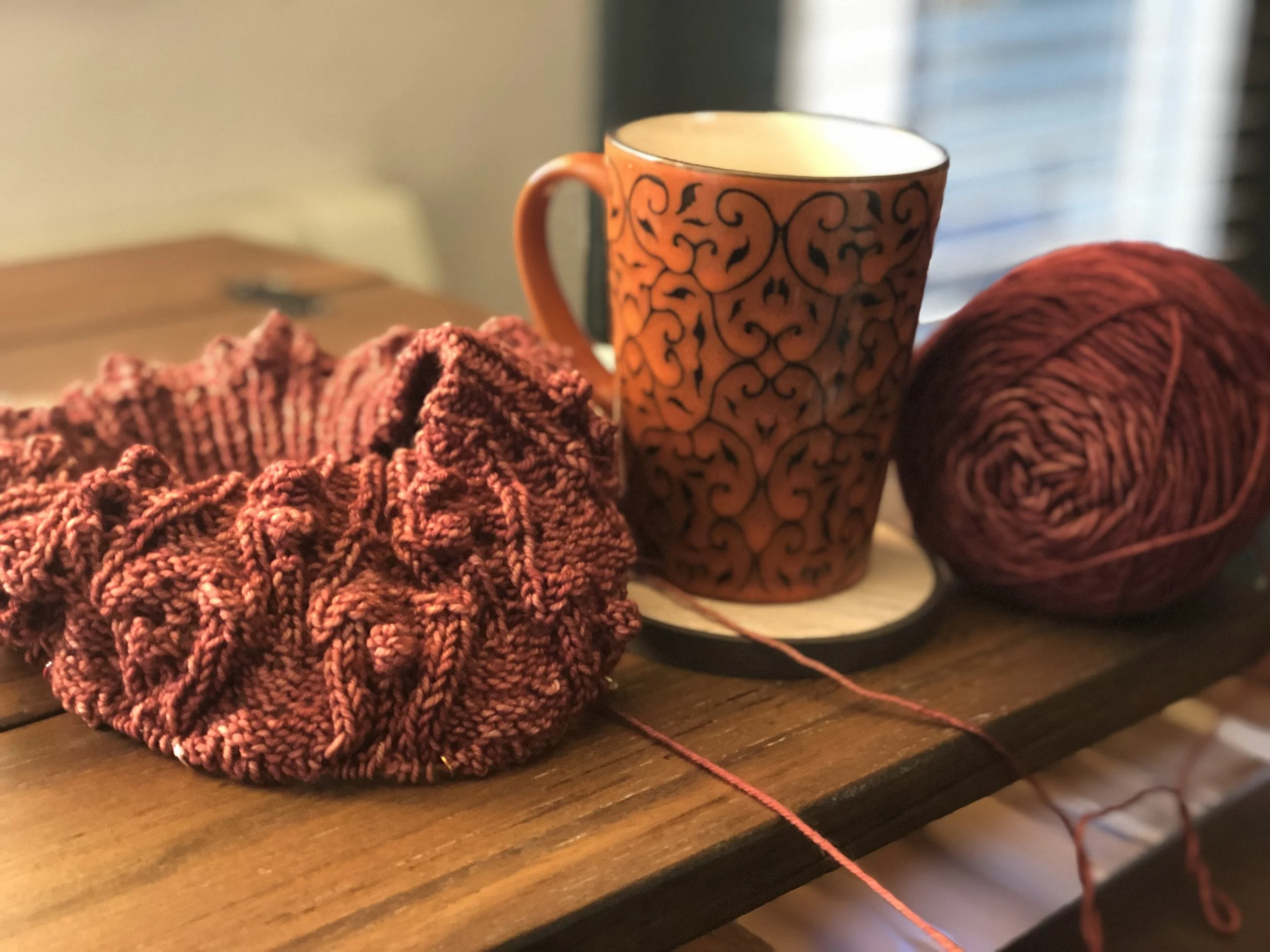
Part of the joy of fall knitting is imagining the finished project before it exists: the shawl you will wrap around your shoulders, the hat you will pull on for a morning walk, the blanket that will live beside your favorite chair, or perhaps the sweater you will reach for as the evening air begins to change. Scrolling Ravelry.com, browsing Instagram posts of yarns and projects, creating a fall vibes Pinterest board. All these things are part of the process of preparing for fall knits.
It is very easy to choose yarn based entirely on the color we love or the softness of the skein. I have met knitters. I understand how this works. But taking a moment to consider the fiber can help ensure that the finished project feels just as good to use or wear as the yarn felt in your hands.
As you think about your next fall project, picture where you will wear it. What does that day actually feel like? Is the air cool and crisp, or does the temperature change by twenty degrees between breakfast and lunch? Do you want warmth, breathability, structure, or drape?
Then choose the fiber that will help your project become what you are imagining.
And if the first cool morning of the season convinces you to cast on three new projects instead of one, well…that is a different kind of fall tradition, lol.
If you enjoy thoughtful knitting guidance that helps you understand not only what to choose but why, I would love to have you join my newsletter. It is where I share new articles, helpful resources, and plenty of encouragement for whatever you are ready to knit next.