
Knit Your First Socks
Learn how a traditional top-down sock is constructed, one manageable step at a time.
If you’re comfortable knitting and purling and you’re ready to try socks, Knit Your First Socks will guide you through your first traditional top-down sock from cuff to toe.
Whether you’ve never attempted socks before or you’ve tried and gotten stuck somewhere along the way, I’ll help you understand what each part of the sock is doing while we work through the construction together.
Ready to Try Socks with a Little More Guidance?
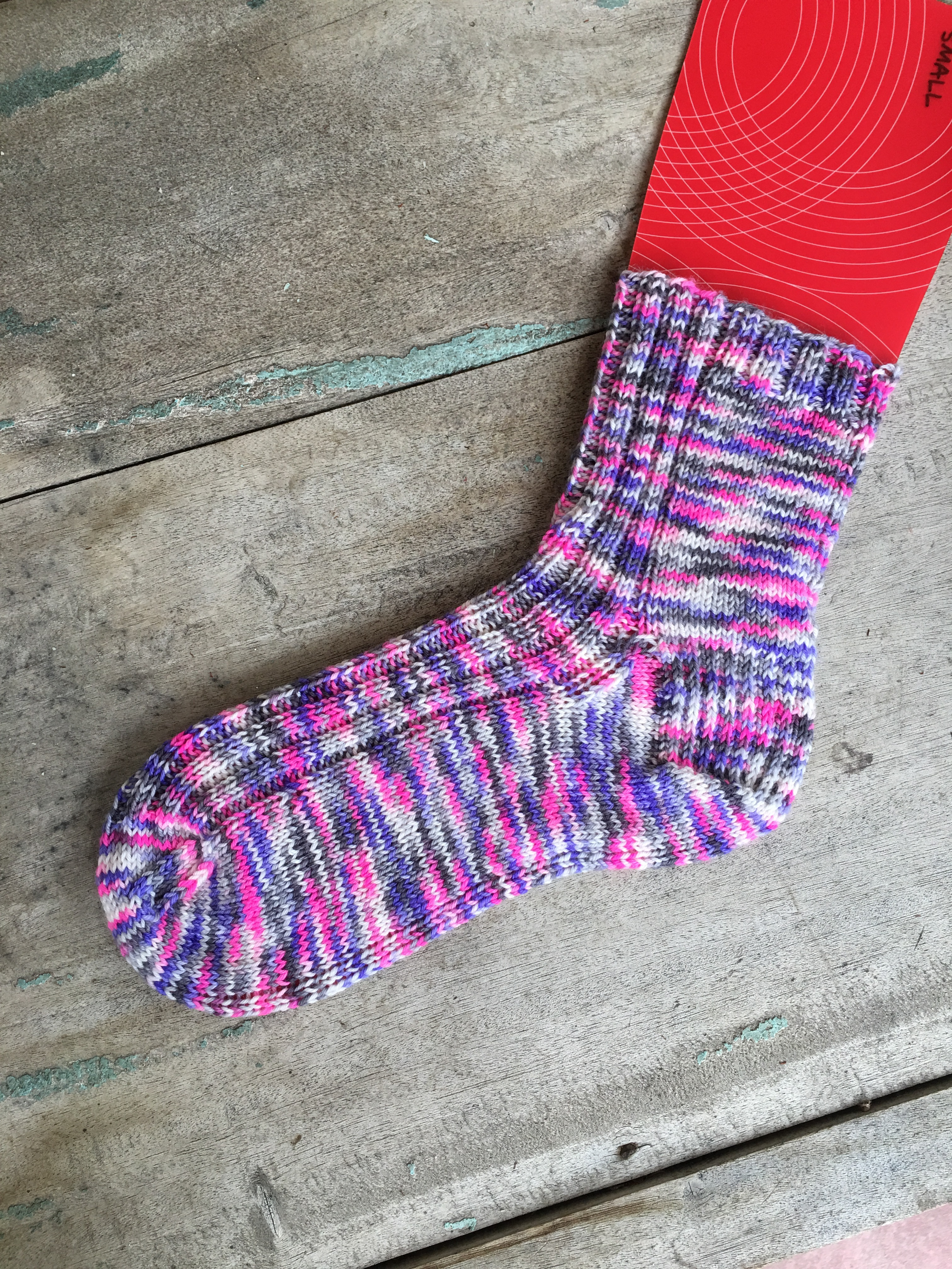
This course is designed for knitters who already feel comfortable with the basic knit and purl stitches and are ready for their next knitting adventure.
You might be someone who has knit hats, scarves, cowls, or other projects and has been curious about socks.
Or maybe you’ve already attempted a sock but reached the heel, DPNs, gusset, or another unfamiliar part and thought:
“I’m not quite sure what I’m supposed to do here.”
That’s exactly the kind of thing we’ll work through together. You do not need to already know how to knit socks. You also do not need previous experience joining your knitting in the round. I’ll show you how to get started.
First, We’re Learning How a Sock Works
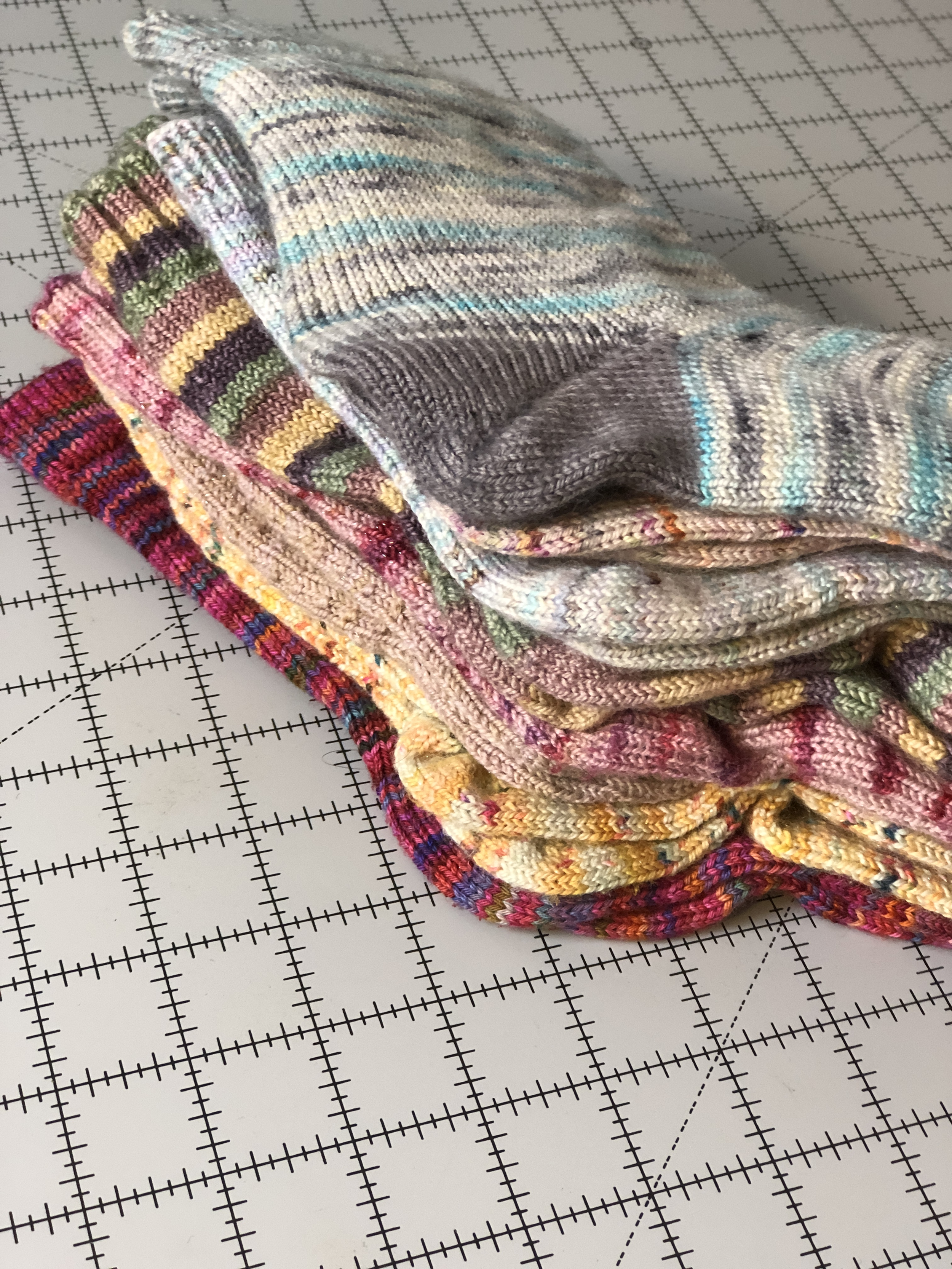
Your First Sock is Your Learning Sock
Your first sock is going to teach you a lot.
Not only about sock construction—but about your own knitting. As you work through your first sock, you may discover that you knit a little tighter or looser than you expected.
You may decide that next time you’d like the leg a little longer or shorter.
You may want a little more or less room in the foot.
Maybe eventually you’ll want to experiment with another heel, another toe shape, or a different size.
That doesn’t mean anything went wrong.
That information is part of what your first sock is here to teach you.
The goal of this course is to give you a strong foundation so that by the time you’re ready to cast on again, you understand much more about how socks are constructed and what you might want from your next pair.
There are many wonderful ways to knit socks.
Different heels. Different toes. Different construction methods. Different ways to adjust fit.
But before we start experimenting with all of those possibilities, I want you to understand the foundation.
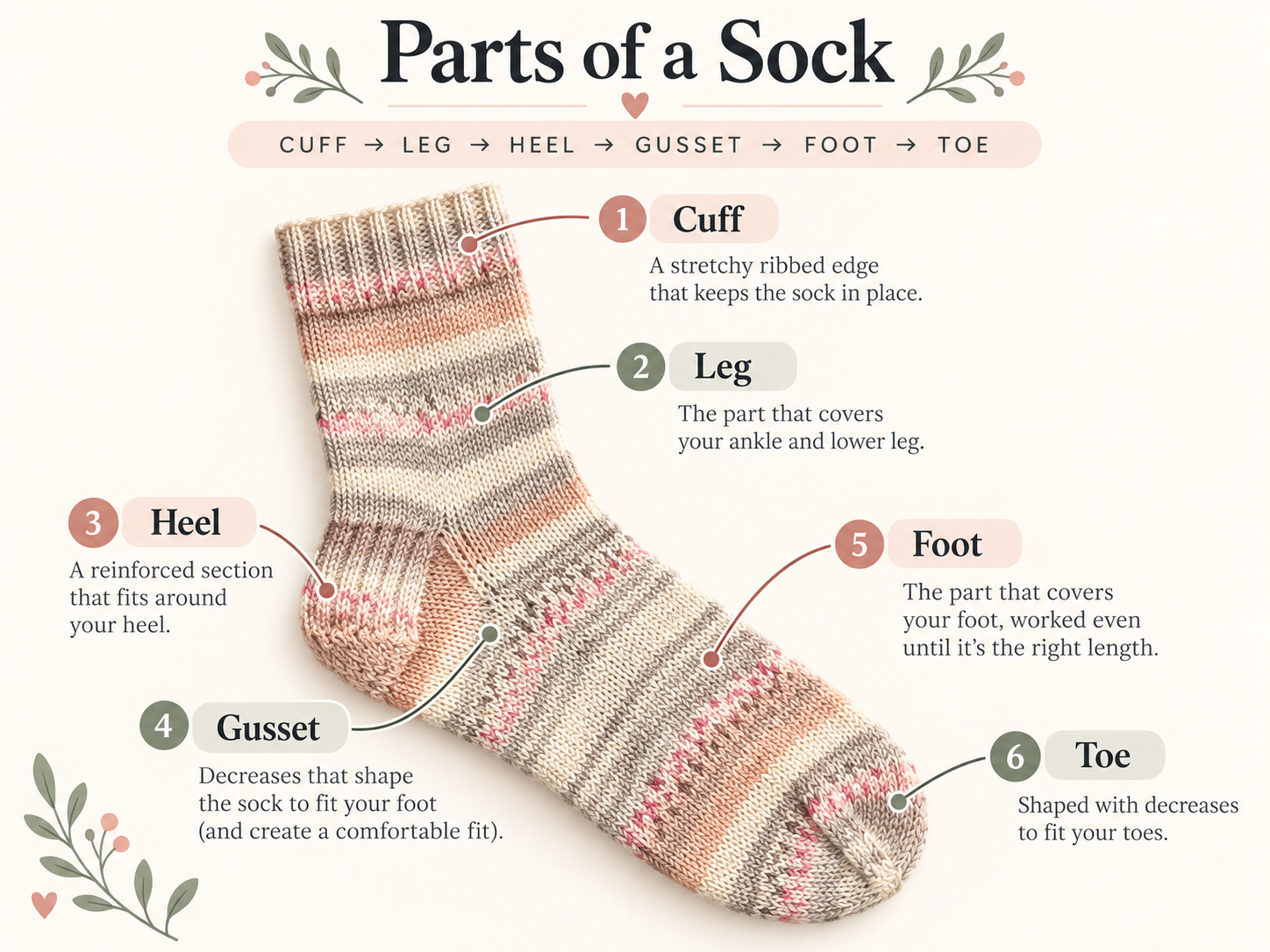
In this course, we’ll knit a traditional top-down sock with a heel flap and gusset. This tried-and-true construction gives you a wonderful introduction to the basic anatomy of a knitted sock while also teaching you several techniques you’ll use in future knitting projects.
We are not trying to design your perfect custom-fit sock during this class.
Instead, we’re learning:
How does a sock actually come together?
Once you understand that, future sock knitting becomes much less mysterious.
From Cuff to Toe, We’ll Work Through the Whole Sock
During the course, you’ll learn how to:
Cast on and join your knitting in the round
Knit the cuff and leg
Work a small circumference using a 9" circular needle
Set up and knit a traditional heel flap
Work with double-pointed needles
Turn the heel using short-row shaping
Pick up stitches along the heel flap
Build and decrease the gusset
Knit the foot
Work basic decreases for sock shaping
Shape the toe
Finish the toe using Kitchener stitch
Weave in your ends and finish your sock
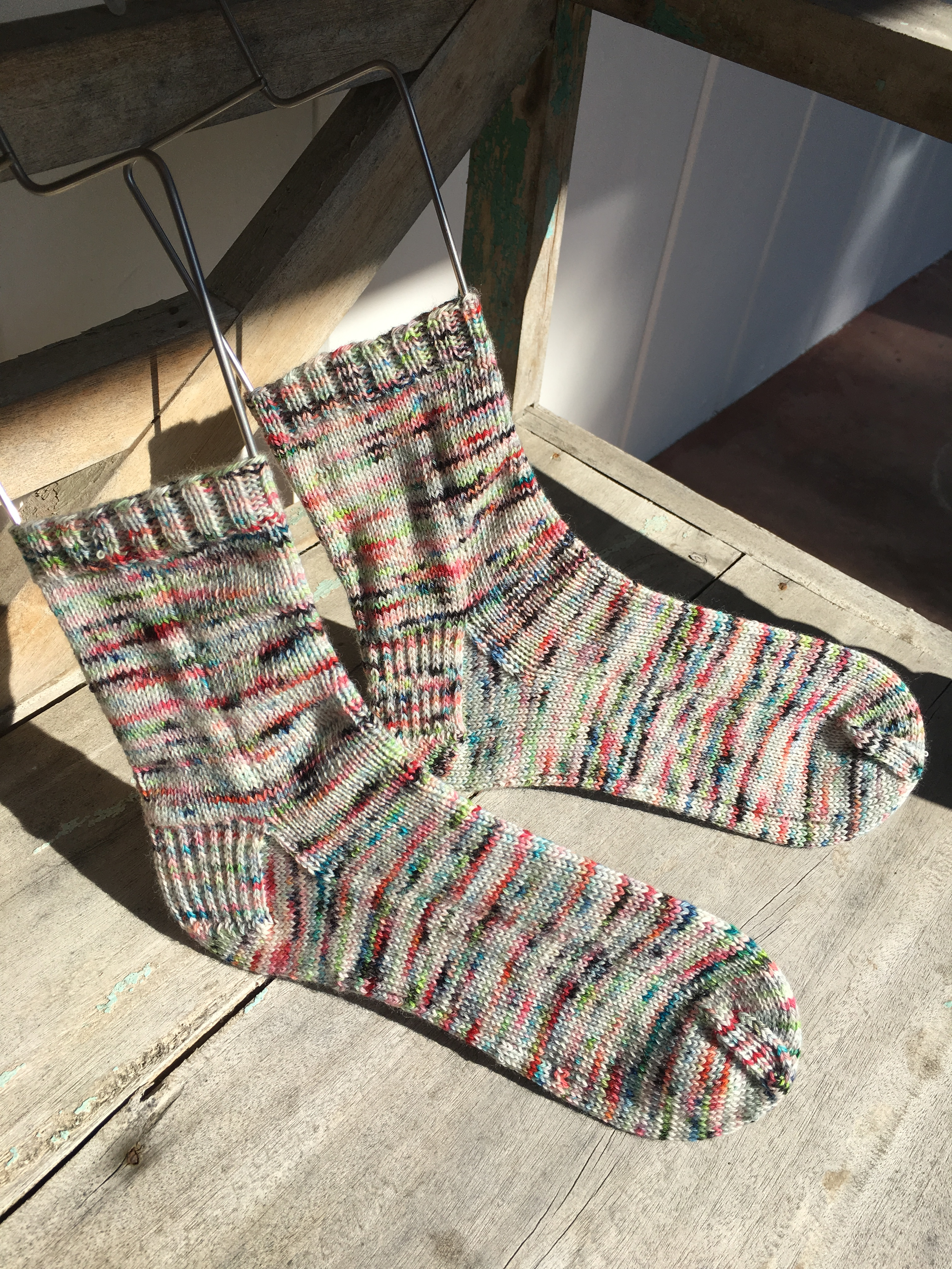
You’ll also be practicing skills that can show up in many other knitting projects, including picking up stitches, shaping with decreases, short-row concepts, and working with different needle configurations.
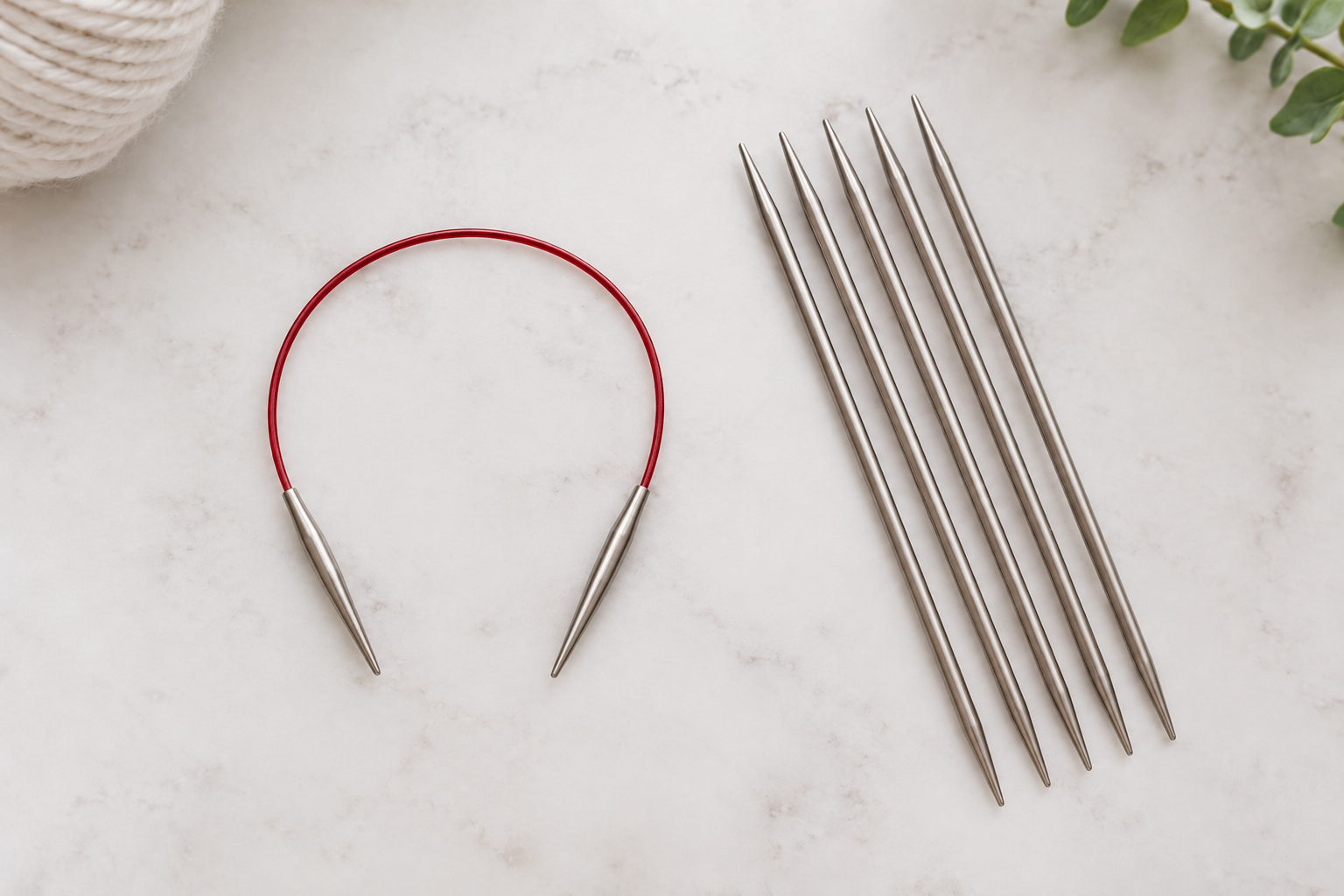
The Setup I’ll be Demonstrating
For the clearest follow-along experience, I recommend using the same setup I use throughout the course:
A 9" circular needle for the cuff, leg, and foot
and DPNs—double-pointed needles—for the heel, gusset, and toe
This is my favorite way to knit socks, and it’s the method I demonstrate in the video lessons. That means when you look at my hands and then look at your own knitting, your needles and stitches can be arranged the same way.
If you’re already an experienced small-circumference knitter and prefer to work your entire sock on DPNs, two circular needles, or Magic Loop, you’re welcome to adapt the pattern to your preferred method.
Just keep in mind that two circulars and Magic Loop are not specifically taught or demonstrated in this course.
If you’re new to sock knitting, I recommend following along with the 9" circular + DPN setup shown in the videos.