
When a Knitting Retreat Led Me to Europe's Most Remarkable Cashmere Farm
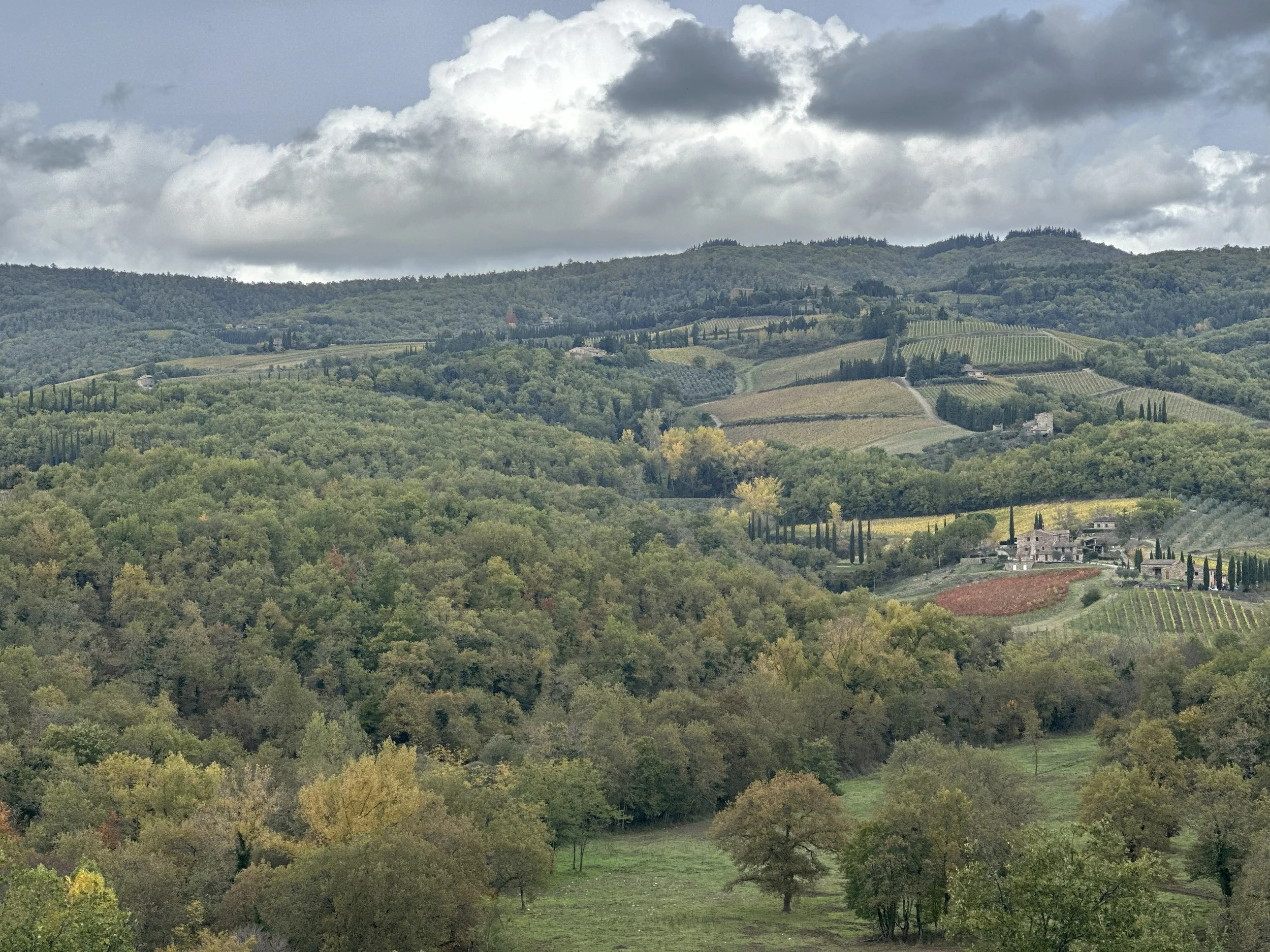
Rolling Tuscan hills dotted with adorable cashmere goats, a passionate American veterinarian who chose the Italian countryside over Long Island, and a story so inspiring it'll make you want to book your own ticket to Chianti. That's exactly what happened on my recent knitting retreat in Tuscany, where we visited Chianti Cashmere – and trust me, this wasn't just another farm tour.
Our visit to Italy was in late October where the fall colors have arrived and the cooler weather is just on the cusp of November that’s right around the corner.
The Woman Behind the Magic
Meet Dr. Nora Kravis —prepare to have your mind blown. An American who grew up on Long Island, this remarkable woman moved to Italy in 1972, when she was just in her twenties, fell head over heels for the Tuscan landscape, and decided this was home. But here's where the story gets excellent – she didn't just settle for sipping Chianti and gazing at vineyards (though honestly, who would blame her?). Instead, Nora rolled up her sleeves and earned her veterinary degree from the University of Pisa.
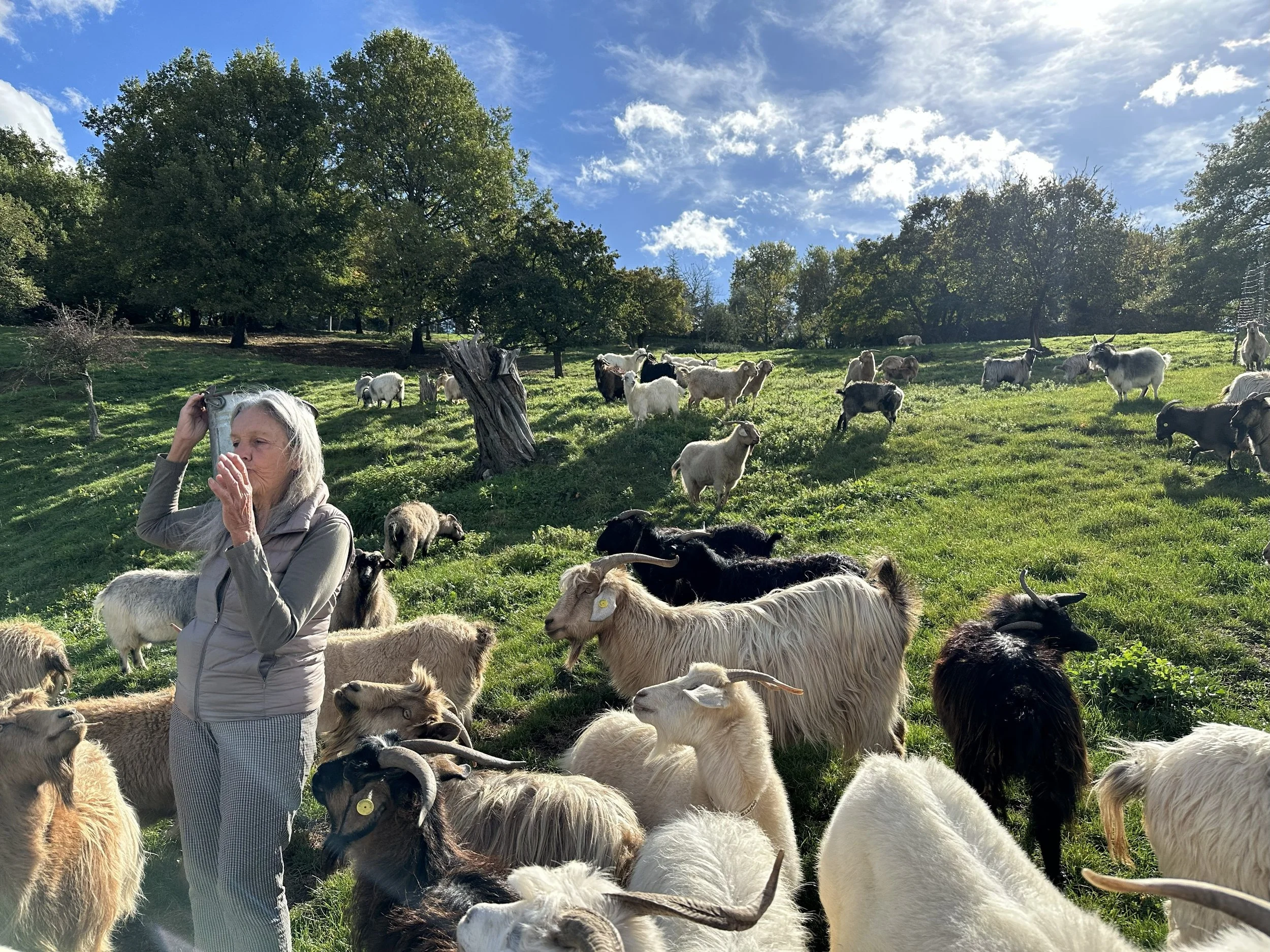
Nora with a bucket of corn kernels on her shoulder while she talks about the land and the the care process for these sheep. The sheep wait impatiently for the treats. 😄
Through what she describes as "a series of serendipitous events," Nora started with two goats tied to a tree. She gradually built what would become an absolute breakthrough: the first and largest cashmere goat farm in Europe. Yep, you read that right – the first one. When she established Chianti Cashmere in 1995, nobody in Europe was doing this.
What Makes This Farm So Revolutionary
Here's what totally fascinated me about Nora's approach: she started by importing the first cashmere goats into Italy and then carefully cross-bred them with local Italian goats to create an Italian Cashmere Goat. And here's the kicker – there's no one "perfect" cashmere goat breed. Cashmere is actually the super-soft, downy undercoat that most goats (except Angora/mohair goats) grow as insulation against winter cold. It's like nature's cozy sweater, shed each spring!
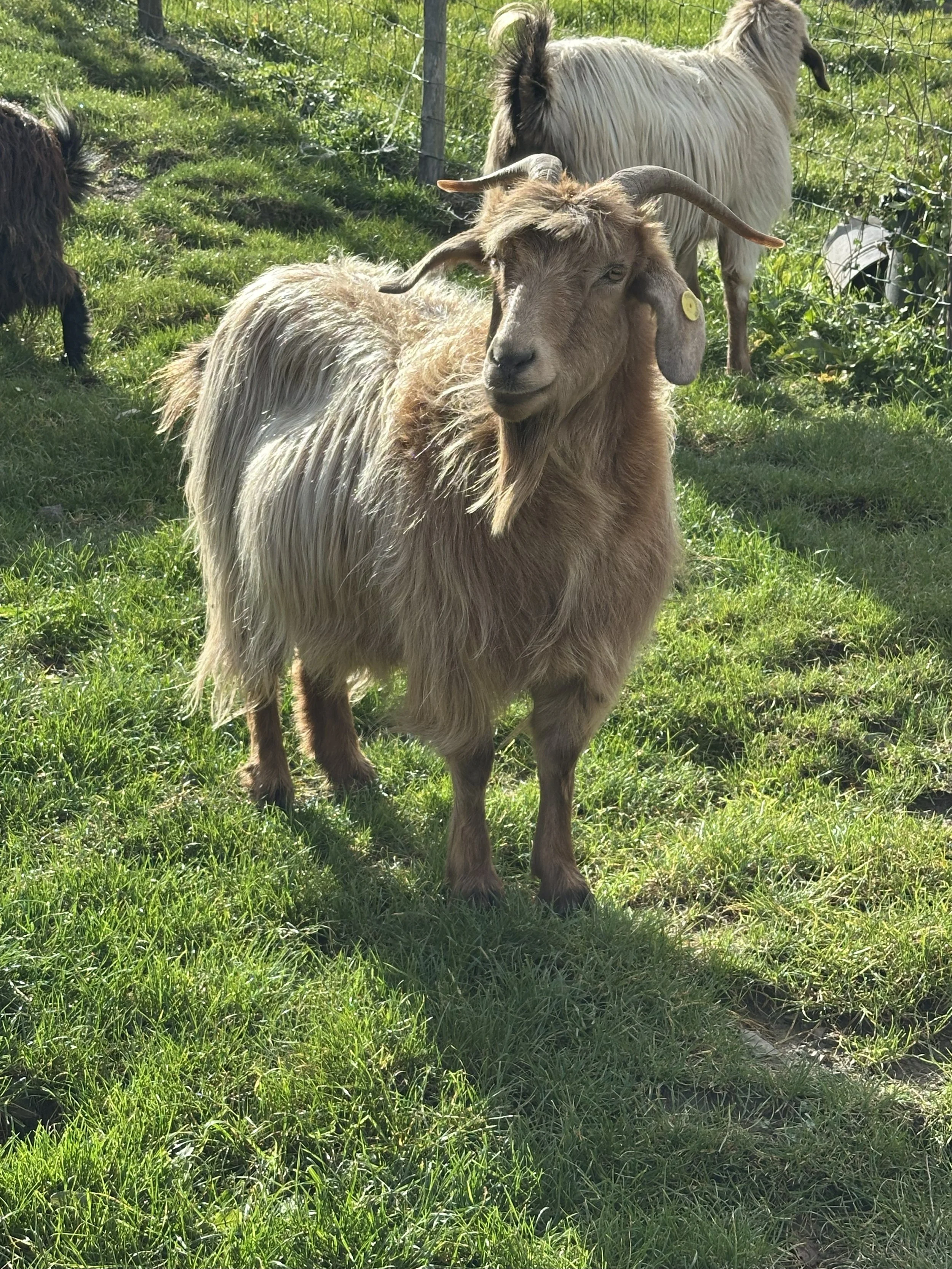
These pretty ladies come in beautiful colors and make three main natural colors of fiber, white, tan and chocolate.
What sets Nora apart is her scientific approach to breeding. She meticulously analyzes the cashmere fibers – we're talking about measuring fiber diameter (the finest quality is 14-19 microns, which is incredibly fine), length, crimp, and quality – and then strategically cross-breeds goats to improve these characteristics. It's part veterinary medicine, part textile science, and part art. She showed us some of her samples and the meticulous lab results and documentation. Her lab work is not just a necessity; it's a passion for her.
A Pioneer in Ethical and Sustainable Cashmere
Now, this is where my heart really swelled. The way cashmere is harvested at Chianti Cashmere is nothing short of beautiful. During the natural shedding season in spring (April and May), the goats are gently hand-combed to collect their undercoat. This isn't stressful shearing – it's a loving, gentle process that works with the goats' natural cycle. The goats aren't harmed; in fact, many of Nora's goats live long, productive lives. She pointed out one sixteen-year-old goat who had just had a baby the previous season!
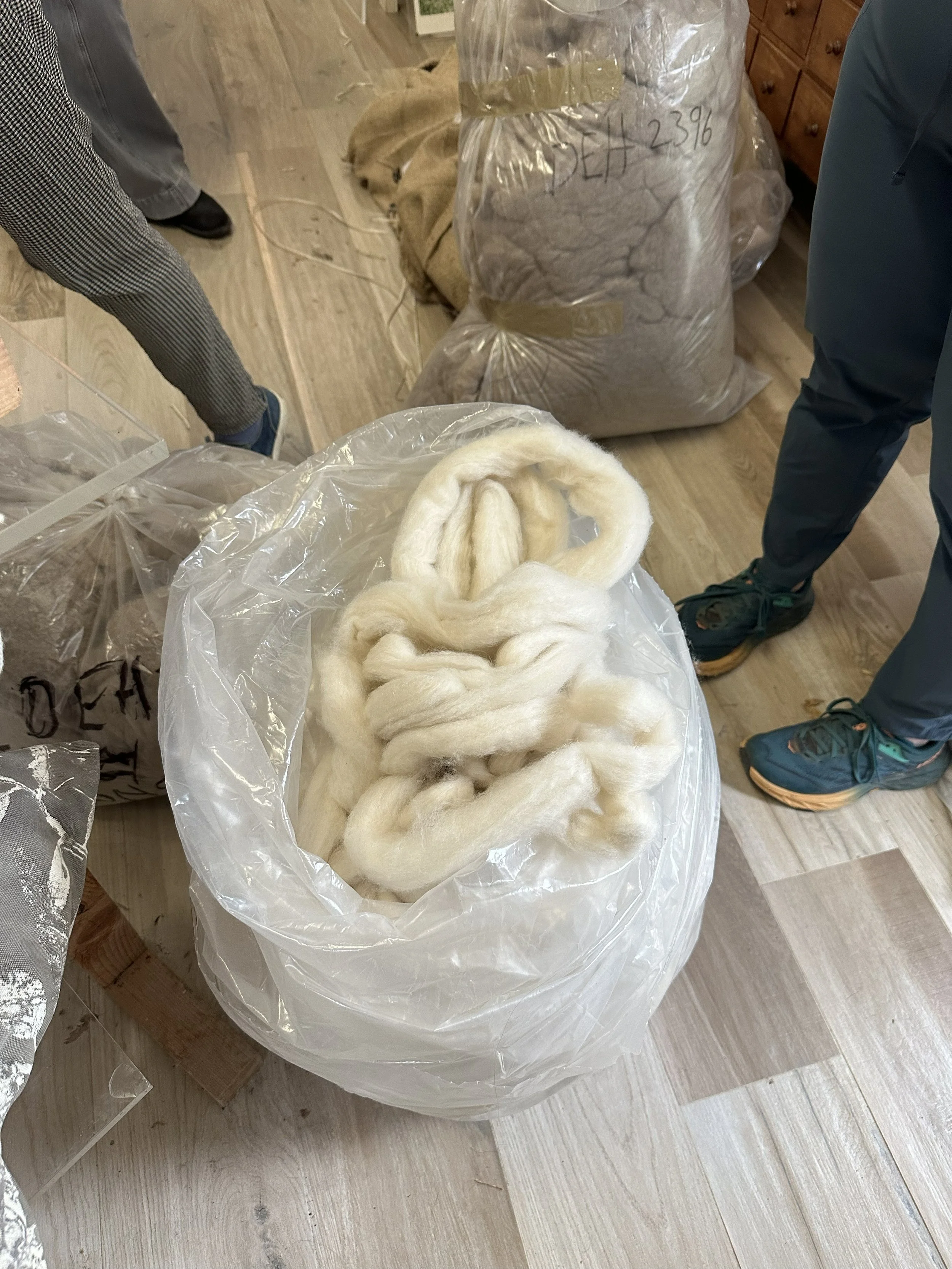
There were these 3 bags of cashmere that was just to die for. It was absolutely stunning. So soft and warm. Nora is about to have this fiber spun into fingering weight yarn. 😍
But wait, there's more (and this part gave me goosebumps). Chianti Cashmere is the only agricultural enterprise in Europe certified by the Wildlife Friendly Enterprise Network. In an area where wolves, foxes, and other predators roam, Nora uses non-lethal methods to protect her herd of around 130-200+ goats. She has employed about a dozen Abruzzo Maremmano livestock guardian dogs – these magnificent, ancient Italian shepherd dogs that have been protecting flocks from wolves for centuries. No poisoning, no shooting, just smart predator management with electric fencing and these incredible doggies.
Changing the Game for European Cashmere Production
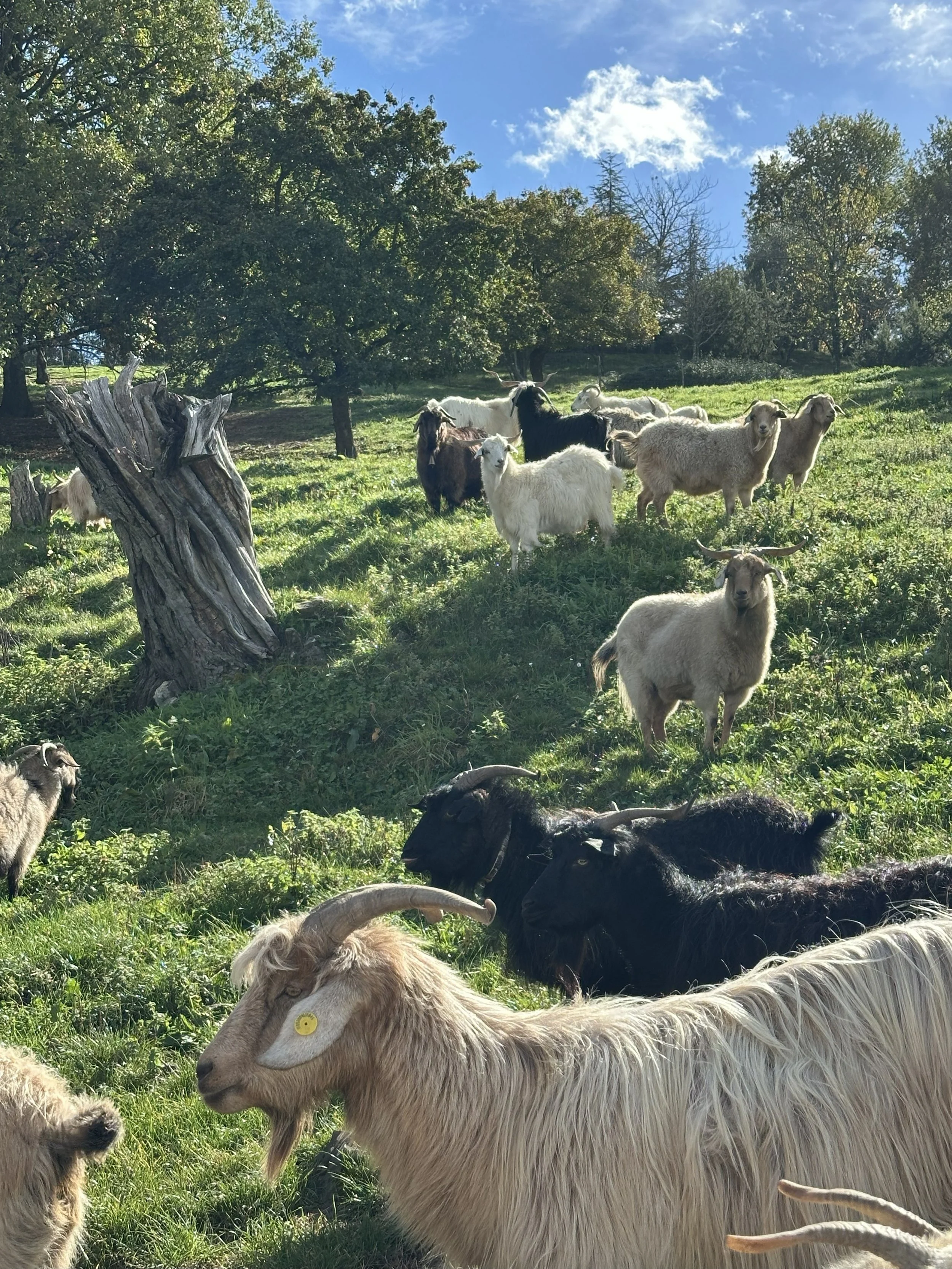
All the pretty ladies enjoying the beautiful fall day in the Chianti Valley.
Here's something that really excited me: in 2024, Nora established a new National Registry (Stud Book) for European Cashmere goats. This is huge, you guys! She's working to establish standards and certifications for cashmere goats across Europe, helping identify and certify high-quality cashmere-producing goats and building a community of breeders committed to fiber excellence.
Nora doesn't just run a farm – she's an educator, consultant, and advocate for sustainable pastoralism. She collaborates with universities, speaks at international conferences, and consults on projects that use cashmere goats to reclaim abandoned or marginal land. Her goats actually improve the environment by grazing on overgrown, uncultivated areas, clearing brambles and undergrowth, increasing biodiversity, and improving soil quality. They're basically adorable, fiber-producing land management experts!
The Visit That Stole My Heart
When we visited, we were greeted by the most enthusiastic bunch of goats you've ever seen. These beauties came running toward us for treats, and let me tell you, watching cashmere goats galloping across Tuscan hills is pure magic. Nora offers amazing experiences like "Shepherd for a Day" (Pastore per un giorno), where visitors can actually herd the goats through the valley with Nora and her dogs. And yes, there's a wine tasting break in the middle because – hello – it's Tuscany!
Why This Matters for All of Us
As fiber lovers, knitters, and quilters, we understand the value of quality materials and ethical production. Nora's work shows us that it's entirely possible to create luxury fiber products while respecting animals, supporting local communities, protecting wildlife, and regenerating the land. She's proving that sustainable, ethical cashmere production can work in Europe – and she's sharing her knowledge to help others do the same.
The fact that she's working to standardize cashmere goat breeding and production across Europe means we could see more high-quality, traceable, sustainable cashmere options in the future. For those of us who care about where our fiber comes from (and I know you do!), this is incredibly exciting.
Final Thoughts From My Tuscan Adventure
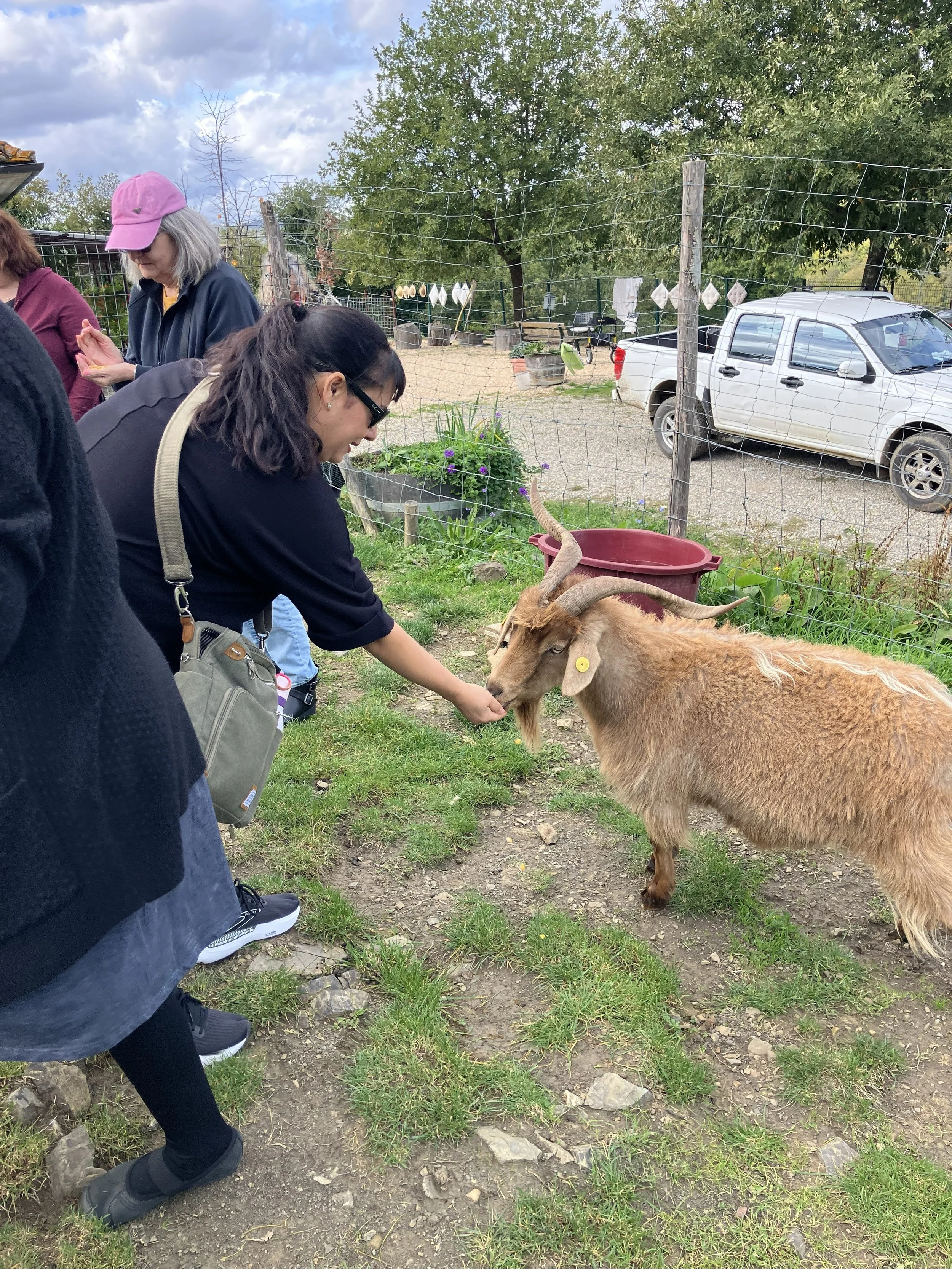
The ladies were very happy get treats from us. Some were a bit more sassy and pushy but some were patient and followed you around like puppies.
Visiting Chianti Cashmere wasn't just a stop on our knitting retreat – it was an education, an inspiration, and a reminder of what's possible when passion meets purpose. Nora's journey from a young woman who fell in love with Italy to a pioneering veterinarian running Europe's first cashmere goat farm is the kind of story that makes you believe in following your dreams, no matter how unconventional they might seem. And to top things off, Nora invited us into her home and made an amazing lunch. The food was fresh, light, locally produced, and so yummy. She was more than generous with her time, sharing her story, knowledge, and fantastic sense of humor with my group.
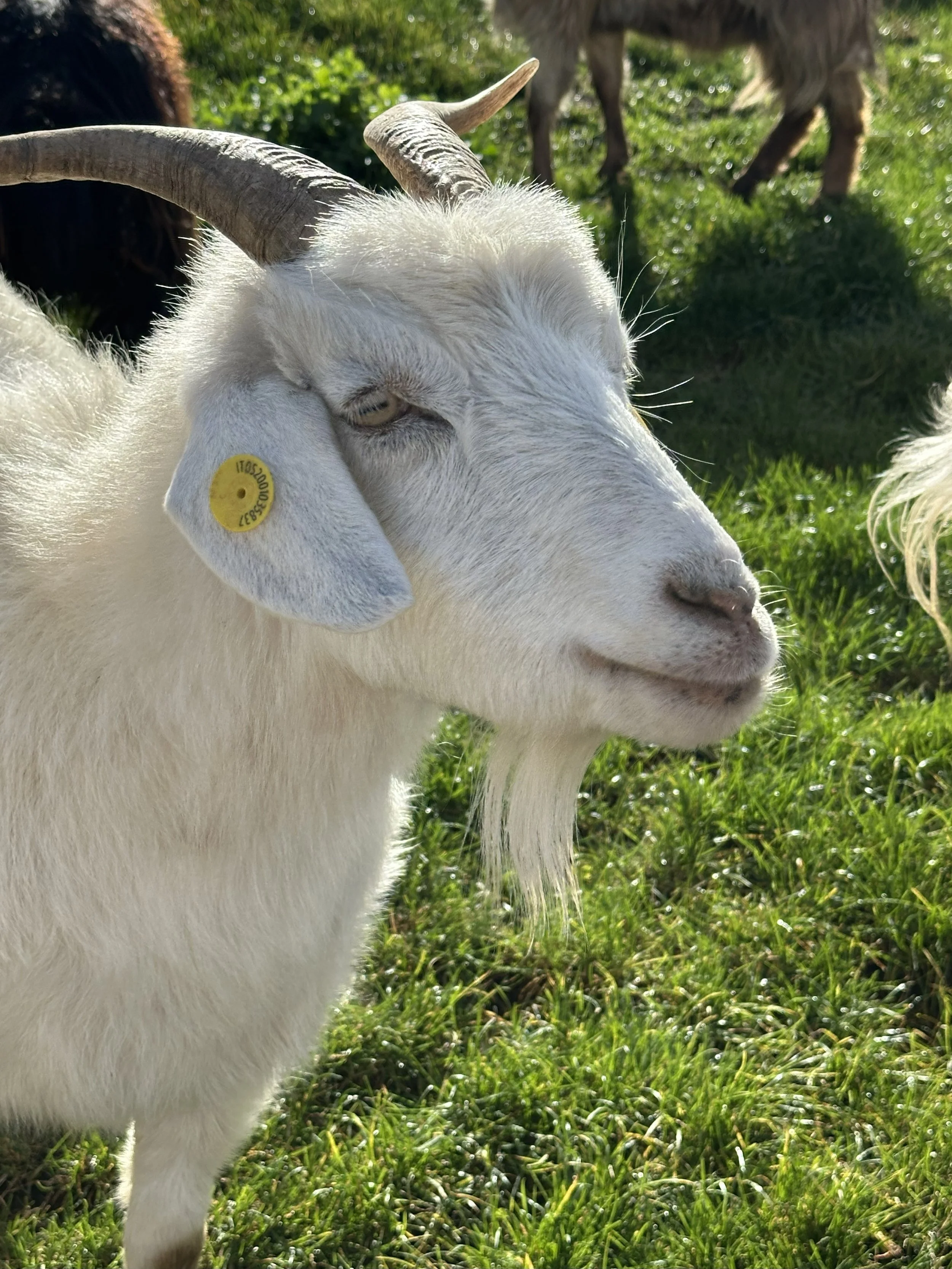
She told me this is her good side… she loves getting her picture taken lol.
If you ever find yourself in Tuscany (and honestly, you should make that happen), reach out to Nora for a visit. The farm is open by appointment only, and you can contact her through www.chianticashmere.com. Whether you're interested in the shepherd experience, want to shop for sustainable cashmere, or just want to meet some of the most pampered goats in Europe, it's an experience you won't forget.
Now if you'll excuse me, I need to go cuddle my stash and daydream about those adorable goats running through the Chianti valley!
Have you ever visited a fiber farm that changed the way you think about your craft? Drop a comment – I'd love to hear your stories!