
“Some travel experiences stay with you not simply because of where you went, but because of the people who welcomed you in.”
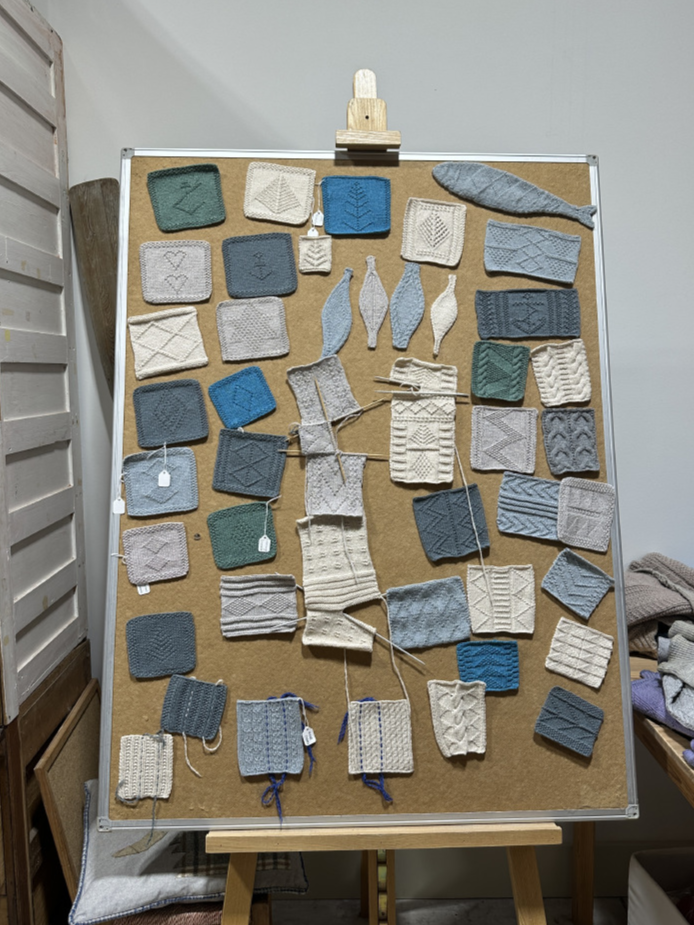
During our Sweater Club retreat in Scotland, we had the extraordinary opportunity to spend an entire day—from 10:00 in the morning until 5:00 that evening—inside the design studio of Di Gilpin and Sheila Greenwell.
Outside, the day was cool, windy, and overcast. Inside, we were surrounded by knitting history, beautiful yarn, incredible samples, and two women who could not have been more generous with their time and knowledge. We spent the day learning about traditional gansey sweaters, casting on miniature versions of our own, drinking plenty of tea and coffee, eating biscuits, laughing together, and enjoying the kind of warm Scottish hospitality that makes you wish the day did not have to end.
Inside the Di Gilpin Studio
The workshop took place inside Di and Sheila’s working design studio, which made the experience feel even more special. We weren’t learning about their work from a presentation in a hotel conference room—we were sitting right in the space where their ideas, patterns, and extraordinary handknit garments come to life.
Next door was their beautiful little shop, filled with shelf after shelf of Di Gilpin yarn in gorgeous colors. Knitted samples brought the patterns to life throughout the space, making it nearly impossible to look at the yarn without immediately imagining a future sweater. There was also a collection of Di and Sheila’s books, including The Gansey Knitting Sourcebook, which many of us purchased during our visit.
Between the studio, the yarn, and all those beautiful samples, we had barely begun the workshop before future projects were already forming. This was going to be a very educational day—and, as it turned out, a rather dangerous one for the available space in our luggage.
Meet Di Gilpin and Sheila Greenwell
If you haven’t come across Di Gilpin and Sheila Greenwell before, let me introduce you—because they are kind of a big deal in the knitting world.
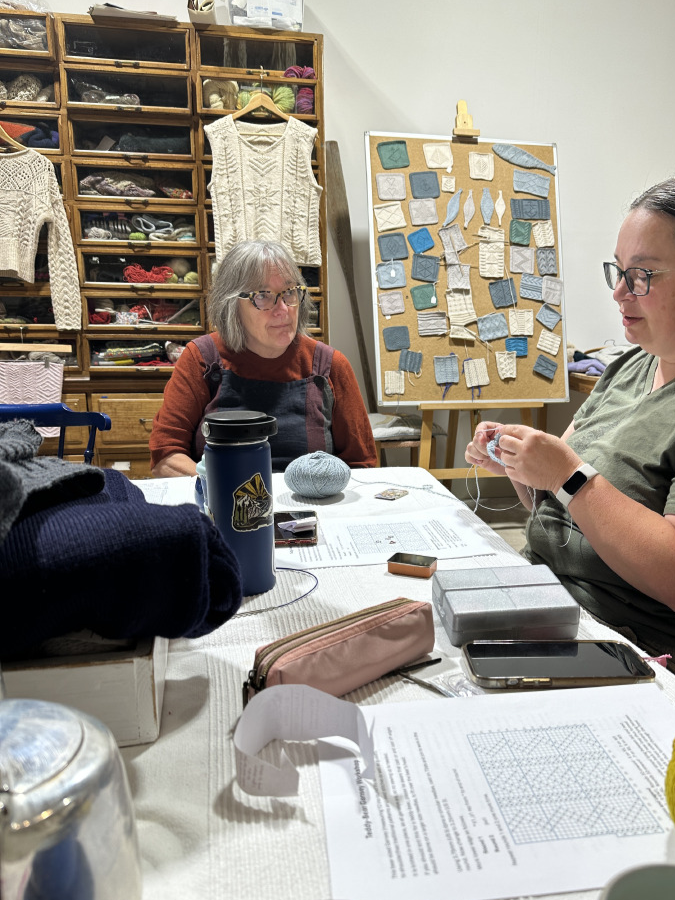
Di is the creative genius behind the brand. She has been designing knitwear for more than 40 years, beginning her career on the Isle of Skye and drawing much of her inspiration from Scotland’s landscapes, history, and traditional knitting techniques.
Her work has appeared on international runways, and she has created handknit pieces for some very well-known designers and brands, including Paul Smith, Nike, and La Fetiche. Some of the couture garments produced by her team of skilled Scottish hand knitters can take as long as two months to complete. These are definitely not your average weekend knitting projects!
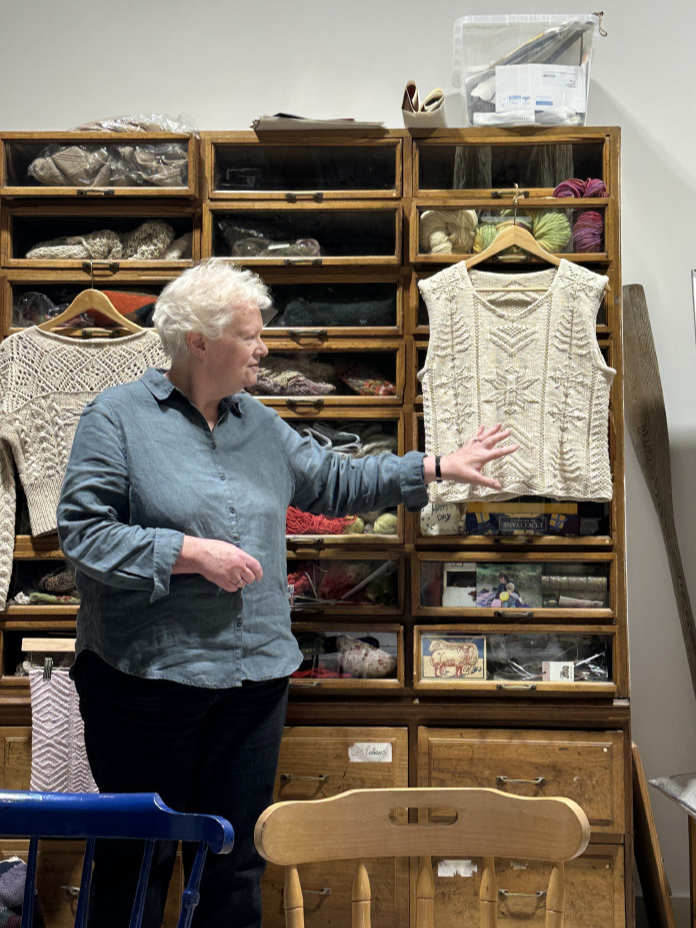
Sheila is Di’s production manager, technical partner, co-author, and—as Di calls her—her right and left hand woman. Di creates the original design and overall vision, and Sheila helps turn those ideas into patterns that can be graded, produced, and eventually knit by the rest of us.
Their talents complement each other beautifully, and after spending the day with them, it was easy to see why they make such a wonderful team.
Entering the World of Gansey Knitting
Our workshop focused on the traditional gansey sweater—a practical, hard-wearing garment with deep roots in Britain’s coastal fishing communities. Ganseys were designed for people who needed sweaters that were warm, durable, and comfortable enough to move in while working in some very cold and unforgiving conditions.
These sweaters were traditionally knit in the round with a firm gauge, creating a dense fabric that helped protect the wearer from the wind and sea. Their construction included thoughtful details such as underarm gussets for movement and patterned sections that added strength, texture, and beauty. Different combinations of knit and purl stitches created ropes, waves, diamonds, ladders, and many other motifs connected to coastal life.
Di and Sheila had examples throughout the studio showing just how many different motifs and pattern combinations could be used. Learning what those details meant—and understanding that they were part of garments made for real people doing incredibly demanding work—gave us an entirely new appreciation for the gansey. These sweaters may have been practical workwear, but they were also beautiful records of skill, community, and the knitters who made them.
Knitting Our Own Miniature Ganseys
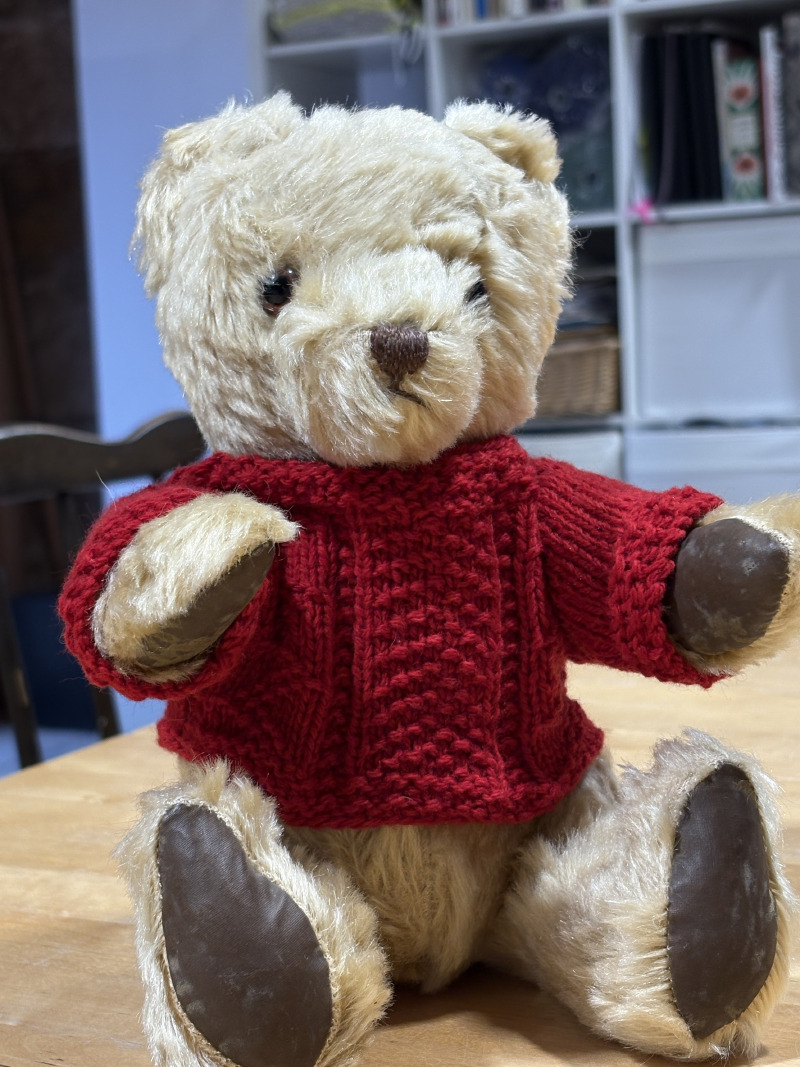
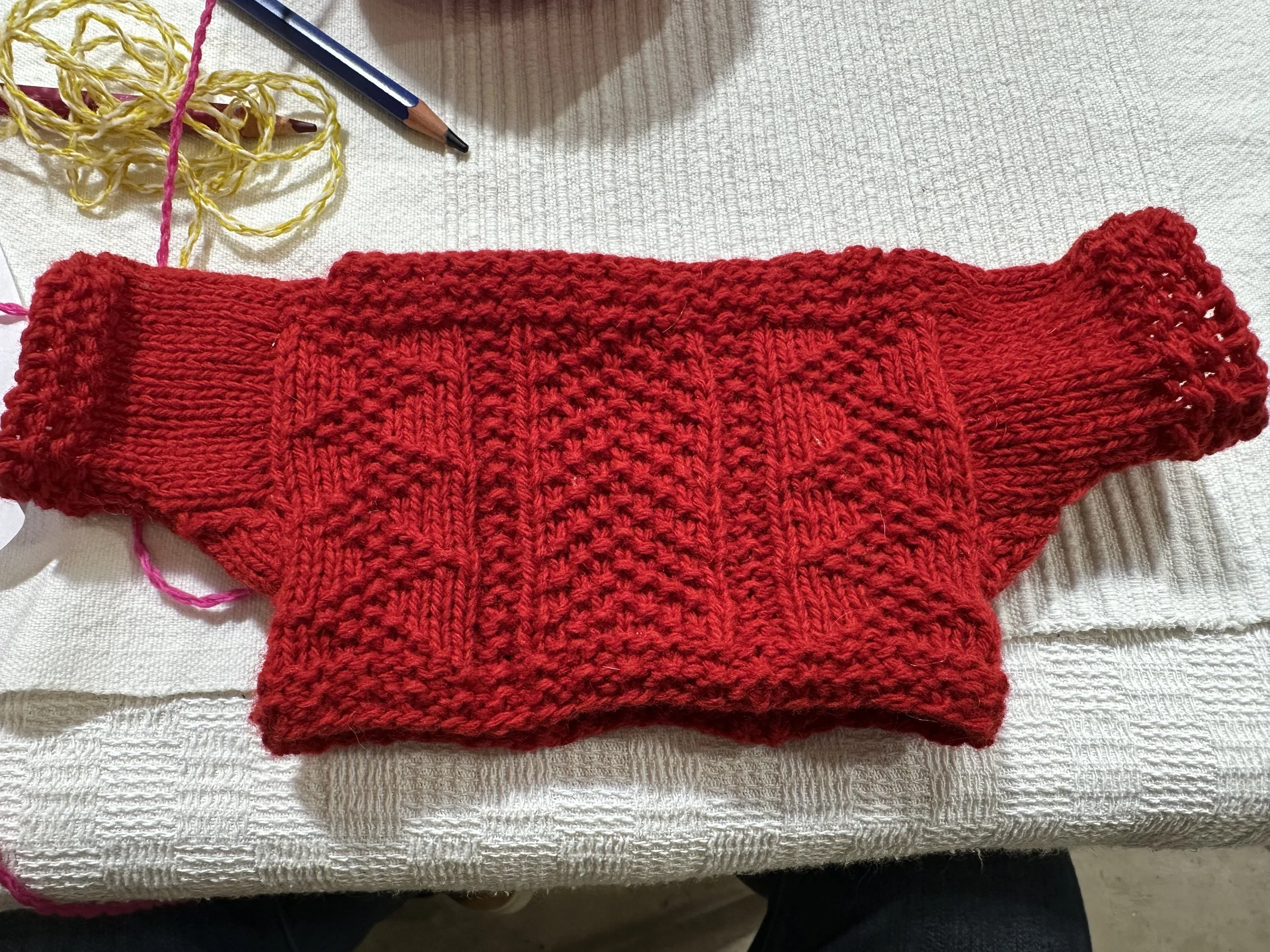
After learning about the history and stories behind traditional ganseys, it was time to put that knowledge onto our needles. Fortunately, Di and Sheila did not expect us to knit a full-size fisherman’s sweater before 5:00 p.m. Instead, they had designed a teddy-bear-sized gansey that allowed us to work through the authentic construction and techniques on a much more manageable scale.
We began by casting on and working through the different parts of the sweater with Di and Sheila guiding us along the way. Even in miniature, the pattern included the special construction details and traditional motifs that give a gansey its character. It was a wonderful way to understand not just how these sweaters look, but how thoughtfully they are built.
Some members of our group finished their little ganseys during the trip, while others brought theirs home to complete. Either way, we left with much more than an adorable tiny sweater. We had a hands-on connection to the techniques and traditions we had spent the day learning about—and, of course, plenty of photographs of our miniature ganseys looking ridiculously charming.
Bella’s Story
One of my favorite stories from the day was about Bella Stewart, a woman who worked in the fishing industry during the day and knitted gansey sweaters at night. Di and Sheila have spent years researching the people and communities connected to these sweaters, so we weren’t just learning about the construction—we were also learning about the women whose hands created them.
What made this especially cool was that Di had pieces connected to Bella right there in the studio. We were actually able to hold them, look closely at the patterns, and feel the fabric for ourselves. There is something very different about seeing a piece of knitting in a photograph and then having the opportunity to hold the real thing in your hands.
Bella’s story and notes helped inspire Di’s Bella and the Wave Sweater, which combines a traditional Argyll diamond pattern with a classic gansey wave motif. I already thought the sweater was beautiful, but after hearing Bella’s story and seeing her work in person, I knew this was the sweater I wanted to knit. Now it feels like I’ll be taking a little piece of what we learned that day and carrying it forward into a sweater of my own.
Tea, Biscuits, and a Wonderful Lunch
As wonderful as the knitting and history were, Di and Sheila’s hospitality was every bit as memorable. Throughout the day, they were constantly checking to see whether anyone needed another cup of tea, coffee, or—of course—a biscuit. They were so warm and welcoming that it felt less like attending a formal workshop and more like being invited into the creative home of two very generous friends.
For lunch, they brought in a meal prepared with locally produced organic ingredients. We had a warm, comforting soup with freshly baked bread that was absolutely unbelievable, along with the option to add a little chili oil to the soup. On a cool, windy, overcast Scottish day, it was exactly the kind of lunch you wanted.
We all sat and ate together, continuing the conversations we had started during the workshop. That time around the table was part of what made the day feel so special. We weren’t being hurried through a class schedule; we had time to ask questions, share stories, laugh, drop stitch markers, peruse the yarns and patterns, and simply enjoy being there with them.
A Castle for Christmas
One of the especially fun stories they shared was about working on the Netflix movie A Castle for Christmas, starring Brooke Shields and Cary Elwes. This happens to be one of my favorite newer Christmas movies, so I was more than a little excited to learn that Di and Sheila were involved behind the scenes.
Their team created knitwear and many of the knitted pieces seen throughout the movie, including the wonderful yarn-bombing decorations. They also helped teach the actors who played members of the village knitting group how to knit so the scenes would look authentic. The exception was Tina Gray, who played Helen, the group’s experienced older knitter. She was already an avid knitter and came to the role knowing exactly what she was doing.
Di and Sheila said they had an absolute blast working with the cast and crew. Now, when I watch the movie again, I know I’ll be paying much closer attention to every sweater, scarf, and knitted decoration in the background. It will be like watching an old favorite with an entirely new treasure hunt added—and it will definitely bring a smile to my face.
The Yarn Had to Come Home Too
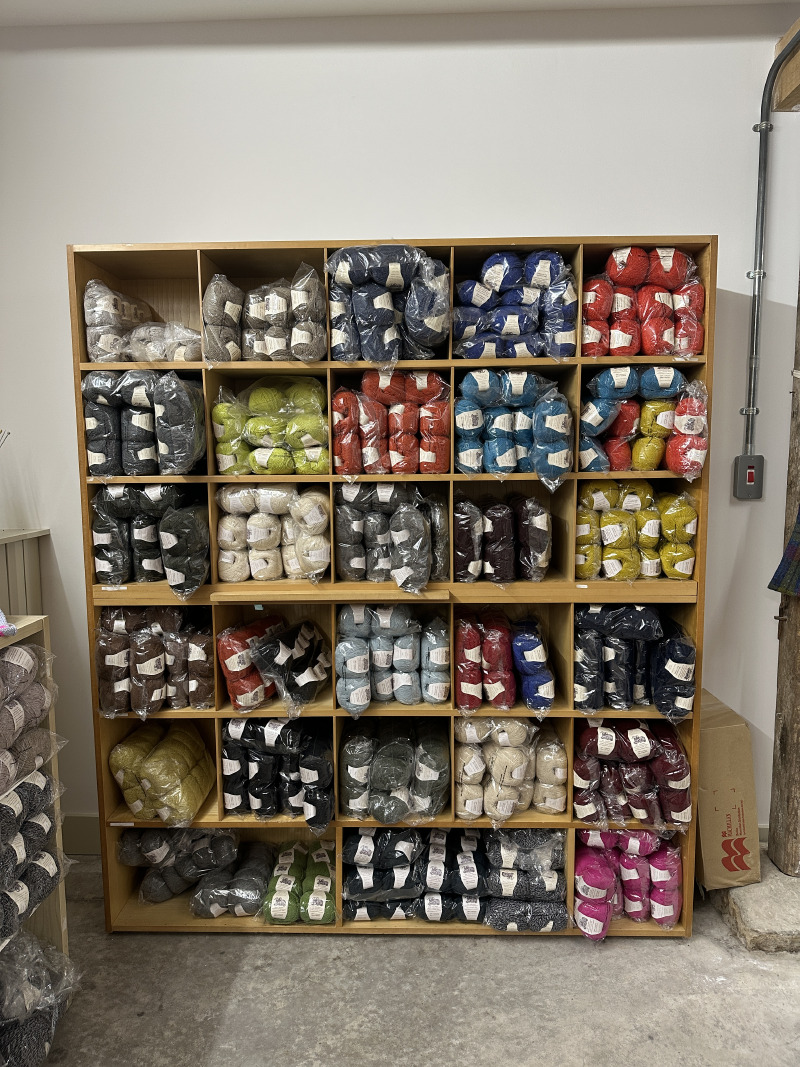
Of course, no day spent in a studio surrounded by beautiful yarn was going to end without some of it coming home with us. Most knitters leave room in their luggage for yarn when they travel, and our group was definitely prepared. We spent plenty of time in the shop petting the yarn, studying the samples, comparing colors, and deciding which future projects needed to follow us back across the Atlantic.
Di’s Lalland DK is a light DK made from 100% Scottish lambswool. It is produced using equipment in a cashmere spinning mill, which requires an exceptionally fine fiber and helps explain why the yarn feels so surprisingly soft. It also has a special balanced twist that gives the yarn beautiful stitch definition and allows the knitted fabric to relax remarkably well. Based on the way it feels and is constructed, I expect it to wear beautifully with very little pilling—which is exactly what I want from a sweater yarn.
I purchased enough Lalland DK to knit Bella and the Wave, choosing Storm Petrel for the main body and Furze for the contrasting collar. Storm Petrel is deep and moody, while Furze adds a wonderful golden pop of color. I’m already excited to cast it on as soon as I finish the sweater currently on my needles. Apparently, even when surrounded by dream yarn in Scotland, I still have to wait my turn in my own knitting queue.
The Gansey Knitting Sourcebook
Many of us also came home with a copy of The Gansey Knitting Sourcebook, written by Di and Sheila. After spending the day learning with them, purchasing the book felt like the perfect way to continue exploring everything we had only begun to uncover during the workshop.
The book includes the history and stories behind gansey knitting, along with charts for 150 different stitch patterns and 10 contemporary projects. It is filled with the ropes, waves, diamonds, ladders, and other textured motifs that make these sweaters so fascinating. More importantly, it connects those patterns to the knitters, fishing communities, and traditions that kept them alive.
I know this will be one of those books I return to again and again—not just when I want to knit a particular project, but whenever I want a little inspiration or a reminder of our wonderful day in the studio.
Bringing the Experience Home to Sweater Club
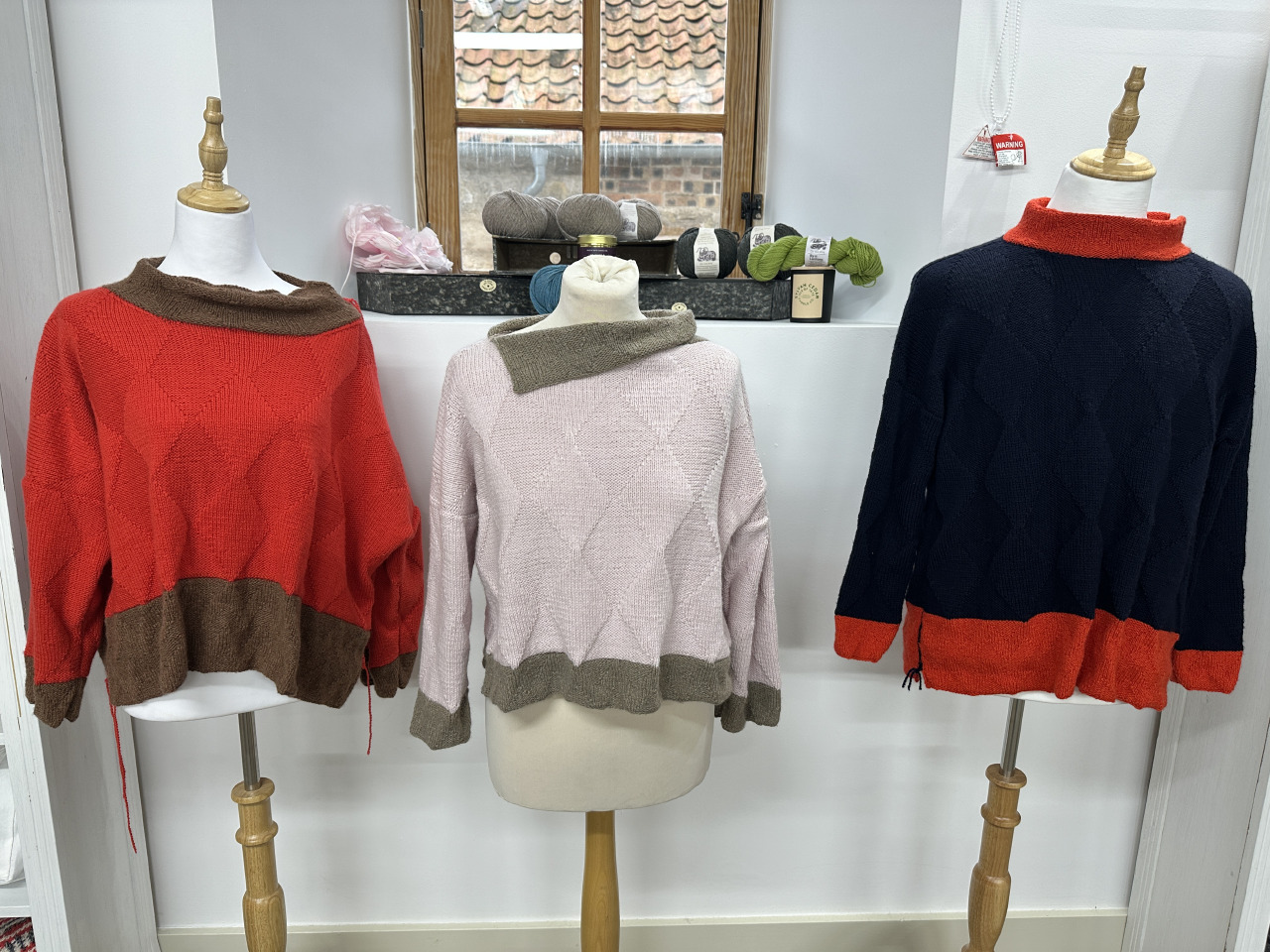
The best part is that this experience is not ending with our trip to Scotland. Once I knit my Bella and the Wave Sweater, I plan to add it to the Sweater Vault inside the Sweater Club. Members will be able to follow along with my step-by-step tutorials, learn the techniques used in the pattern, and confidently knit their own version of this beautiful design.
Di and Sheila will also be joining me for a future Zoom conversation, where we can hear more about their work, gansey history, the inspiration behind Bella and the Wave, and the process of turning Di’s creative ideas into finished patterns. I’m especially excited that Sweater Club members will have the opportunity to learn directly from them—even without jumping on a plane to Scotland.
I’m also exploring the possibility of a future Sweater Club collaboration featuring another of Di’s designs, along with access to the beautiful yarn created for it. There are still details to work out, but I love the idea of bringing a little more of the Di and Sheila experience home and sharing it with the rest of our knitting community.
A Day We Will Always Remember
Toward the end of our retreat, we sat down together for one last lovely dinner and each shared our favorite part of the trip. Our day with Di and Sheila was the obvious winner. For a group of sweater knitters, it was difficult to imagine a more perfect day.
What made it so memorable wasn’t only Di and Sheila’s extraordinary knowledge or the beautiful work surrounding us. It was how generously they shared it all. They welcomed us into their studio, encouraged every question, told us stories, helped us with our tiny ganseys, fed us a wonderful lunch, and made us feel completely at home.
I came away with a miniature gansey, a beautiful book, a sweater’s worth of yarn, and an even deeper appreciation for the people and stories held within our knitting. Most of all, I came home excited to keep learning—and to share as much of this experience as I can with all of you.
Have you ever taken a knitting workshop or visited a place that completely changed the way you looked at the craft? I would love to hear about it in the comments.
The best part of an inspiring knitting experience is getting to share what you've learned with others. Inside Sweater Club, we continue exploring beautiful designs, learning new techniques, and connecting with the stories behind the stitches.
Love discovering new things to try, stories behind the stitches, and inspiration for your next project? There's always something lovely waiting in your inbox!
Come knit with us! Join Sweater Club and discover what you can create, one sweater at a time.